


Listen to the article
Recycled Quotes Exposed: Foreign Clickbait Network Spreads False Political Accusations
A network of foreign websites and Facebook pages has been circulating fabricated political controversies featuring a recycled quote about locking someone up “for lying to Congress, abusing power, and betraying the public trust,” according to a recent investigation.
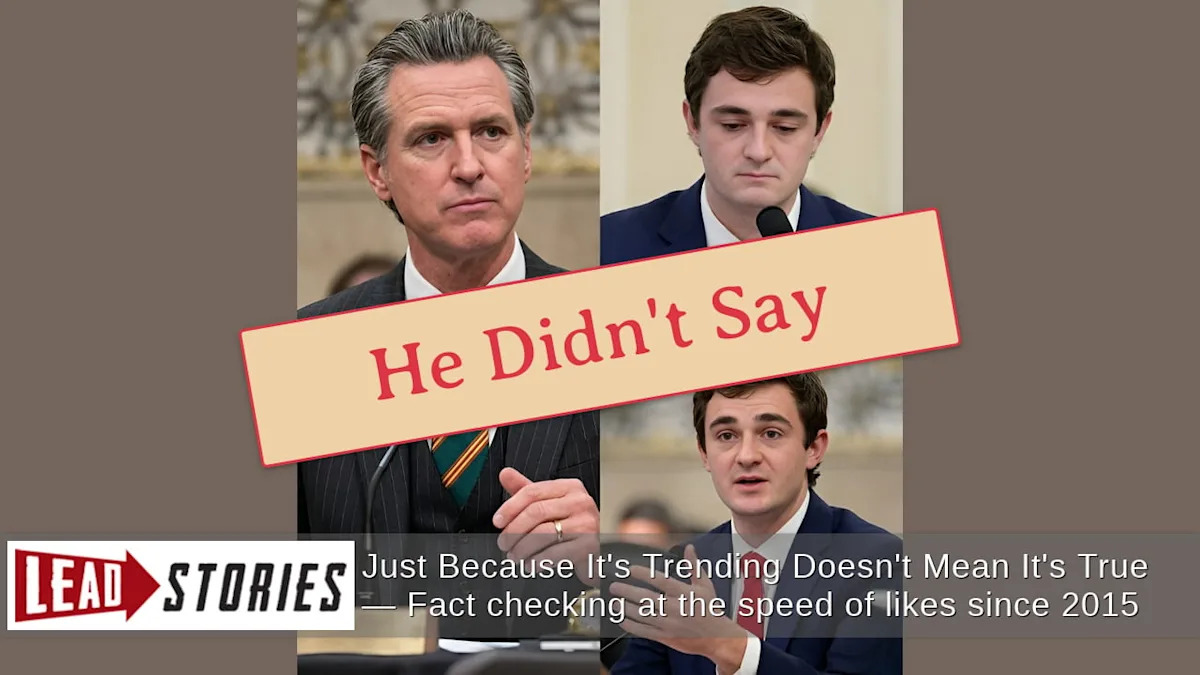
The false claims appear in multiple variations, each pairing different public figures in manufactured confrontations. In one version, California Governor Gavin Newsom supposedly criticizes influencer Nick Shirley. Another iteration shows Senator John Neely Kennedy allegedly attacking Adam Schiff. Two additional versions feature Shirley criticizing Senator Schiff, and Canadian politician Pierre Poilievre condemning Prime Minister Mark Carney.
None of these incidents occurred. A comprehensive Google News search reveals no legitimate reporting of any noteworthy person using this specific phrasing against another public figure, confirming the fabricated nature of these claims.
Digital forensic analysis identified several suspicious elements common across these posts. The content follows a predictable pattern, simply swapping out names while maintaining identical accusatory language. Many posts include future dates from March 2026, a clear indicator of their fraudulent nature.
Further investigation connected these false stories to a sophisticated operation based in Vietnam. This Southeast Asian hub has been identified by multiple fact-checking organizations as a primary source of AI-generated misinformation circulating on social media platforms.
“This is a classic example of what we call ‘Viet spam’ – coordinated misinformation campaigns originating from Vietnam,” explained one digital media expert who studies online misinformation. “These operations often create hundreds of near-identical posts with minimal variations, targeting different audiences with provocative political content designed to generate clicks and engagement.”
The mechanics of this operation follow a consistent pattern. Facebook posts feature sensational headlines and link to external websites with similar but not identical content. Notably, the inflammatory quote that appears in all-capitals on social media often doesn’t appear in the linked articles themselves, creating a bait-and-switch scenario for users who click through.
The technical footprint of these operations reveals their coordinated nature. Analysis of the Facebook pages spreading these false stories shows multiple connections to Vietnamese operators, visible through transparency data available on the platform. Many use similar naming conventions and posting patterns, further confirming their shared origin.
The spread of such misinformation represents a growing challenge for social media platforms and news consumers. These fabricated political controversies exploit existing political divisions and often spread rapidly before fact-checkers can intervene. Their design deliberately triggers emotional responses, particularly among users already inclined to believe negative information about certain political figures.
Media literacy experts recommend several strategies for identifying such content. Users should be suspicious of inflammatory political quotes that don’t appear in mainstream news reporting, especially when they contain precisely the same wording across different scenarios. Checking the transparency information on Facebook pages can also reveal foreign operators masquerading as domestic political commentators.
“Always verify political claims through multiple reliable sources before sharing,” advises one digital literacy educator. “If you see an explosive political accusation that isn’t being covered by established news organizations, that’s a major red flag.”
Platforms continue working to identify and remove coordinated inauthentic behavior, but the sophistication of these operations presents ongoing challenges. As AI tools become more accessible, the volume and believability of such content will likely increase, placing greater responsibility on users to critically evaluate political content they encounter online.
Fact Checker
Verify the accuracy of this article using The Disinformation Commission analysis and real-time sources.

9 Comments
While I’m not surprised to see such blatantly false accusations circulating, it’s still disappointing. We need to be more vigilant about scrutinizing online content, especially when it comes to sensitive political topics. Fact-checking is the best defense against misinformation.
Absolutely. Fact-checking is so important in this age of rampant misinformation. We can’t just accept claims at face value, especially when they involve high-profile public figures.
Fabricated political controversies like this one are extremely concerning. We need to be extremely cautious about the information we consume and share online, and always verify claims against reliable sources. Fact-checking is a critical safeguard against the spread of misinformation.
Interesting fact check. It’s concerning to see such fabricated political claims being spread online. We should be vigilant about verifying information, especially when it comes to accusations against public figures.
This is a good reminder that we need to be very careful about the sources we trust online. Fabricated controversies like this one can spread quickly, and it’s crucial that we verify information before sharing or believing it.
Agreed. It’s concerning to see how easily false narratives can take hold these days. We have to stay vigilant and rely on reputable, fact-based reporting to cut through the noise.
I’m glad this article was able to thoroughly debunk these false claims. It’s so important that we call out misinformation and hold those responsible accountable. Fact-checking is essential for maintaining trust in our political system.
I’m glad this article was able to debunk the false claims about Newsom and others. It’s crucial that we call out disinformation campaigns and hold those responsible accountable. Fact-checking is essential for maintaining trust in our political institutions.
This is a good example of how misinformation can quickly spread online, even if the original claims are completely fabricated. It’s important to rely on reputable news sources and fact-checking efforts to separate truth from fiction.