


Listen to the article
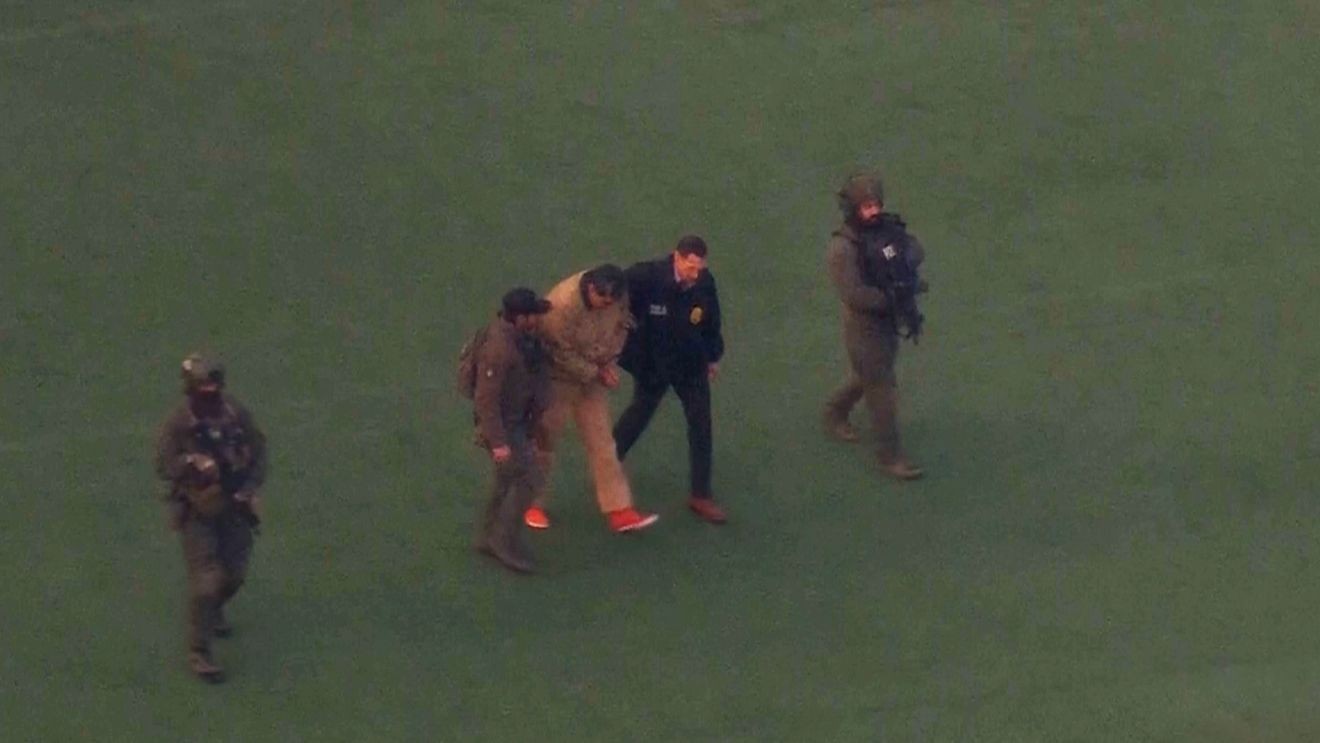
The U.S. capture of Nicolás Maduro has ignited fierce debate both internationally and domestically, with foreign governments and congressional Democrats questioning President Donald Trump’s legal authority to conduct the operation without congressional approval.
The central dispute revolves around constitutional powers and executive authority, with the administration maintaining it acted within its legal rights while critics argue the operation falls into a murky legal territory requiring legislative consent.
Secretary of State Marco Rubio has been at the forefront defending the administration’s position, explicitly rejecting claims that Maduro deserved protections typically granted to foreign heads of state. “Maduro was not the head of state,” Rubio stated in a series of interviews documented in a White House press release, instead characterizing him as “an illegitimate leader and an indicted drug trafficker” – language the administration considers vital to its legal justification.
The White House has anchored its authority primarily in Article II of the U.S. Constitution, which designates the president as commander-in-chief of the armed forces. Administration officials argue that because the Maduro operation was limited in scope, brief, and not a declared war, they were only required to notify Congress rather than seek permission.
This interpretation follows a well-established pattern of executive action. Presidents from both parties have historically relied on Article II powers to conduct targeted military or law-enforcement operations without formal congressional authorization. Notable precedents include President George H.W. Bush’s 1989 operation to capture Panamanian leader Manuel Noriega, President Reagan’s 1983 deployment to Grenada, President Clinton’s 1999 airstrikes in Kosovo, and President Obama’s 2011 intervention in Libya.
The common element in these cases is that when operations are limited in scope, time-sensitive, and not characterized as full-scale wars, presidents have typically claimed constitutional authority to act first and inform Congress afterward.
Administration officials have specifically framed the Maduro mission as a law-enforcement operation rather than a military invasion. This classification hinges on their assertion that Maduro was not a legitimate head of state, which they argue transforms the action from a military operation into an arrest based on existing criminal charges.
The case of Manuel Noriega serves as the administration’s primary legal precedent. Noriega was indicted in U.S. federal court on drug trafficking and money-laundering charges prior to U.S. forces entering Panama in 1989 to apprehend him – an operation ordered without prior congressional approval.
Following his capture, Noriega challenged the legality of his arrest, claiming head-of-state immunity. U.S. courts rejected these arguments, allowing his prosecution to proceed despite questions surrounding the method of capture. Noriega was ultimately convicted, establishing a significant precedent that foreign leaders could be tried in U.S. courts even when the circumstances of their apprehension were controversial.
The Trump administration has drawn heavily on this precedent, arguing that Maduro’s indictment and alleged connections to drug trafficking and hostile foreign entities place him in a comparable legal category to Noriega.
However, legal questions become more complicated regarding President Trump’s subsequent declaration that the United States will temporarily govern Venezuela until new leadership is established. This assertion has raised significant concerns among legal experts.
According to analysis in The New York Times, experts warn there exists no clear authority under either U.S. or international law permitting the United States to directly administer another sovereign nation. Without a swift transfer of power to Venezuelan authorities, such control could potentially constitute an illegal occupation under international legal standards.
The Maduro capture represents the latest chapter in the ongoing tension between executive power and congressional oversight in U.S. foreign policy, raising fundamental questions about constitutional authority, international law, and the limits of presidential action in conducting operations against foreign leaders.
Fact Checker
Verify the accuracy of this article using The Disinformation Commission analysis and real-time sources.

6 Comments
The administration’s characterization of Maduro as an “illegitimate leader and an indicted drug trafficker” is key to their legal justification. This could set an important precedent for how the U.S. handles foreign leaders it deems unfit or criminal.
You raise a good point. This could open the door for more unilateral executive action against foreign leaders the U.S. sees as problematic, which could have significant geopolitical implications.
Interesting legal and constitutional debate around this Maduro capture operation. The administration seems to be relying heavily on executive powers as commander-in-chief, but critics argue this is a murky area requiring legislative consent. I’m curious to see how this all plays out.
As someone who follows mining and commodities news, I’m curious how this Maduro situation might impact Venezuela’s mineral resources and production, given the administration’s moves against him. It could disrupt supply chains and markets in that sector.
The legal and constitutional questions here are quite complex. I appreciate the administration laying out their rationale, but I can also see the concerns from critics about overreach of executive power. It will be interesting to see how this all unfolds.
Curious to hear more details on the administration’s legal justification for this operation. The “indicted drug trafficker” label seems important, but I’d want to understand the full scope of their legal argument. This could set a precedent with wider implications.