


Listen to the article
#
False Claim Circulates Online About Muslim Voters in BMC Elections
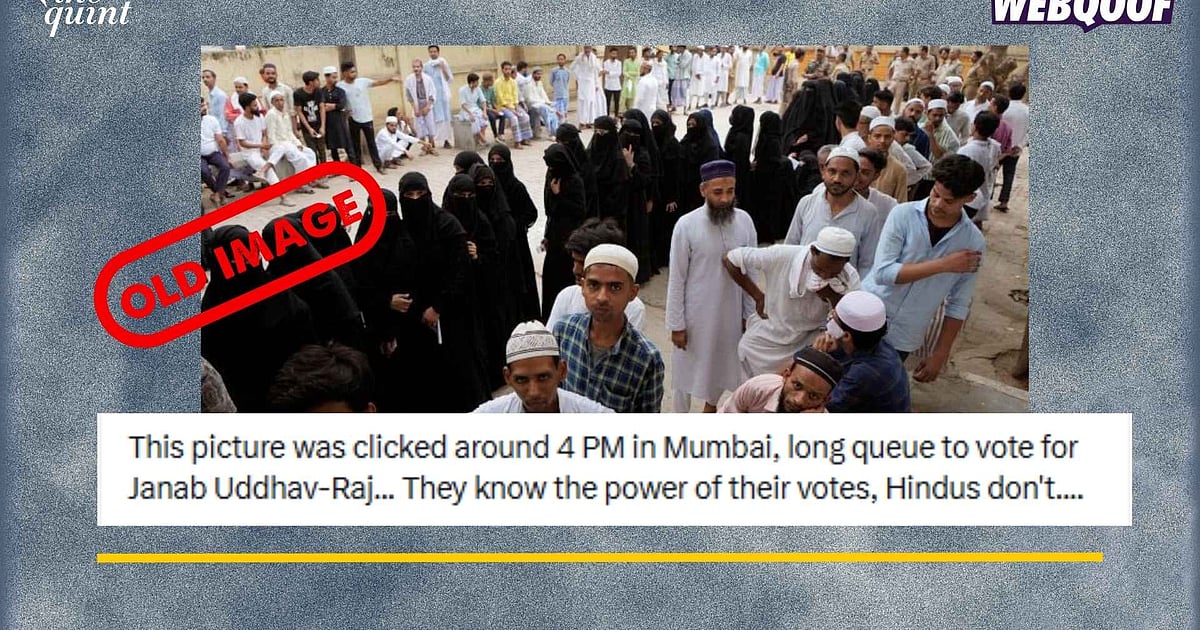
A misleading image purporting to show Muslim voters queuing to vote in the Brihanmumbai Municipal Corporation (BMC) elections has been circulating on social media platforms, fueling communal tensions through false claims.
The viral posts claim the photograph captures Muslim voters standing in line at approximately 4 pm in Mumbai during the ongoing BMC elections. According to these posts, those pictured were allegedly voting for the Shiv Sena (UBT)–Maharashtra Navnirman Sena (MNS) alliance. The posts further implied a divisive comparison, suggesting Muslims were more “aware” of their voting power compared to Hindu voters.
Fact-checking reveals these claims are entirely false. The image in question is from 2024 and has no connection to the BMC elections currently underway. The deliberate misrepresentation appears designed to stoke communal divisions among Mumbai’s diverse population during a politically sensitive period.
The BMC, India’s richest municipal corporation with an annual budget exceeding ₹50,000 crore ($6 billion), oversees crucial civic functions in India’s financial capital. Elections to this powerful body historically witness intense political competition, with parties often attempting to consolidate votes along religious and linguistic lines.
Mumbai’s demographic diversity makes it particularly vulnerable to such divisive messaging. The city houses significant populations of various religious communities, including Hindus, Muslims, Christians, Jains, Buddhists, and others, who have generally maintained peaceful coexistence despite occasional political tensions.
This incident reflects a troubling pattern of misinformation targeting electoral processes in India, particularly through social media channels. Political analysts note that such misleading claims typically intensify during election periods as parties vie for influence among different voting blocs.
The Shiv Sena (UBT), led by former Maharashtra Chief Minister Uddhav Thackeray after a split in the original Shiv Sena, and the Maharashtra Navnirman Sena (MNS), headed by Raj Thackeray, represent significant political forces in Mumbai’s municipal politics. While these parties have historically appealed to Marathi-speaking voters, they have in recent years attempted to broaden their support base.
“Misrepresentation of voter behavior along religious lines can potentially influence genuine electoral outcomes by creating false narratives about voting patterns,” noted an electoral analyst who requested anonymity. “It’s particularly concerning when such claims circulate widely without verification.”
Digital rights advocates have raised concerns about the increasing sophistication of election-related misinformation in India, particularly content designed to exploit existing social divisions. Many have called for greater platform accountability and improved digital literacy to counter such manipulative content.
Voter turnout has been a persistent concern in urban elections across India, including in Mumbai. The BMC elections typically see participation rates between 50-55%, lower than state or national elections. This context makes claims about differential voting enthusiasm among religious communities particularly sensitive.
Election Commission officials have repeatedly urged voters to verify information from official sources and report misleading electoral content to appropriate authorities.
Citizens are advised to rely on official election commission announcements and credible news sources for accurate information about voting processes and results rather than unverified social media posts, particularly those with communal overtones.
As Mumbai’s electoral process continues, authorities remain vigilant against misinformation that could potentially disrupt the peaceful conduct of elections in one of India’s most important urban centers.
Fact Checker
Verify the accuracy of this article using The Disinformation Commission analysis and real-time sources.

10 Comments
This is a concerning example of how social media can be weaponized to distort reality and stir up tensions. I’m glad the article provides the facts to debunk this misleading claim. Maintaining the integrity of elections is critical for a healthy democracy.
Agreed. Disinformation campaigns that target minority communities are especially pernicious. It’s crucial that trusted sources provide accurate, impartial information to counter these tactics and protect the fairness of the electoral process.
This seems like another attempt to sow division and spread misinformation. It’s important to verify claims like this before sharing them, especially around sensitive political issues. I hope the authorities can address the root causes behind these misleading posts.
Agreed. Fact-checking is crucial to counter the spread of disinformation, which can have real consequences for communities. We should be vigilant about verifying claims, especially during election periods.
This is a disturbing instance of how social media can be used to spread divisive narratives and undermine democratic institutions. I’m glad the fact-checking article sets the record straight. Maintaining trust in the electoral process should be a priority for all citizens.
Well said. Fact-checking and media literacy are crucial tools to combat the erosion of trust in our democratic systems. Responsible reporting that upholds the principles of fairness and accuracy is essential, especially during sensitive political periods.
The attempt to falsely link this image to the BMC elections is a clear example of the kind of misinformation we need to be vigilant about. I hope the public remains discerning and relies on credible sources to form their views on important civic matters.
It’s disappointing to see false narratives emerge around something as fundamental as the right to vote. Regardless of one’s background, every eligible citizen should be able to participate freely in the democratic process. I hope the authorities take firm action against those spreading this kind of divisive content.
Misleading images like this that try to portray voter demographics in a divisive way are concerning. The article rightly points out this is an attempt to stoke communal tensions. I hope the public remains discerning and focuses on the real issues at stake in these elections.
Absolutely. Responsible reporting and media literacy are so important to help the public navigate politically charged misinformation. This serves as a reminder to always cross-check sources and be wary of agendas behind viral content.