


Listen to the article
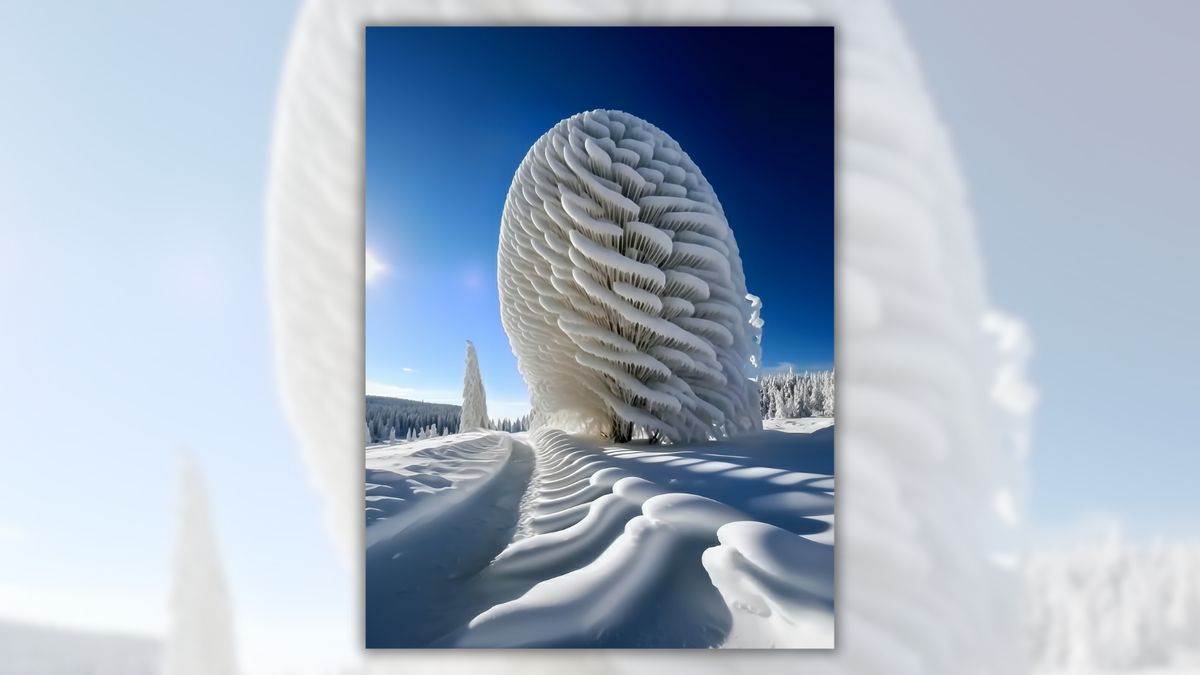
As winter approached many regions of the United States in November 2025, a striking image began circulating across social media platforms, allegedly showing a tree in Alaska completely encased in an unusual, fungi-shaped ice formation. The image quickly captivated users on Facebook, X (formerly Twitter), and Instagram, with many marveling at what one poster described as “a natural ice sculpture carved solely by the Alaskan winter.”
However, closer examination reveals the image is fake, almost certainly created using generative artificial intelligence technology.
Several telltale signs expose the fabricated nature of the photograph. Most notably, branches around the tree’s base blur together unnaturally – a common indicator of AI-generated imagery. Viewers with sharp eyes would also notice ice tendrils on the right side of the tree that appear disconnected from the main structure, defying physical logic.
The shadows throughout the image present another clear problem. They lack consistency, with some not aligning with the apparent light source and others failing to match the shape and depth created by the spacing between branches.
Nature photography experts point out additional inconsistencies that further undermine the image’s authenticity. Snow, known for its high reflectivity, would typically appear glistening in a photograph taken in natural light. More tellingly, the perfect rounded edges visible across all surfaces in the image would be virtually impossible to form naturally in freezing conditions.
Digital forensics provides even more evidence of manipulation. A detailed examination reveals faint black grid lines around the primary tree’s edges – likely the remnants of a structural outline created to guide the AI generation process but not fully removed in the final version.
The image appears to have originated from a Facebook account called “Ethereal Earth,” which describes itself as a “digital creator.” The page has a documented history of sharing both authentic and AI-generated imagery. Its introduction notably states that “Some images may be depictions with sole purpose of sparking interest in Earth and especially nature” and includes the hashtag “artwork” – a subtle disclaimer about the manufactured nature of some content.
When contacted about the image, page managers did not immediately respond to requests for comment.
A reverse-image search found no instances of the photograph prior to mid-November 2025, and no photographer was credited in any postings. Significantly, no credible nature or photography publications shared or validated the image, with search results consistently leading back to the Ethereal Earth Facebook page.
Further technological verification came from the AI-detection platform Hive Moderation, which determined with 99.5% certainty that the photograph was AI-generated. While such detection tools aren’t infallible, the high confidence rating combined with the numerous visual inconsistencies provides compelling evidence of the image’s fabricated nature.
This isn’t the first instance of AI-generated nature imagery fooling social media users. Similar cases have included fabricated scenes of wolves protecting piglets from mountain lions and geese sharing nests with bald eagles – all created to generate engagement through their unusual or heartwarming characteristics.
As AI image generation technology becomes increasingly sophisticated, distinguishing between authentic and fabricated nature photography grows more challenging. Digital literacy experts recommend scrutinizing unusual images for inconsistent lighting, physically impossible elements, and perfect symmetry – all hallmarks of AI generation that contradict the beautiful but imperfect patterns of natural phenomena.
The widespread sharing of this “ice tree” highlights the growing need for critical evaluation of extraordinary natural imagery, especially as winter weather inspires increased sharing of spectacular cold-weather phenomena across social platforms.
Fact Checker
Verify the accuracy of this article using The Disinformation Commission analysis and real-time sources.

33 Comments
The cost guidance is better than expected. If they deliver, the stock could rerate.
Good point. Watching costs and grades closely.
Good point. Watching costs and grades closely.
Nice to see insider buying—usually a good signal in this space.
Good point. Watching costs and grades closely.
Production mix shifting toward Fact Check might help margins if metals stay firm.
Good point. Watching costs and grades closely.
Good point. Watching costs and grades closely.
Nice to see insider buying—usually a good signal in this space.
Good point. Watching costs and grades closely.
Good point. Watching costs and grades closely.
Production mix shifting toward Fact Check might help margins if metals stay firm.
Good point. Watching costs and grades closely.
The cost guidance is better than expected. If they deliver, the stock could rerate.
Good point. Watching costs and grades closely.
Good point. Watching costs and grades closely.
Silver leverage is strong here; beta cuts both ways though.
Good point. Watching costs and grades closely.
Good point. Watching costs and grades closely.
If AISC keeps dropping, this becomes investable for me.
Good point. Watching costs and grades closely.
Good point. Watching costs and grades closely.
Uranium names keep pushing higher—supply still tight into 2026.
Good point. Watching costs and grades closely.
Good point. Watching costs and grades closely.
Production mix shifting toward Fact Check might help margins if metals stay firm.
Good point. Watching costs and grades closely.
Exploration results look promising, but permitting will be the key risk.
Good point. Watching costs and grades closely.
Good point. Watching costs and grades closely.
The cost guidance is better than expected. If they deliver, the stock could rerate.
Production mix shifting toward Fact Check might help margins if metals stay firm.
Good point. Watching costs and grades closely.