


Listen to the article
Political interpretations of the same video evidence in the Minnesota ICE shooting have highlighted how partisan viewpoints can shape conclusions about a controversial incident.
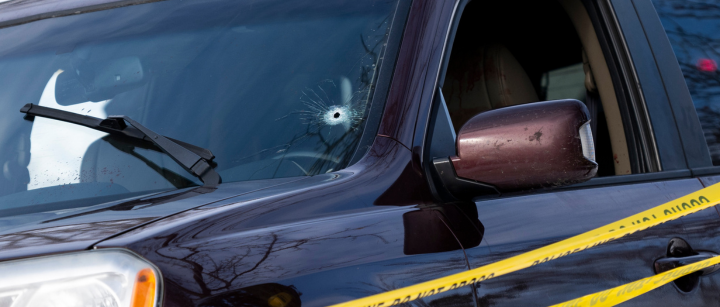
In the aftermath of the January 7 shooting that left 37-year-old Renee Nicole Good dead in Minneapolis, both Republican and Democratic officials have drawn dramatically different conclusions from the same bystander videos. The incident involved an Immigration and Customs Enforcement agent who shot Good during an encounter with her vehicle on a residential street.
Former President Donald Trump quickly posted a video clip of the shooting on Truth Social, asserting that Good had “violently, willfully, and viciously ran over the ICE Officer, who seems to have shot her in self defense.” Department of Homeland Security Secretary Kristi Noem described the incident as “an attempt to kill or to cause bodily harm to agents, an act of domestic terrorism,” adding that the officer “fired defensive shots” because he was “fearing for his life.” Vice President JD Vance similarly stated, “She was trying to ram this guy with his — with her car.”
Minnesota Democratic officials offered starkly different interpretations. Minneapolis Mayor Jacob Frey directly challenged the self-defense narrative, stating, “That is bullshit. This was an agent recklessly using power that resulted in somebody dying, getting killed.” Governor Tim Walz criticized Noem for having “already determined who this person [Good] was, what their motive was,” calling the shooting death “for no reason whatsoever.”
Experts say such divergent interpretations of video evidence are not only common but nearly inevitable in politically charged cases. Seth W. Stoughton, a law professor at the University of South Carolina, explained, “People can disagree about the underlying facts of what happened… even when people agree about the facts, they can disagree about the conclusions that can be drawn from those facts.”
The early videos show ICE officers approaching an SUV partially blocking traffic. One officer approaches the driver’s window and reaches for the door handle while another walks in front of the vehicle. In less than five seconds, the car backs up then moves forward, and the officer at the front draws his weapon and fires while moving to the side as the vehicle speeds away.
Ed Obayashi, a use-of-force expert and deputy sheriff in California, cautioned that “it is too premature” to make conclusions. “The investigation is at its baby stages. It’s going to take months and months, if not a year or more, to come to a conclusion.”
John R. Black, a former law enforcement officer who has served as an expert witness in police practices cases, emphasized that “all the video does is demonstrate the need for questions,” adding that video “by itself, can never be conclusionary.”
Cognitive biases play a significant role in how people interpret such footage. Stoughton cited motivated reasoning and confirmation bias as factors that lead viewers to interpret information in ways that reinforce their existing worldviews and identities. “A progressive Democrat who identifies, in part, as being anti-immigration enforcement and a MAGA Republican who identifies, in part, as staunchly supportive of the administration’s immigration crackdown are motivated to see the same incident very differently,” he explained.
Investigators will need to gather substantial additional evidence beyond the videos, including witness statements, forensic analysis of bullet trajectories, and comprehensive reconstruction of the event. Initially, the FBI and Minnesota Bureau of Criminal Apprehension were jointly investigating, but now the FBI is solely leading the probe, a decision Governor Walz has criticized.
For a complete assessment of whether deadly force was justified, investigators must determine several critical factors: whether the agent unnecessarily put himself in the vehicle’s path, whether a reasonable officer would have perceived the vehicle’s movement as a threat of serious harm or death, and whether the agent could have reasonably avoided the threat by stepping aside rather than shooting.
As Stoughton concluded, “Video can be highly informative. However, the existence of video does not assure complete agreement about what happened or how the facts should be characterized.”
Fact Checker
Verify the accuracy of this article using The Disinformation Commission analysis and real-time sources.

10 Comments
Reasonable people can disagree on the details and implications of this event. However, rushing to conclusions without a full understanding of the circumstances is unwise. I look forward to seeing the findings of an impartial investigation.
This shooting seems to have become another flashpoint in the polarized political landscape. While the details are still emerging, I hope officials on all sides can come together to seek the truth and find ways to prevent such tragedies in the future.
This is a tragic and complex incident. It’s concerning to see how political affiliations can shape such divergent interpretations of the same video evidence. A thorough, impartial investigation is crucial to determine the facts and ensure justice is served.
The stark partisan divide in reactions to this shooting highlights the need for greater objectivity and transparency when it comes to use of force incidents. I hope a comprehensive review can shed light on what exactly transpired and why.
The divergent political reactions to this shooting video are very troubling. I hope officials on all sides can put aside partisan agendas and work together to conduct a comprehensive, impartial investigation. Uncovering the full facts should be the priority.
The differing political interpretations of this shooting video are deeply concerning. I hope investigators can cut through the noise and establish a clear, impartial account of the events. Transparency and accountability should be the priorities here.
Tragically, this incident has become a partisan football. I think we need to wait for the full facts to come to light before making definitive judgments. An objective, thorough investigation is crucial to understand what really happened and why.
I agree, knee-jerk partisan reactions rarely lead to constructive solutions. Careful examination of the evidence is the best path forward.
This is a sensitive and complex incident that deserves a measured, fact-based response. I’m troubled to see how quickly it has become embroiled in partisan politics. A thorough, unbiased investigation is needed to determine what truly happened.
Well said. Letting politics cloud the pursuit of truth and justice in these situations is counterproductive and dangerous.