


Listen to the article
Online Seed Scam Leaves Gardener with Unexpected Results
A Webster, NY gardener’s curiosity about brightly colored hostas advertised online led to disappointment and confirmation of what experts had long suspected – the vibrant, multicolored hostas seen in online advertisements simply don’t exist.
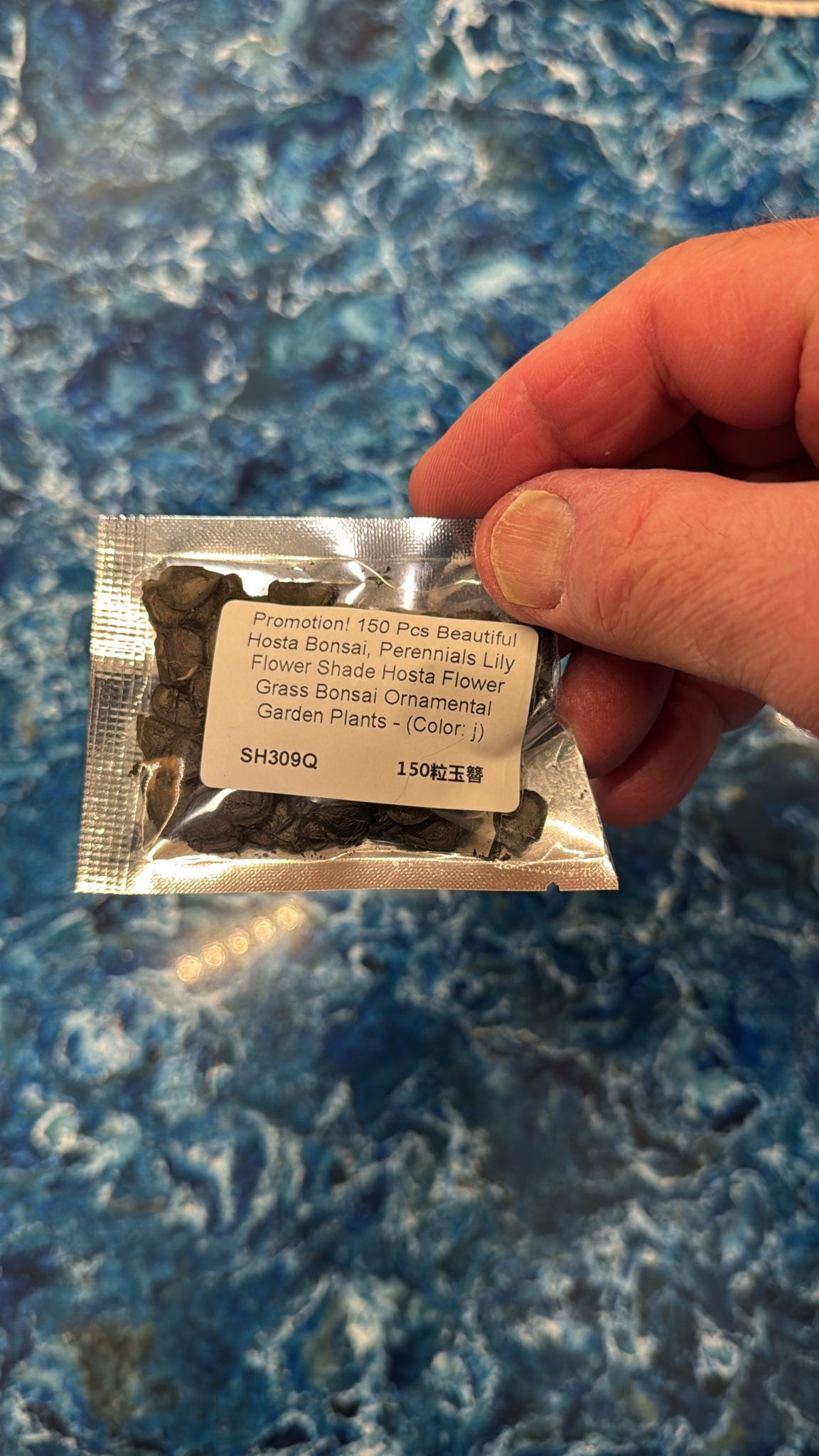
Parker Zack, who describes himself as an avid gardener, was scrolling through Etsy when an advertisement for bright red hostas caught his attention. Despite his botanical knowledge and initial skepticism, Zack couldn’t resist the possibility that these extraordinary plants might be real.
“It was so breathtaking,” Zack recalled. “I thought, this can’t be possible. It’s gotta be fake. But I kept thinking, what if it’s not.” This curiosity led him to spend $10.50 on a packet of seeds that promised to grow into the vivid hostas depicted in the advertisement.
Bill Hegeman, president of the Genesee Valley Hosta Society, confirmed what many horticulturists already know – such dramatically colored hostas don’t exist in nature. While legitimate hostas do come in various shades of green, blue-green, and may feature white or cream variegation, they never display the rainbow of bright colors shown in these deceptive online advertisements.
“None of them have the vivid colors like you see in these ads and stuff. It’s all fake,” Hegeman stated, highlighting a growing problem in online plant sales where digitally altered or AI-generated images are used to sell commonplace or entirely different plants.
To verify the nature of these advertisements, News10NBC consulted Christopher Schwartz, a research scientist with RIT’s Deepfake Detection Project. After examining the photos and video advertisements, Schwartz concluded they were almost certainly AI-generated.
“First and foremost, there’s just a lot of unnaturalness in the physics of the video,” Schwartz explained. “There’s also some odd physics to the hostas themselves, to the people. If you look closely at some of the images, you’ll see the hands are kind of weird.”
These sophisticated fake images represent a troubling trend in e-commerce platforms where artificial intelligence tools are increasingly being used to create convincing but entirely fictional products. The scam targets gardening enthusiasts looking for unique additions to their landscapes.
Zack’s story didn’t end with the purchase. Determined to discover what would actually grow from these supposed “exotic hosta seeds,” he planted them in pots outside his driveway and monitored them throughout the summer.
“They took all summer to grow. But finally, they revealed who they were,” Zack said.
The results were underwhelming but revealing – instead of colorful hostas, the seeds produced plants that appeared to belong to the aloe family, entirely different from the hostas advertised. While disappointed, Zack was somewhat relieved that actual living plants emerged from the seeds rather than nothing at all.
“It was kind of a consolation prize. Okay, at least they’re something legit. But it’s disturbing to think how many people fall for that. And if I could fall for it, knowing what I know botanically, then anybody could fall for it,” Zack reflected.
News10NBC attempted to contact the Etsy seller for comment but received no response. When reporters later checked the listing, it had been removed with a message stating “This item is unavailable.”
This incident highlights a broader challenge for online marketplaces and consumers alike. With increasingly sophisticated digital manipulation tools widely available, verification of product authenticity becomes more difficult, particularly for seasonal items like seeds where the deception may not be discovered until months after purchase.
Garden experts recommend researching unfamiliar plant varieties through established horticultural societies or extension services before purchasing, particularly if the plants display characteristics never before seen in nature.
Fact Checker
Verify the accuracy of this article using The Disinformation Commission analysis and real-time sources.

30 Comments
Exploration results look promising, but permitting will be the key risk.
Good point. Watching costs and grades closely.
Good point. Watching costs and grades closely.
Interesting update on Man Discovers ‘Suspicious’ Seeds Yield Plants Unlike Expected Hostas. Curious how the grades will trend next quarter.
Production mix shifting toward Fact Check might help margins if metals stay firm.
If AISC keeps dropping, this becomes investable for me.
Good point. Watching costs and grades closely.
Nice to see insider buying—usually a good signal in this space.
Nice to see insider buying—usually a good signal in this space.
Good point. Watching costs and grades closely.
If AISC keeps dropping, this becomes investable for me.
Good point. Watching costs and grades closely.
Production mix shifting toward Fact Check might help margins if metals stay firm.
Good point. Watching costs and grades closely.
Good point. Watching costs and grades closely.
Interesting update on Man Discovers ‘Suspicious’ Seeds Yield Plants Unlike Expected Hostas. Curious how the grades will trend next quarter.
Good point. Watching costs and grades closely.
Silver leverage is strong here; beta cuts both ways though.
Good point. Watching costs and grades closely.
Good point. Watching costs and grades closely.
The cost guidance is better than expected. If they deliver, the stock could rerate.
Good point. Watching costs and grades closely.
Good point. Watching costs and grades closely.
Nice to see insider buying—usually a good signal in this space.
Good point. Watching costs and grades closely.
Interesting update on Man Discovers ‘Suspicious’ Seeds Yield Plants Unlike Expected Hostas. Curious how the grades will trend next quarter.
Good point. Watching costs and grades closely.
Production mix shifting toward Fact Check might help margins if metals stay firm.
Uranium names keep pushing higher—supply still tight into 2026.
Good point. Watching costs and grades closely.