


Listen to the article
Fact-Check: No Evidence of Louvre Jewels Recovered in Ukrainian Billionaire’s Possession
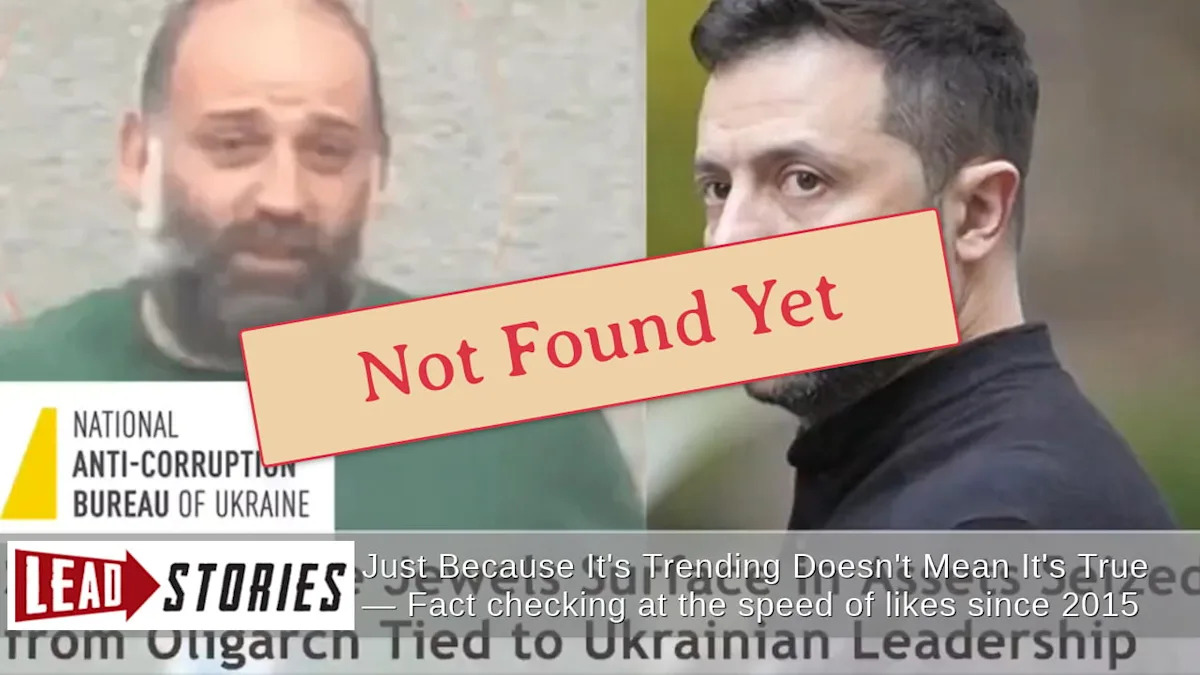
Claims that Ukrainian investigators recovered jewels stolen from the Louvre museum among the possessions of a billionaire linked to President Volodymyr Zelenskyy have been debunked as false, according to multiple European fact-checking organizations.
The allegations, which circulated on social media platforms in late November, stated that the National Anti-Corruption Bureau of Ukraine (NABU) had discovered items from Marie-Louise of Austria’s jewelry collection during raids targeting businessman Timur Mindich, described as a close associate of the Ukrainian president.
The viral video claimed investigators had found an emerald necklace and earrings from the imperial jewelry set valued at approximately €15 million, which was reportedly stolen from the Louvre on October 19, 2025.
However, NABU has officially denied these claims. The anti-corruption agency has not published any information about such discoveries on its social media channels or official website. A thorough review of the agency’s communications reveals no mention of recovered Louvre artifacts or investigations targeting Mindich in connection with the theft.
Both Belgian broadcaster VRT and German news outlet Deutsche Welle conducted independent investigations into the claims, concluding the video was fabricated using artificial intelligence. Their analysis revealed several critical inconsistencies, including that the jewels depicted in the video did not match those actually stolen from the Louvre.
“The video is fake and a product of either pro-Kremlin propaganda or someone who wants to spread disinformation,” stated the Deutsche Welle fact-check report.
The original social media post alleged that Mindich, described as a former co-owner of Kvartal 95 Studio (the production company founded by Zelenskyy), had escaped to Israel before the searches were conducted. The post claimed NABU had accused Mindich of corrupt activities in the energy sector involving approximately $100 million in laundered funds.
Further undermining the claim’s credibility, French media outlets—which would typically provide extensive coverage of developments regarding such a high-profile theft from one of the country’s premier cultural institutions—have not reported any recovery of the stolen items. A comprehensive search of French and international news sources returns only articles about the initial theft and subsequent arrests of suspects, with no mention of recovered artifacts.
The fabricated story appears to combine elements of actual events—the Louvre theft did occur in October 2025—with fictional claims about Ukrainian political figures. This type of misinformation follows a pattern of fabricated content targeting Ukrainian leadership that has circulated amid the ongoing Russia-Ukraine conflict.
Fact-checkers note that the timing and nature of such disinformation often aligns with broader campaigns to undermine international support for Ukraine by suggesting corruption at the highest levels of government.
The false claim emerges during a particularly sensitive period for Ukraine, as the country continues to navigate complex relationships with international allies while managing domestic anti-corruption efforts.
Experts warn that sophisticated AI-generated content increasingly blurs the line between fact and fiction in international news, requiring heightened vigilance from media consumers. The case demonstrates how readily artificial intelligence tools can be deployed to create convincing but entirely fabricated narratives that target prominent political figures.
NABU continues its legitimate anti-corruption work in Ukraine, but as of this report, there is no evidence connecting Ukrainian officials to the Louvre theft or suggesting any recovery of the stolen imperial jewels.
Fact Checker
Verify the accuracy of this article using The Disinformation Commission analysis and real-time sources.

31 Comments
Exploration results look promising, but permitting will be the key risk.
Good point. Watching costs and grades closely.
Good point. Watching costs and grades closely.
The cost guidance is better than expected. If they deliver, the stock could rerate.
If AISC keeps dropping, this becomes investable for me.
Good point. Watching costs and grades closely.
If AISC keeps dropping, this becomes investable for me.
Exploration results look promising, but permitting will be the key risk.
Good point. Watching costs and grades closely.
Good point. Watching costs and grades closely.
The cost guidance is better than expected. If they deliver, the stock could rerate.
Good point. Watching costs and grades closely.
Good point. Watching costs and grades closely.
Silver leverage is strong here; beta cuts both ways though.
Uranium names keep pushing higher—supply still tight into 2026.
Good point. Watching costs and grades closely.
Good point. Watching costs and grades closely.
Nice to see insider buying—usually a good signal in this space.
Good point. Watching costs and grades closely.
Good point. Watching costs and grades closely.
Silver leverage is strong here; beta cuts both ways though.
Good point. Watching costs and grades closely.
If AISC keeps dropping, this becomes investable for me.
Silver leverage is strong here; beta cuts both ways though.
Good point. Watching costs and grades closely.
Silver leverage is strong here; beta cuts both ways though.
Good point. Watching costs and grades closely.
Good point. Watching costs and grades closely.
Uranium names keep pushing higher—supply still tight into 2026.
Good point. Watching costs and grades closely.
Good point. Watching costs and grades closely.