


Listen to the article
Democratic Campaign Ad Misleadingly Blames Republicans for Rising Burger Prices
As Americans fire up their grills for Labor Day weekend, the Democratic Congressional Campaign Committee (DCCC) is launching digital advertisements that blame House Republicans for the soaring cost of hamburgers. However, economic experts say this claim significantly oversimplifies a complex market situation driven primarily by agricultural challenges rather than congressional policy.
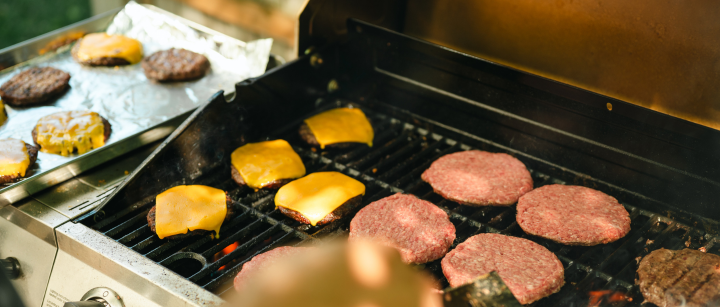
The social media campaign targeting young men in 35 Republican-held districts features images of grilled burgers with text asserting “Republicans are driving up the price of burgers,” highlighting that ground beef prices have increased 28% during Republican control of the House.
Analysis of Bureau of Labor Statistics data confirms the price surge is real – ground beef now averages $6.25 per pound as of July, compared to $4.89 in mid-2022, with a particularly steep 12.8% jump occurring this year alone. The timing of these price increases, however, correlates with agricultural challenges rather than Republican legislative actions.
Agricultural economists point to persistent drought conditions across cattle-producing regions as the primary driver behind beef price inflation. Bernt Nelson, an economist with the American Farm Bureau Federation, explained to NBC News that weather stress forced many farmers to send breeding females to market rather than keeping them to sustain herd sizes, resulting in “slow but steady contraction in the cattle herd.”
Supply chain disruptions have further complicated the beef market. In July, the Department of Agriculture suspended live cattle imports from Mexico after discovering a case of New World screwworm, a deadly livestock parasite. This restriction came at a particularly sensitive time for American beef supplies.
While the DCCC advertisement focuses on Republican inaction, experts note that the cattle supply challenges began developing years before the current Congress took office. Republicans gained House control following the 2022 midterms but didn’t assume leadership until January 2023, well after the cattle herd decline was underway.
DCCC spokesperson Viet Shelton defended the messaging, saying, “Republicans promised to lower costs on day one and by all accounts have failed miserably. Prices continue to rise, people are struggling to get by, and Republicans have all fallen in line behind sweeping tariffs that are making everyday items like beers and burgers more expensive.”
The tariff reference does highlight one area where Republican policies could potentially affect future beef prices. In early August, the Trump administration implemented 50% tariffs on certain Brazilian imports, including beef. Industry consultant Bob Chudy warned these tariffs could “effectively shut out Brazil beef from the USA, just at a time when we are critically short of beef and prices are already at record high levels.”
Imported beef constitutes approximately 20% of the U.S. beef supply, with Brazil providing nearly 30% of those imports – a significant share that has grown in recent years to compensate for domestic shortages.
This beef price debate mirrors similar political messaging from 2022, when Republicans blamed Democrats and President Biden for broader inflation concerns. Economic experts noted then that multiple factors drove inflation, including pandemic-related supply chain disruptions, stimulus spending, and Russia’s invasion of Ukraine.
The DCCC indicates this messaging campaign will continue through the midterm elections, representing an early example of how economic concerns will likely dominate political advertising in the coming election cycle. However, the simplistic attribution of beef prices to congressional control overlooks the more significant agricultural and supply chain factors that experts identify as the primary drivers of today’s higher hamburger costs.
Fact Checker
Verify the accuracy of this article using The Disinformation Commission analysis and real-time sources.

9 Comments
The DCCC’s ad campaign seems like a transparent attempt to score political points. While the price of ground beef has indeed surged, the article rightly points out that this is more closely tied to agricultural challenges than congressional policies. It’s important to avoid simplistic explanations on complex economic issues.
Well said. This is a good example of how political spin can distort the real drivers behind price fluctuations. Maintaining objectivity and examining the full context is crucial.
Interesting take on the political spin around rising beef prices. While the DCCC’s messaging may be simplistic, the underlying price surge is undeniable. I wonder how much of it is really due to agricultural challenges versus other economic factors?
That’s a good point. The article highlights how the price hikes correlate more with supply chain issues than congressional policy. It’s important to look at the full context rather than jumping to partisan conclusions.
This seems like a classic case of political finger-pointing. While the DCCC’s claims about Republicans driving up burger prices are likely an oversimplification, the data on the actual price increases is hard to ignore. I’d be curious to see a more balanced analysis of the various factors at play.
I agree, a more nuanced look at the drivers behind the beef price surge would be helpful to cut through the partisan rhetoric. Economic issues are rarely black and white.
The DCCC’s ad campaign appears to be a clear case of political posturing rather than a serious examination of the factors behind rising beef prices. While the data on price increases is accurate, the article rightly points out that the causes stem more from agricultural challenges than congressional policies. A more nuanced analysis would be helpful.
This seems like a case of the DCCC trying to capitalize on economic pain for political gain. While the price increases on beef are real, the article makes a convincing case that the causes lie more with agricultural factors than congressional actions. I’d be curious to see a less partisan analysis of the situation.
Agreed. It’s important to look beyond the political rhetoric and focus on the underlying economic realities. A more balanced assessment would help cut through the spin.