


Listen to the article
Democrats and Legal Experts Claim Trump Officials May Have Violated Espionage Act in Signal Chat Mishap
The fallout continues from a Trump administration group chat that inadvertently included a journalist during discussions of a military attack in Yemen, with some Democrats claiming the breach was not merely incompetent but criminal in nature.
Legal experts specializing in national security issues suggest these Democrats may have valid concerns, noting that a case could be made that the chat violated provisions of the Espionage Act. However, they consider it highly unlikely that the Trump administration would initiate prosecution against its own officials.
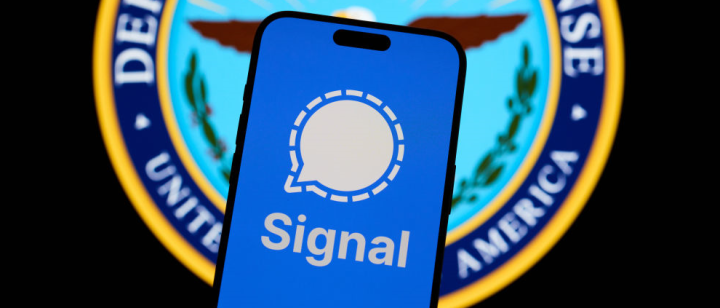
The controversy centers on a private encrypted Signal messaging app chat between top administration national security officials. Jeffrey Goldberg, editor-in-chief of The Atlantic, reported on March 24 that National Security Adviser Michael Waltz had sent him a connection request and added him to the chat. On March 26, after administration officials insisted no classified information was shared, The Atlantic published more of the messages, including what appeared to be Defense Secretary Pete Hegseth providing a timeline for impending U.S. military strikes in Yemen on March 15.
Department of Defense regulations explicitly prohibit using Signal to share “non-public DoD information.” A 2023 DoD memo states: “Unmanaged ‘messaging apps,’ including any app with a chat feature, regardless of the primary function, are NOT authorized to access, transmit, process non-public DoD information.” NPR reported that just days after the March 15 Signal chat, the Pentagon issued a warning about vulnerabilities in the Signal app, noting that “Russian professional hacking groups are employing the ‘linked devices’ features to spy on encrypted conversations.”
While House Speaker Mike Johnson called the use of Signal “a mistake,” and President Donald Trump acknowledged that Waltz — who took “full responsibility” for adding Goldberg — “has learned a lesson,” Democrats insist these responses are insufficient. House Minority Leader Hakeem Jeffries sent Trump a letter demanding Hegseth’s immediate dismissal.
Other prominent Democrats went further. Senator Elizabeth Warren posted on X: “This is blatantly illegal and dangerous beyond belief. Our national security is in the hands of complete amateurs.” Representative Jim Himes, ranking member of the House Intelligence Committee, said he was “horrified” by reports that senior national security officials shared “sensitive and almost certainly classified information” through a commercial messaging app.
Senator Jack Reed, ranking member of the Senate Armed Services Committee, emphasized the severity of the situation: “If an American service member texted classified information about an active military operation to an unknown number on an unclassified app, they would be dismissed, investigated and prosecuted.”
Legal experts point to a section of the Espionage Act that makes it illegal to share sensitive national security information “through gross negligence.” Kevin Carroll, a lawyer specializing in national security litigation and former CIA officer, was unequivocal: “It’s 100% a violation of that law.”
“If Hegseth and others were junior military personnel, they would absolutely be court-martialed,” Carroll added. “If they were civilians, they’d absolutely be prosecuted by the counter espionage section of the Justice Department.”
Secretary of State Marco Rubio, who participated in the chat, downplayed the incident, saying the Pentagon assured him that “none of the information on there at any point threatened the operation or the lives of our servicemen.” Hegseth himself posted on X that the supposed “war plans” contained “no names, no targets, no locations, no units, no routes, no sources, no methods, and no classified information.”
However, The Atlantic reported that Hegseth shared specific timing details about F-18 launches, strike windows, drone deployments, and Tomahawk launches. Carroll called Hegseth’s claim that such information wasn’t classified “preposterous,” noting that information need not be marked classified to violate the Espionage Act if it constitutes “national defense information that could be helpful to an adversary.”
Stanford law professor David Alan Sklansky agrees the Espionage Act may have been violated if the information related to military activities was “closely held” by the government and if officials exhibited “gross negligence” in handling it.
Despite the legal concerns, both experts believe charges are unlikely to be filed. “The Trump Administration has, to put it mildly, shown little interest in holding itself to account for violations of the law,” Sklansky noted.
The incident also raises questions about compliance with federal records laws, including the Presidential Records Act, which require preservation of all official government communications. Signal’s auto-delete feature was set to remove the messages after four weeks, though federal employees using non-official accounts have 20 days to provide records to federal archivists.
When asked about investigating the matter, Trump said, “It’s not really an FBI thing,” adding that he had asked Waltz “to immediately study that and find out.” White House Press Secretary Karoline Leavitt later said the National Security Council, White House counsel’s office, and “Elon Musk’s team” were looking into the issue.
Fact Checker
Verify the accuracy of this article using The Disinformation Commission analysis and real-time sources.

10 Comments
This incident highlights the tricky balance governments face in adopting new secure communication tools. The benefits of privacy need to be weighed against the risks of misuse or breaches.
Interesting to see the debate around the potential Espionage Act violations from the Signal chat mishap. It highlights the tricky balance of national security, transparency, and the use of encrypted messaging apps in government.
I’m curious to learn more about the specifics of what was discussed in the Signal chat and whether any truly classified information was shared, even inadvertently. The legal questions seem murky.
Yes, more transparency around the content would help assess the severity of the potential violations. But the encrypted nature makes that challenging.
Signal is a double-edged sword – it provides secure communication but can also enable potential misuse. This case shows the need for clear policies and training around use of encrypted apps in sensitive government settings.
The legal experts seem to raise valid concerns about the chat potentially crossing lines, even if unintentionally. But the unlikely prosecution suggests politics may play a bigger role than the letter of the law here.
Agreed, the political dynamics likely mean this incident will fade without any serious consequences, regardless of the legal merits.
While the Espionage Act implications seem questionable, the broader issue of government officials using encrypted apps for sensitive discussions is certainly worthy of scrutiny and policy review.
Agreed, this case should prompt a closer look at protocols and training around the use of encrypted messaging apps in sensitive government settings.
The legal debate around the Signal chat mishap raises important questions about the boundaries of classified information and the application of the Espionage Act in the digital age.