


Listen to the article
In the wake of a devastating fire in Hong Kong’s North Point district, a concerning trend has reemerged on social media platforms: the spread of conspiracy theories regarding urban planning concepts, specifically targeting the “15-minute city” model.
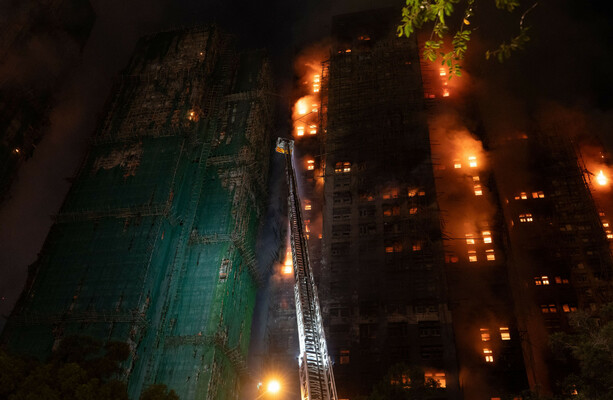
The deadly blaze, which claimed multiple lives in a densely populated residential building, has become the latest flashpoint for misinformation campaigns that frame urban design innovations as government control mechanisms rather than quality-of-life improvements.
“The horrific scenes in Hong Kong are being weaponized to spread fear about legitimate urban planning approaches,” explains Dr. Eleanor Chen, an urban development researcher at the University of California, Berkeley. “There’s a fundamental misunderstanding—either deliberate or genuine—about what 15-minute cities actually represent.”
The 15-minute city concept, pioneered by Professor Carlos Moreno of the Sorbonne University in Paris, proposes a simple principle: residents should be able to access essential services like groceries, healthcare, education, and recreation within a 15-minute walk or bike ride from their homes. The model gained significant traction during the COVID-19 pandemic when lockdowns highlighted the importance of local accessibility.
However, posts connecting the Hong Kong tragedy to these urban planning principles have garnered thousands of shares across Twitter, Facebook, and Telegram. One widely circulated claim suggests that the fire exemplifies “what happens when you force people into tightly packed living arrangements,” implying the disaster is a direct consequence of 15-minute city designs.
Urban planning experts are quick to point out the fundamental flaws in this reasoning. Hong Kong’s housing density issues predate modern urban planning concepts by decades and stem from complex historical, economic, and geographical factors unique to the region.
“Hong Kong’s extreme population density is the result of limited buildable land, extraordinarily high real estate costs, and historical development patterns—not contemporary urban planning philosophies,” notes Zhang Wei, an urban housing specialist at the Hong Kong Polytechnic University. “In fact, 15-minute city principles, properly implemented, could potentially improve safety and quality of life in dense urban environments through better distributed resources and reduced congestion.”
This isn’t the first time the 15-minute city concept has faced misinformation campaigns. Throughout 2022 and 2023, similar claims circulated widely, particularly as cities like Oxford, England, and Portland, Oregon, announced initiatives incorporating aspects of the model. Critics mischaracterized traffic management schemes and zoning proposals as government attempts to restrict movement and confine populations.
The conspiracy theories often align with broader anti-government narratives that gained momentum during the pandemic. They frequently invoke references to climate lockdowns, surveillance states, and the World Economic Forum’s “Great Reset” initiative—weaving disparate elements into a coherent but factually baseless narrative.
Social media platforms have struggled to contain the spread of such misinformation. While some platforms have implemented fact-checking measures, the emotionally charged nature of disaster-related content complicates moderation efforts.
Urban planning advocates worry that these persistent conspiracy theories could hamper legitimate efforts to create more livable, sustainable cities as climate change and urbanization create new challenges for metropolitan areas worldwide.
“When we allow misinformation to dominate public discourse about urban planning, we lose valuable opportunities to have productive conversations about the future of our cities,” says Marco Alvarez, director of the Institute for Sustainable Urban Development. “The 15-minute city concept isn’t about control—it’s about convenience, community building, and reducing carbon emissions through decreased reliance on cars.”
For residents of cities considering such models, experts recommend seeking information directly from official planning documents and public consultations rather than social media claims. Most implementations involve gradual changes to existing infrastructure and expanded transportation options rather than restrictive policies.
As investigations into the Hong Kong fire continue, urban safety experts emphasize that meaningful improvements to building standards, emergency response systems, and housing accessibility would serve residents better than unfounded conspiracy theories that distract from addressing real urban challenges.
Fact Checker
Verify the accuracy of this article using The Disinformation Commission analysis and real-time sources.

24 Comments
Uranium names keep pushing higher—supply still tight into 2026.
Good point. Watching costs and grades closely.
Nice to see insider buying—usually a good signal in this space.
I like the balance sheet here—less leverage than peers.
Silver leverage is strong here; beta cuts both ways though.
Good point. Watching costs and grades closely.
The cost guidance is better than expected. If they deliver, the stock could rerate.
Good point. Watching costs and grades closely.
Good point. Watching costs and grades closely.
Exploration results look promising, but permitting will be the key risk.
Good point. Watching costs and grades closely.
Good point. Watching costs and grades closely.
Interesting update on Hong Kong Fire Reignites False Claims That ’15-Minute Cities’ Are Totalitarian Plot. Curious how the grades will trend next quarter.
Good point. Watching costs and grades closely.
Good point. Watching costs and grades closely.
Interesting update on Hong Kong Fire Reignites False Claims That ’15-Minute Cities’ Are Totalitarian Plot. Curious how the grades will trend next quarter.
Good point. Watching costs and grades closely.
Good point. Watching costs and grades closely.
The cost guidance is better than expected. If they deliver, the stock could rerate.
Good point. Watching costs and grades closely.
Good point. Watching costs and grades closely.
I like the balance sheet here—less leverage than peers.
Good point. Watching costs and grades closely.
Good point. Watching costs and grades closely.