


Listen to the article
AI-Generated Videos Falsely Show Muslims Complaining About Life in Australia
A Facebook page operated from Sri Lanka has been spreading misinformation through AI-generated videos that falsely depict Muslims complaining about aspects of life in Australia, according to an investigation by AAP FactCheck.
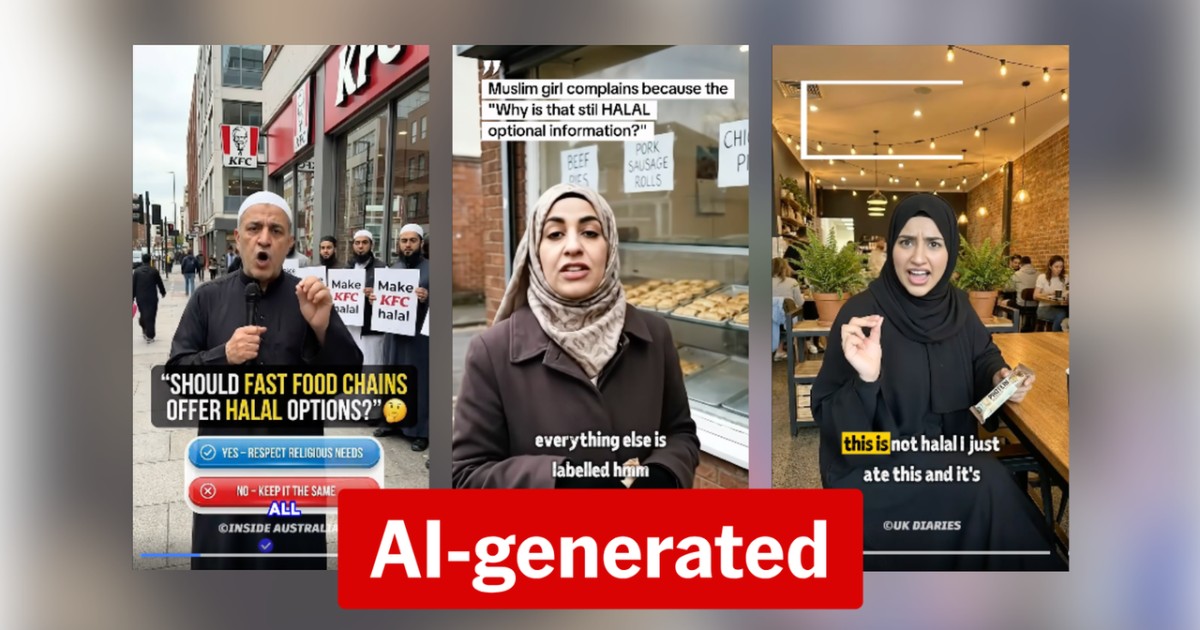
The page, called “Inside Australia,” regularly posts synthetic videos showing individuals who appear to be immigrants making unreasonable demands or complaining about their treatment in Australia. Recent videos specifically target Muslim individuals, portraying them as dissatisfied with the availability of halal food in the country.
One widely circulated clip, which has garnered over 1.6 million views, features an AI-generated woman in a burka claiming her biggest challenge since moving to Australia is that “there is too much pork in the shops.” In another video, a woman eating what appears to be a chicken sandwich complains, “I just bought this chicken wrap and it’s not halal,” before adding, “There is no clear warning anywhere on the label. Why can’t companies just clearly say if it’s halal or not? It’s not that hard. This needs to change.”
Halal food, which complies with Islamic dietary laws, is particularly important for observant Muslims, especially regarding animal products. The videos appear designed to stoke tension around cultural integration in Australia, where the Muslim community makes up approximately 3.2% of the population.
However, AAP FactCheck has identified numerous telltale signs of artificial intelligence manipulation in these videos. Google Images searches revealed hidden digital watermarks indicating AI generation. The videos also contain multiple visual anomalies typical of synthetic media, including unnaturally smooth skin textures, erratic lip-syncing, inconsistent accents, and gibberish text in background elements.
In one particularly obvious example, a butcher shop sign visible in the background advertises nonsensical meat products like “pork lugs” and “shicket” — terms that don’t exist in the meat industry. Another video shows a woman holding a burger that mysteriously morphs back into an unopened package mid-scene.
The fabricated nature of these videos becomes even more apparent in a clip allegedly showing a protest at a KFC restaurant over the lack of halal options. While the audio features chants of the Arabic expression “wallah,” none of the visible protesters are actually moving their mouths.
This isn’t the first time AAP FactCheck has debunked content from the Inside Australia page. According to Facebook’s transparency details, the page is managed from Sri Lanka, not Australia, despite its misleading name.
The spread of such synthetic content highlights growing concerns about AI’s role in creating and amplifying divisive narratives about immigration and cultural integration. Social media platforms continue to struggle with effectively identifying and limiting the spread of such misleading AI-generated content.
Screenshots from these fabricated videos have been further shared by other Facebook pages, amplifying the misinformation. One such post falsely claimed a Muslim woman had “gone viral” after discovering her chicken sandwich was not halal, further spreading the artificial narrative.
As AI-generated content becomes increasingly sophisticated, media literacy experts emphasize the importance of scrutinizing unusual visual elements, inconsistent text, and improbable scenarios as potential indicators of synthetic media.
Fact Checker
Verify the accuracy of this article using The Disinformation Commission analysis and real-time sources.

13 Comments
The use of AI-generated videos to misrepresent the concerns of minority communities is deeply troubling. We should condemn such tactics and work towards building a more inclusive and understanding society.
Agreed. Fact-based, nuanced discussions are crucial to address legitimate issues without resorting to inflammatory rhetoric or misinformation.
While the concerns about halal food options may have some merit, the way they are presented in these AI-generated videos is clearly intended to provoke outrage and intolerance. We must reject such tactics and focus on constructive solutions.
This is a disturbing example of how AI can be weaponized to spread disinformation and incite hatred. We need stronger regulations and oversight to prevent such misuse of technology.
Absolutely. Fact-checking and public awareness campaigns are essential to counter the spread of these synthetic, misleading videos.
While concerns about food labeling and availability of halal options are understandable, these AI-generated videos seem designed to exaggerate and misrepresent the issues. We should strive for constructive dialogue, not inflammatory rhetoric.
Using synthetic media to portray minorities as unreasonable or ungrateful is a tactic to sow discord. I hope authorities can investigate this and hold the perpetrators accountable.
Agreed. Fact-checking and debunking these false claims is crucial to counter the spread of hate and xenophobia.
Spreading misinformation through AI-generated videos is a dangerous and unethical tactic. We need to be vigilant in identifying and debunking such attempts to sow discord and hatred in our communities.
This is a concerning example of how AI can be misused to promote harmful narratives. We must be cautious about the rise of synthetic media and its potential to manipulate public discourse.
This is concerning. Spreading misinformation through AI-generated videos to incite anti-Muslim sentiment is highly problematic and damaging. We need to be vigilant against such attempts to divide communities.
It’s disappointing to see social media being exploited in this way. We need to be vigilant and fact-check claims, especially those involving synthetic media, to prevent the spread of misinformation and division.
While the availability of halal food is a valid concern, these videos seem designed to exaggerate and distort the issue. We must be vigilant against the use of synthetic media to promote divisive narratives.