


Listen to the article
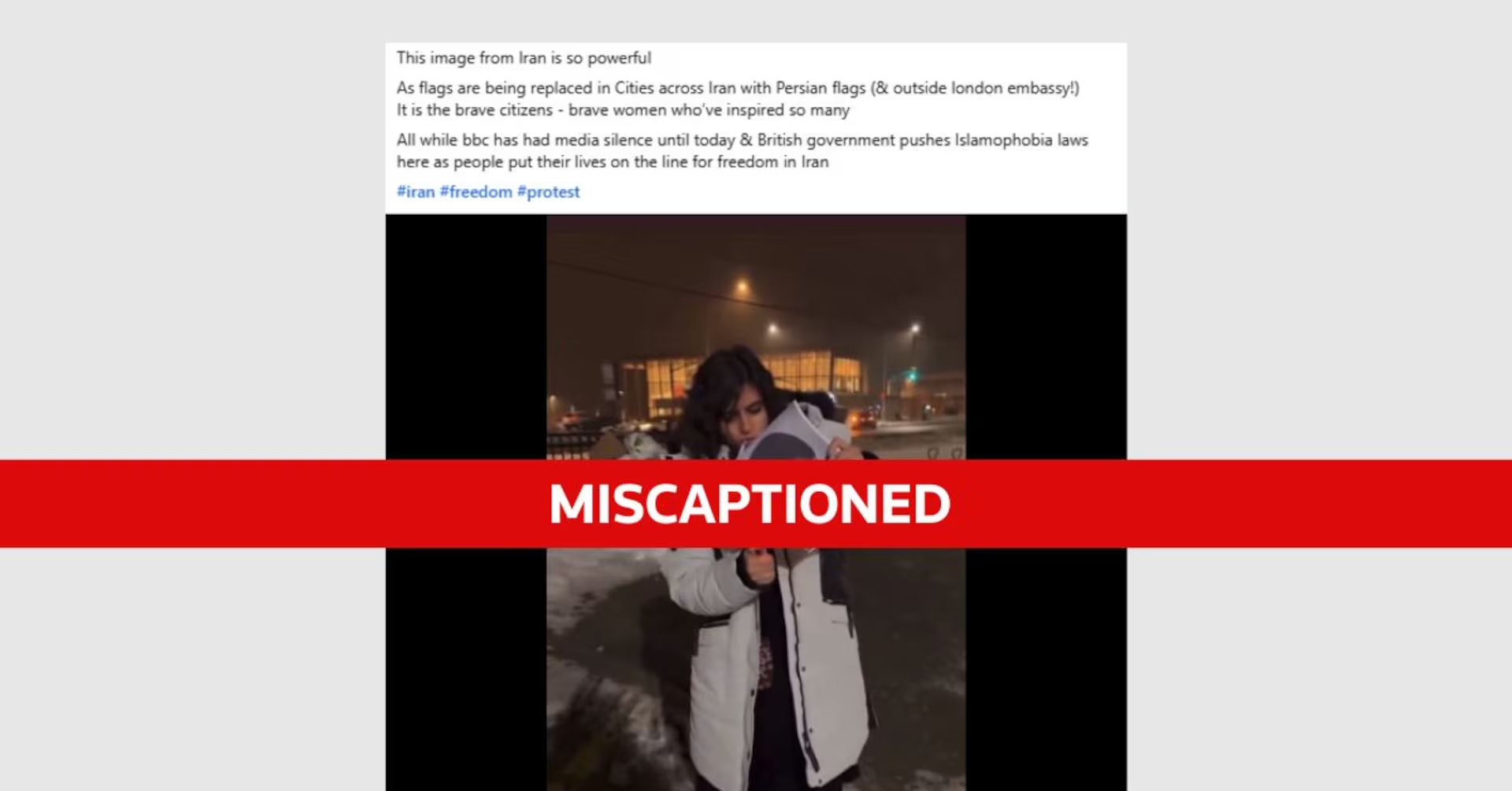
A viral video showing a woman lighting a cigarette with a burning image of Iran’s Supreme Leader was filmed in Canada, not Iran as widely claimed on social media.
The footage, which has circulated extensively across social platforms, shows a young woman in a white coat standing in a snowy area. In the video, she sets fire to a printed portrait of Ayatollah Ali Khamenei and uses the flames to relight her cigarette. The clip quickly spread with captions incorrectly identifying the location as Iran, with descriptions such as “A young woman in Iran is seen burning a photo of Ayatollah Khamenei before lighting her cigarette” and “This image from Iran is so powerful.”
A Reuters fact-check has determined the video was actually filmed outside a Canadian Imperial Bank of Commerce branch in Ontario, Canada. The Richmond Hill Public Library is clearly visible in the background of the footage, confirming the North American location rather than the Middle Eastern one claimed in viral posts.
The woman in the video operates online under the pseudonym “Morticia Addams” on social media platform X. While she did not respond to Reuters’ request for comment on the video, she has previously discussed her background in an interview with Spanish media outlet The Objective. In that January 13 interview, which she later reposted, she revealed that though she had spent most of her 23 years living in Iran, she is now living in exile in Canada while her family remains in Iran.
This context is important given the ongoing political situation in Iran. The country has experienced its largest anti-government demonstrations in years, with some human rights organizations estimating that approximately 2,600 people have been killed in the nationwide protests. The misattribution of the video’s location appears to be connected to the narrative surrounding these protests, with many viewers assuming the act of defiance must have taken place within Iran itself.
The video represents a symbolic act of protest against the Iranian regime by a member of the Iranian diaspora. Burning images of political figures is a longstanding form of political protest, and the act carries significant weight in Iranian politics, where images of the Supreme Leader hold enormous symbolic importance.
The case highlights the challenges of verifying information in the age of social media, where content can be rapidly shared with incorrect contextual details. This particular example of misinformation was relatively easy to debunk through visual verification of landmarks in the background, but demonstrates how quickly misleading claims can spread online.
For members of the Iranian diaspora community, particularly those who have fled political persecution, such symbolic protests represent a way to express solidarity with ongoing movements within Iran while remaining physically safe from potential consequences that might face those conducting similar protests inside the country.
The Reuters Fact Check team, which produced the original verification report, regularly examines viral content to help audiences distinguish between accurate and misleading information circulating online.
While the location was misrepresented, the video nonetheless reflects genuine political tensions surrounding Iran’s leadership and the ongoing struggle between the Iranian government and opposition movements both within the country and among expatriate communities worldwide.
Fact Checker
Verify the accuracy of this article using The Disinformation Commission analysis and real-time sources.

10 Comments
This case highlights the need for caution when sharing content online, as details can easily be misconstrued or taken out of context. It’s a good reminder to fact-check before amplifying potentially misleading narratives.
Agreed. Social media makes it all too easy for false information to spread rapidly. Responsible reporting and critical thinking are essential to combat the spread of disinformation.
This is a good example of how misinformation can quickly take hold online. I’m glad the location was verified, as it’s important to have accurate information, especially around sensitive political topics.
Agreed. Viral videos can be powerful, but we must be vigilant in verifying their authenticity and context before drawing conclusions or spreading them further.
Interesting fact check. It’s important to verify the accuracy of viral videos, especially when they claim to show politically charged events. Good to see the location was clarified as Canada, not Iran as initially claimed.
Yes, verifying the source and context of viral videos is crucial to avoid spreading misinformation. Kudos to Reuters for the thorough investigation.
While the act of burning an image may be provocative, it’s important to understand the full context. This fact check provides helpful clarity on the actual location and circumstances behind the viral video.
Absolutely. Without proper context, such incidents can be easily misinterpreted and used to further polarize discussions. Fact-checking is crucial for maintaining truthful and balanced narratives.
The clarification that this incident occurred in Canada, not Iran, is an important fact to establish. It’s a good reminder that we shouldn’t jump to conclusions based on limited information or unverified claims.
Absolutely. Fact-checking is crucial in an age of rapid information sharing. This case demonstrates the need for responsible reporting and critical analysis before amplifying potentially misleading narratives.