


Listen to the article
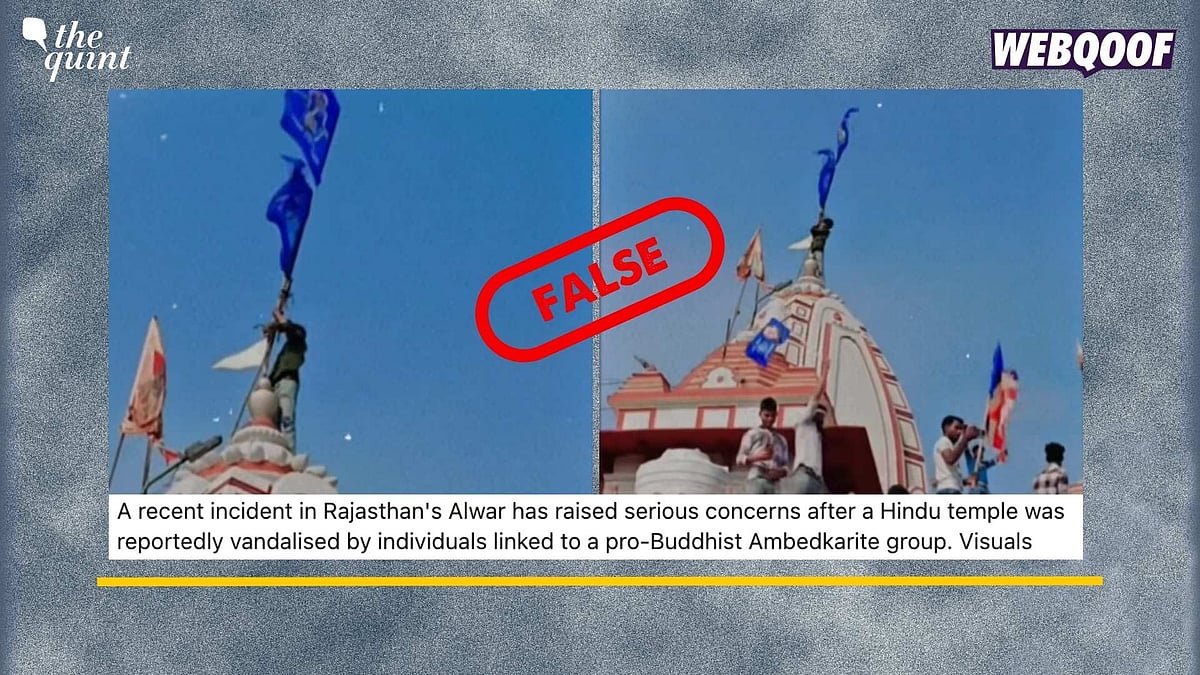
A video clip showing vandalism at a temple in Alwar, Rajasthan has begun circulating across social media platforms, with claims that it depicts a recent incident of religious desecration. The footage, which shows individuals damaging temple structures and idols, has sparked outrage online with many users attributing the act to communal tensions.
However, a thorough investigation reveals that the viral footage is not recent. The video actually documents an incident that occurred in April 2024 in Alwar district, when a group of individuals vandalized a temple in Bahror area. At that time, the incident had received significant media coverage and prompted swift action from local authorities.
The Rajasthan Police had responded to the April incident by filing multiple FIRs and arresting several suspects within days of the vandalism. Senior police officials had confirmed that those responsible were identified through CCTV footage and eyewitness accounts, leading to prompt arrests.
“We acted immediately when the April incident was reported,” said a senior police officer from Alwar district, speaking on condition of anonymity. “The resurfacing of this footage with claims that it is a new incident only creates unnecessary tension in the community.”
The recent circulation of the video comes at a sensitive time when several states have reported isolated incidents of religious tension. Social media platforms have become fertile ground for the rapid spread of misinformation, often with the potential to inflame communal sentiments.
Digital forensics experts point to this case as a classic example of temporal miscontextualization, where genuine footage is shared with false timing to create a narrative of ongoing or escalating problems.
“What we’re seeing is a dangerous pattern where authentic but dated content is recirculated as if it’s breaking news,” explains Rahul Sharma, a digital media analyst based in Delhi. “The emotional response it triggers is based on the false premise that the incident is current, which can lead to real-world consequences.”
Community leaders in Alwar have urged residents to verify information before sharing it on social media. Rajendra Singh, a community organizer in Alwar, emphasized the importance of responsible social media use: “Peace has been restored since the April incident, and the law took its course. Recirculating old videos only reopens wounds that were beginning to heal.”
The district administration has been monitoring social media channels for misinformation and has established a rapid response team to address any tensions that might arise from the circulation of such content. They have also been conducting awareness programs about the dangers of sharing unverified information.
This incident highlights a broader challenge facing Indian authorities and communities alike: the struggle to contain the spread of misinformation in an increasingly digital society. According to a recent study by the Internet and Mobile Association of India, over 800 million Indians now have internet access, making the country particularly vulnerable to the rapid spread of misleading content.
The Ministry of Electronics and Information Technology has repeatedly issued advisories to social media platforms to strengthen their content moderation policies, particularly for content that could potentially disrupt communal harmony.
Experts recommend that users verify information through multiple credible sources before sharing sensitive content. Simple verification steps include checking when the incident occurred, confirming details with official sources, and being wary of posts designed to provoke strong emotional reactions.
As investigations confirm that the viral video is indeed from April 2024, authorities are urging citizens to remain vigilant against misinformation and to report accounts that deliberately share misleading content with malicious intent.
“The peace and harmony of our communities depend on responsible citizenship both offline and online,” noted Alwar’s District Collector in a recent press statement addressing the circulation of the video. “We must all become more discerning consumers of information in the digital age.”
Fact Checker
Verify the accuracy of this article using The Disinformation Commission analysis and real-time sources.

32 Comments
I like the balance sheet here—less leverage than peers.
Interesting update on Fact-Check: Viral Video of Temple Vandalism in Alwar Dates Back to 2024, Not Recent Incident. Curious how the grades will trend next quarter.
Good point. Watching costs and grades closely.
Good point. Watching costs and grades closely.
If AISC keeps dropping, this becomes investable for me.
Good point. Watching costs and grades closely.
Nice to see insider buying—usually a good signal in this space.
Good point. Watching costs and grades closely.
Good point. Watching costs and grades closely.
Interesting update on Fact-Check: Viral Video of Temple Vandalism in Alwar Dates Back to 2024, Not Recent Incident. Curious how the grades will trend next quarter.
Good point. Watching costs and grades closely.
Uranium names keep pushing higher—supply still tight into 2026.
If AISC keeps dropping, this becomes investable for me.
Production mix shifting toward Fact Check might help margins if metals stay firm.
Good point. Watching costs and grades closely.
Good point. Watching costs and grades closely.
Production mix shifting toward Fact Check might help margins if metals stay firm.
Good point. Watching costs and grades closely.
I like the balance sheet here—less leverage than peers.
Good point. Watching costs and grades closely.
Uranium names keep pushing higher—supply still tight into 2026.
Good point. Watching costs and grades closely.
I like the balance sheet here—less leverage than peers.
Interesting update on Fact-Check: Viral Video of Temple Vandalism in Alwar Dates Back to 2024, Not Recent Incident. Curious how the grades will trend next quarter.
Good point. Watching costs and grades closely.
Good point. Watching costs and grades closely.
Interesting update on Fact-Check: Viral Video of Temple Vandalism in Alwar Dates Back to 2024, Not Recent Incident. Curious how the grades will trend next quarter.
Good point. Watching costs and grades closely.
Good point. Watching costs and grades closely.
Silver leverage is strong here; beta cuts both ways though.
Good point. Watching costs and grades closely.
Good point. Watching costs and grades closely.