


Listen to the article
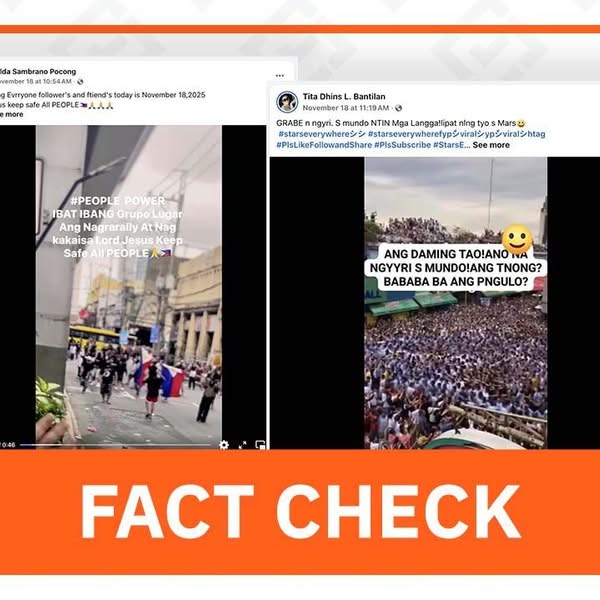
Police officials have confirmed that a widely shared video on social media does not depict a political rally, as some users have claimed, but rather shows devotees participating in the annual Peñafrancia Fluvial Procession in Naga City, Philippines.
The video, which began circulating on September 20, captures a large crowd moving through city streets. Its original caption clearly indicated the religious nature of the gathering, noting that participants were heading toward Danlugan ni Ina, the traditional starting point of the fluvial procession.
“This video has been taken out of context and repurposed to suggest it shows political support for a particular candidate,” said Captain Maria Santos of the Naga City Police Department. “We can verify this footage shows devotees participating in one of our region’s most significant religious traditions.”
The Peñafrancia Festival, celebrated annually in September, is one of the Philippines’ largest religious events, drawing hundreds of thousands of devotees to Naga City in the Bicol region. The fluvial procession, which involves transporting the image of Our Lady of Peñafrancia along the Naga River, represents the culmination of the nine-day festival.
Regional tourism officials estimate that the festival attracts approximately 500,000 visitors each year, significantly boosting the local economy. Hotels and accommodations in Naga City typically reach full capacity during the celebration, with many pilgrims traveling from across the Philippines and abroad.
Social media experts note that religious gatherings are frequently misrepresented online, particularly during politically charged periods. “Large crowds are visually impressive and easily repurposed to suggest popular support for various causes,” explained Dr. Elena Mendoza, a media studies professor at Ateneo de Manila University. “This type of misinformation is particularly problematic because it exploits genuine religious devotion for political purposes.”
The Catholic Bishops’ Conference of the Philippines (CBCP) has expressed concern about the misrepresentation of religious events on social media. In a statement issued last month, CBCP Secretary General Monsignor Bernardo Pantin urged the faithful to be vigilant about how religious images and gatherings are portrayed online.
“The sanctity of these processions and their spiritual significance should be respected,” Pantin stated. “Using these sacred traditions to advance political narratives diminishes their religious importance and potentially misleads the public.”
Fact-checking organizations across the Philippines have seen an uptick in misleading content as the country approaches its next election cycle. The #FactsFirstPH initiative, a collaborative effort among media organizations, academic institutions, and civil society groups, has been actively monitoring and debunking false claims on social media platforms.
“Context stripping is one of the most common forms of misinformation we’re seeing,” said Ricardo Buenaventura, lead fact-checker at Vera Files, a founding member of the #FactsFirstPH coalition. “Taking genuine footage and presenting it with a false narrative can be more convincing than completely fabricated content.”
Facebook has implemented measures to reduce the spread of misinformation, including partnering with third-party fact-checkers who can flag misleading content. However, experts note that the platform’s algorithms still often prioritize engagement over accuracy, allowing misleading videos to reach large audiences before fact-checkers can respond.
Local officials in Naga City have urged social media users to verify information before sharing it. “Our religious traditions are an important part of our cultural identity,” said Vice Mayor Nelson Legacion. “We encourage everyone to respect these traditions and not use them for political purposes.”
As the festival concludes, devotees have expressed disappointment that their religious participation has been mischaracterized. “We come here every year to show our devotion to Our Lady,” said Maria Elena Ramos, a pilgrim from Legazpi City. “This has nothing to do with politics. It’s about faith and tradition.”
Fact Checker
Verify the accuracy of this article using The Disinformation Commission analysis and real-time sources.

12 Comments
Interesting that a religious procession could be misinterpreted as a political rally. It’s important to verify the context before jumping to conclusions about these types of events.
Absolutely. Fact-checking is crucial to avoid spreading misinformation, especially around sensitive topics like elections and religious gatherings.
The Peñafrancia Fluvial Procession seems like a beautiful and meaningful tradition. It’s great that the authorities were able to clarify the true nature of the event.
Yes, it’s important to respect the cultural and religious significance of these kinds of events, rather than jumping to politicized conclusions.
The Peñafrancia Festival sounds like a rich cultural tradition in the Philippines. It’s good to see the authorities clarifying the true nature of the event to prevent any further confusion.
I agree. Preserving the integrity of longstanding religious celebrations is important, especially in a diverse country like the Philippines.
It’s concerning to see how easily misinformation can spread, even around something as straightforward as a religious procession. Vigilance and fact-checking are essential.
Agreed. In today’s digital landscape, it’s crucial that we all strive to be responsible consumers and sharers of information.
The Peñafrancia Festival sounds like a truly remarkable event, bringing together the community in a profound way. I’m glad the authorities were able to set the record straight.
Yes, it’s heartening to see the authorities taking the time to clarify the facts and prevent the spread of misinformation around this important cultural tradition.
This is a good reminder to be cautious when sharing videos or images online, especially if the context is unclear. It’s always best to verify the information from reliable sources.
Exactly. In the age of social media, it’s easy for content to be taken out of context and used to spread misinformation. Fact-checking is crucial.