


Listen to the article
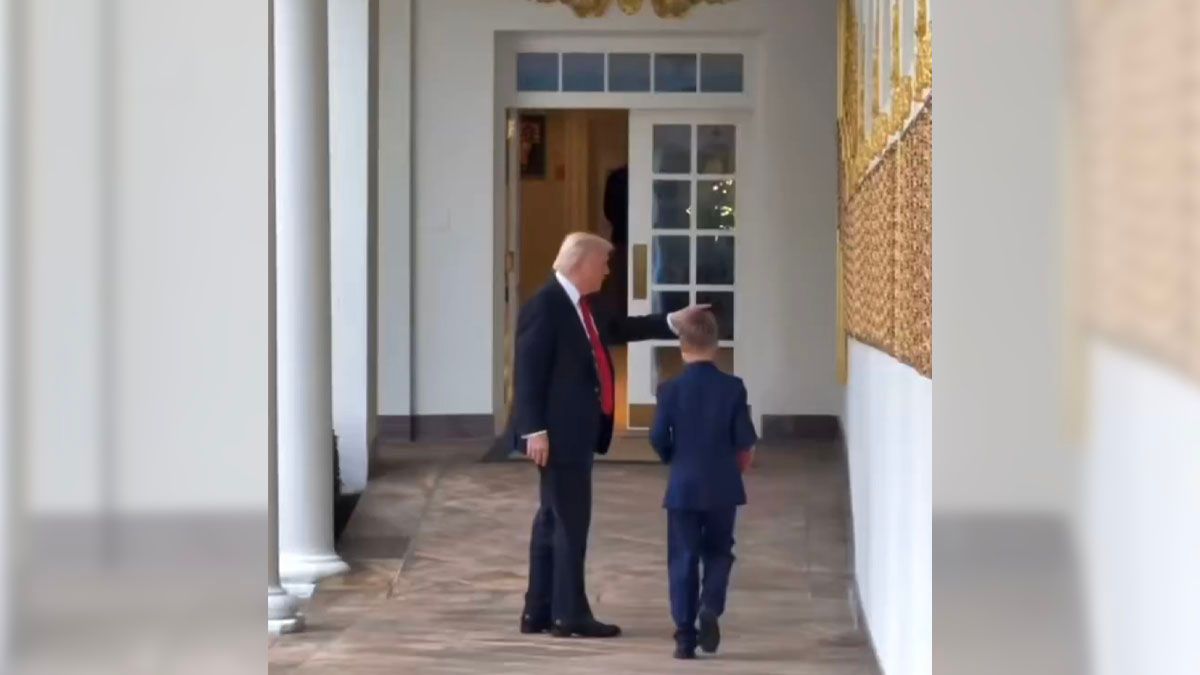
In a flurry of social media speculation last week, a video showing President Donald Trump walking with his grandson Theodore Kushner at the White House sparked unfounded rumors about the president’s health, demonstrating once again how selectively edited footage can fuel misleading narratives online.
The video, originally shared by Ivanka Trump on November 21, 2025, shows the president stopping multiple times along the “Presidential Walk of Fame” to point out portraits to his 9-year-old grandson. While the authentic footage shows nothing unusual, versions circulating on social media platforms were edited to remove the ending, where Trump can be seen walking away in a normal manner.
By November 24, the clip had gained such traction that it appeared prominently in X’s “News” section with the headline “Video of Trump Walking with Boys Prompts Health Talk.” Users across multiple platforms, including X, Bluesky, Facebook, and Threads, began making unsubstantiated claims about the president’s health, suggesting he suffers from dementia, wears leg braces, has experienced stroke complications, or has been diagnosed with pigeon toes (intoeing).
The timing of the speculation appears connected to the president’s recent medical examination. Last month, Trump mentioned receiving an MRI scan, which some social media users referenced when sharing the walking video.
A technical analysis of the footage confirms it has not been altered using artificial intelligence or other digital manipulation tools. The video simply shows Trump taking his time while guiding his grandson through the presidential portrait display, including pausing on an upward ramp to explain specific portraits.
Additional evidence contradicts the health-related speculation. Just one day after the video was recorded, on November 22, the president was filmed walking with his usual gait to meet reporters near Marine One for an impromptu press conference. This footage, which received significantly less attention on social media, shows Trump moving without any apparent difficulty.
The White House’s official social media accounts corroborate the innocent nature of the original scene, having posted several photos of Trump and his grandson viewing the portraits on November 21. Ivanka Trump also shared additional content from the visit on Instagram, including a video of Theodore playing football with his grandfather on the White House grounds.
The president’s attire in the controversial video – a suit with a red tie and American flag pin – matches his outfit from earlier that day when he met with New York City Mayor-elect Zohran Mamdani in the Oval Office, confirming the timeline of events.
This incident follows a pattern of social media-driven speculation about the president’s health. Earlier this year, a similarly misleading claim circulated when users suggested that a photo showed Trump holding hands with his eldest son, Donald Trump Jr., because he needed assistance leaving a stage – another claim that lacked supporting evidence.
When contacted for comment on the latest rumors, the White House had not responded by press time.
The rapid spread of these health-related claims highlights the ongoing challenge of misinformation on social media platforms, where selectively edited content can quickly gain traction. Despite efforts by platforms to label misleading content, contextual information often fails to reach audiences with the same speed and scale as the original claims.
As the 2025 political landscape continues to evolve, media literacy experts emphasize the importance of seeking complete context and verifying claims before sharing potentially misleading content online.
Fact Checker
Verify the accuracy of this article using The Disinformation Commission analysis and real-time sources.

7 Comments
It’s concerning to see how selectively edited footage can fuel misleading narratives online. The full video appears to show nothing unusual – just a grandfather spending time with his grandson. We should be careful about jumping to conclusions without the full context.
Agreed. Social media has a way of amplifying these kinds of speculative stories. It’s important to rely on authoritative and verified sources when it comes to public figures’ health and well-being.
This is a good example of how misinformation can spread quickly online, especially when it involves a high-profile figure like the president. The full video doesn’t seem to show anything out of the ordinary, but the edited versions have certainly stirred up a lot of unfounded rumors. We need to be more vigilant about verifying information before sharing it.
This case highlights the importance of context and full transparency when it comes to public figures’ health and well-being. While the edited video may have raised some concerns, the unedited footage seems to show nothing unusual. We should be wary of fueling speculation without a clear understanding of the facts.
This video has certainly sparked a lot of speculation about President Trump’s health. While the edited versions circulating online seem concerning, the full footage shows a fairly normal interaction with his grandson. We should be cautious about making unsubstantiated claims, and wait for official updates from the White House.
While it’s understandable that people would be curious about the president’s health, making unsubstantiated claims based on a short video clip is irresponsible. The full footage shows a fairly normal interaction, and we should avoid fueling further speculation without credible evidence.
It’s unfortunate to see how a seemingly harmless video can be twisted and used to spread misinformation. The full footage appears to show a fairly typical interaction between a grandfather and his grandson. We should be cautious about jumping to conclusions and instead focus on verified, factual information from reliable sources.