


Listen to the article
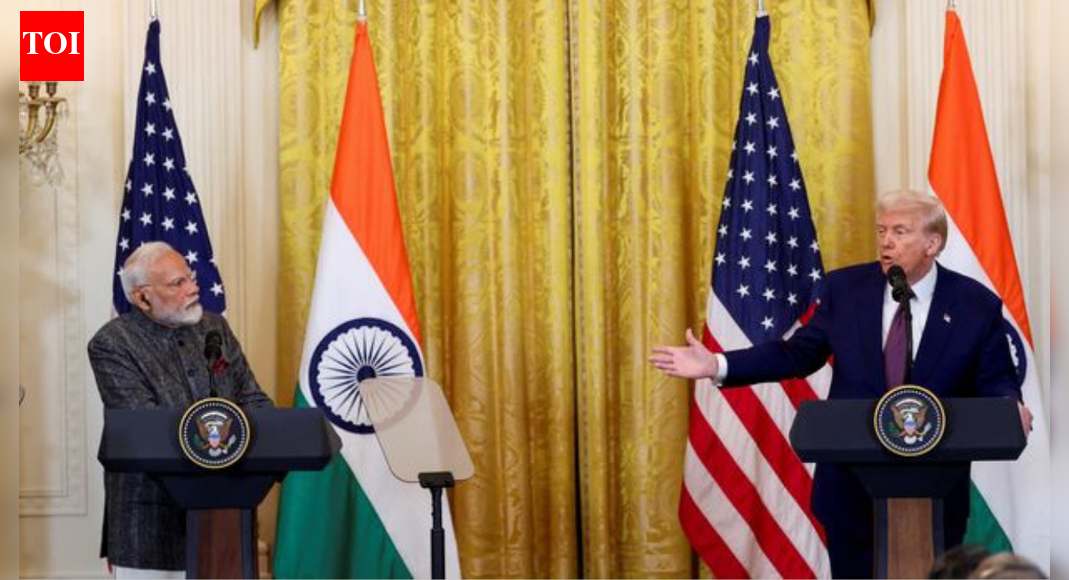
In a clear case of presidential hyperbole, former President Donald Trump has made claims about India’s Apache helicopter purchases that starkly contrast with verifiable records. During recent remarks, Trump asserted that India had ordered 68 Apache attack helicopters from the United States, adding that delivery delays prompted Prime Minister Narendra Modi to personally request a meeting with him to address the issue.
A comprehensive review of defense contracts, delivery schedules, and deployment information reveals a different reality. India has purchased only 28 Apache helicopters in total, less than half the number claimed by Trump. All of these aircraft have been delivered as of December 2025.
The actual procurement occurred in two separate phases. The first contract, signed in September 2015 during the Obama administration, involved 22 AH-64E Apache Guardian helicopters for the Indian Air Force at approximately $2.2 billion. These aircraft were delivered on schedule, with the final units arriving by 2020 during Trump’s first term. The helicopters were subsequently deployed to two frontline squadrons, becoming integral to India’s attack helicopter capabilities.
The second contract, valued between $600-800 million, was signed in February 2020 during Trump’s visit to India. This agreement covered six Apache helicopters for the Indian Army Aviation Corps. This smaller order did experience significant delays, which became a discussion point in bilateral talks.
While the Air Force’s Apaches arrived on time, the Army’s six helicopters faced substantial setbacks. Originally scheduled for delivery in early 2024, the first batch reached India only in July 2025—approximately 15 months behind schedule. The final three helicopters arrived in December 2025, completing the order nearly two years late.
Multiple factors contributed to these delays. Boeing’s Apache production facility in Mesa, Arizona, struggled with post-pandemic supply chain disruptions, including shortages of critical components like engines, gearboxes, and specialized electronics. India reportedly held a relatively low priority ranking within the U.S. defense priorities and allocations system in 2024, placing it behind other customers, including the U.S. Army, for certain components.
Technical complications further extended the timeline. Boeing temporarily paused some Apache deliveries worldwide due to electrical and power-generation concerns requiring additional safety testing. In a final complication, the last batch destined for India in November 2025 was forced to turn back mid-flight after Turkey denied overflight clearance to the Antonov-124 transport aircraft carrying the helicopters, adding several more weeks of delay.
These genuine frustrations likely formed the basis of Trump’s remarks, though the numerical exaggeration undermines their credibility. It’s possible Trump conflated two separate Indian helicopter purchases from Boeing: the AH-64E Apache attack helicopter and the CH-47F Chinook heavy-lift helicopter. Both deals were signed around the same time and involved Boeing, but they still total only 43 aircraft, as India ordered 15 Chinooks, all delivered between 2019 and 2020.
India’s defense ministry records and U.S. Foreign Military Sales notifications show no additional Apache orders beyond the 28 units. While the Indian Army initially projected a requirement for 39 Apaches, no new contracts have materialized.
The experience with supply chain uncertainties and shifting U.S. strategic priorities regarding China and Pakistan has prompted India to reduce foreign dependencies in defense procurement. New Delhi is increasingly prioritizing indigenous solutions under its “Make in India” policy, specifically the HAL Prachand Light Combat Helicopter. This lighter aircraft, optimized for extreme altitudes, can operate above 20,000 feet—including the Siachen Glacier—where the heavier Apache struggles. India plans to induct 156 Prachand helicopters across the Army and Air Force, gradually reducing reliance on foreign attack helicopters.
This pattern reflects a broader strategic shift: while Apaches will remain India’s heavy strike platforms in plains and desert sectors, the future of India’s rotary-wing combat capabilities will increasingly feature domestically produced aircraft.
Trump’s claim about Modi deferentially addressing him as “sir” while requesting a meeting also aligns with a pattern observers have noted in his public remarks, where foreign leaders are frequently portrayed as showing exceptional deference in their interactions with him.
Fact Checker
Verify the accuracy of this article using The Disinformation Commission analysis and real-time sources.

16 Comments
This fact-check provides a helpful reality check on the former president’s statements about the Apache helicopter deal with India. It’s good to see the actual contract details and delivery timelines laid out clearly.
Analyzing the facts behind political rhetoric is crucial. This fact-check demonstrates the value of digging into the specifics rather than just accepting broad claims at face value.
This fact-check highlights the importance of verifying the accuracy of public statements, even from high-profile figures. The details around the Apache helicopter purchases in India seem to tell a different story than what was claimed.
Fact-checking is an essential journalistic responsibility. This level of scrutiny helps to ensure that the information being reported to the public is grounded in verifiable facts rather than political rhetoric or exaggeration.
It’s good to see this news outlet taking the time to thoroughly fact-check the claims made by the former president regarding the Apache helicopter deal with India. Providing the actual contract and delivery details helps to correct the record.
Digging into the facts behind political statements is crucial. This fact-check demonstrates the value of consulting official sources and records to get the full and accurate picture on complex military procurement issues.
It’s important to fact-check political claims, even from prominent figures. The details around India’s Apache helicopter purchases seem to contradict the former president’s statements. A careful look at the actual defense contracts and delivery timelines provides a more accurate picture.
Verifying the facts is crucial, especially on high-profile issues like military equipment sales. Relying on official records and information appears to be the best way to get the full and correct story here.
It’s commendable that this news outlet has taken the time to thoroughly fact-check the claims made by the former president regarding the Apache helicopter deal with India. Providing the actual procurement and delivery details helps to correct the record.
Digging into the specifics behind political statements is crucial for maintaining journalistic integrity. This fact-check demonstrates the value of consulting official sources to present a clear and accurate picture on complex issues.
While it’s understandable for political figures to tout achievements, this fact-check shows the importance of verifying the details. The actual Apache procurement numbers and timeline seem quite different from what was publicly claimed.
Fact-checking is essential to maintain public trust and ensure accurate reporting, even on politically charged issues. This level of scrutiny helps readers assess the credibility of the information they’re receiving.
This fact-check highlights the need to be cautious about accepting public statements at face value, especially when they involve specific numbers and timelines. Digging into the actual procurement details reveals a different reality than what was claimed.
It’s good to see this discrepancy being addressed. Maintaining accuracy in reporting on government and military matters is critical for public understanding.
The Apache helicopter procurement seems to be a case of political exaggeration that doesn’t hold up under scrutiny. It’s valuable for news sources to provide this level of fact-checking and context around claims made by public figures.
Fact-checking is an important journalistic responsibility, especially when it comes to high-profile political statements. This level of detail helps readers evaluate the accuracy of the claims being made.