


Listen to the article
Michigan House Republicans’ $6 Billion Budget Cut Plan Questioned by Experts
Republicans in the Michigan House of Representatives have proposed cutting approximately $6 billion from the state’s annual budget in what they describe as a fight against “waste, fraud and abuse.” However, budget experts are challenging a key component of their plan: the claim that $750 million has been allocated for thousands of unfilled positions in state departments.
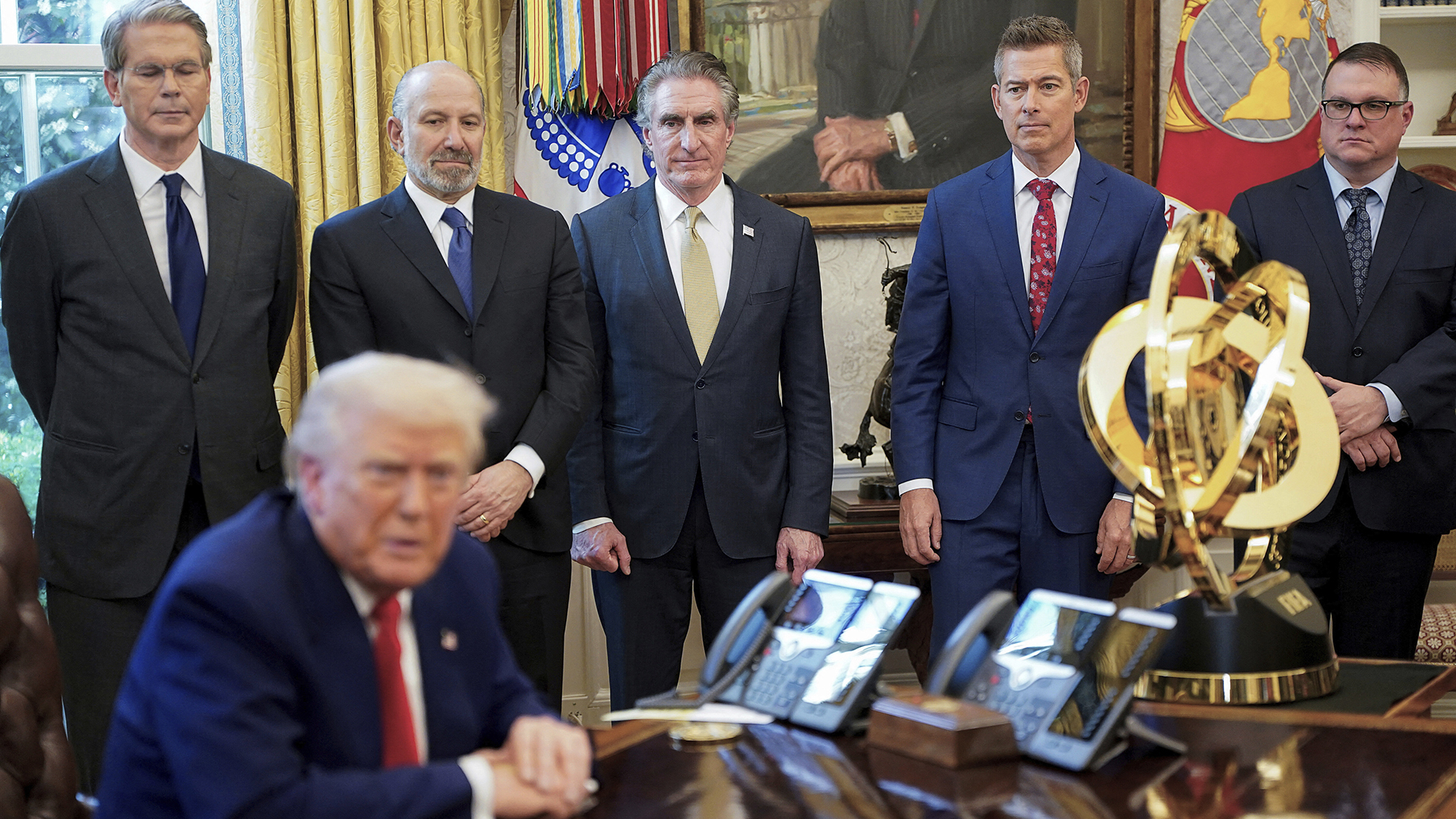
The controversy intensified Monday when President Donald Trump shared a video on his social media platform alleging Michigan Democrats were “laundering $5 billion in taxpayer money.” Michigan Republicans initially thanked the president for sharing the video before deleting their tweet, while Democrats criticized Trump for spreading what they called a “blatant lie” designed to distract from what they view as a flawed GOP budget proposal.
This dispute unfolds against the backdrop of a budget standoff between the state House and Senate that could trigger a government shutdown if not resolved by October 1.
At the center of the Republican claims are what they call “ghost” or “phantom” employees. House Speaker Matt Hall stated last week that “it’s around $177,000 on average each one of these ghost employees is getting, if you count their wages and their benefits,” adding that “that totals up to, I think it’s $750 million.”
Budget experts, however, explain that Hall is referring to vacant positions that were authorized in annual budgets but remain unfilled. These are not employees being paid for no-show jobs but rather positions that departments have been unable to fill.
Mitch Bean, former director of the nonpartisan House Fiscal Agency, bluntly called the claim of significant savings from eliminating more than 5,000 vacant positions “bullshit” in an interview with Bridge Michigan. “Money gets appropriated with the assumption that these positions are going to be filled, but at the end of the year, if they’re not, money lapses back,” Bean explained, dismissing the allegation as “a red herring.”
Roger Kahn, a Republican who led the state’s budget committee for eight years, noted that departments typically request funding for positions they “intended to fill, which may or may not happen,” adding that he didn’t find the practice “deceptive in any way.”
The Michigan State Police serves as a prime example of the situation. In its most recent quarterly report to the Legislature, the department acknowledged having about 737 fewer full-time positions than authorized in the current budget. A department spokesperson emphasized that “all FTEs are critical to our operations and the department is constantly working to fulfill vacant positions.”
The vacancies, representing nearly a quarter of the department’s allotted workforce, resulted from “a large number of retirements and other departures” combined with recruitment challenges. Despite these staffing issues, the House GOP budget proposes cutting 298 full-time positions from state police operations.
Republican Representative Matt Maddock has suggested state departments are committing fraud by not filling vacant positions, claiming they are “squirreling away money” that should be returned to taxpayers. Hall initially appeared to agree but later admitted, “I would say we’re not sure, but we’re looking.” To date, House Republicans have provided no evidence of embezzlement or misappropriation of funds.
The video shared by Trump claimed Michigan Democrats were “caught laundering $5 billion in taxpayer money” for various purposes, including “questionable gender surgeries for prisoners.” This appears to be an exaggeration of the House GOP claims that “phantom employees” cost the state $3.8 billion over several fiscal years.
Importantly, the video falsely attributes responsibility solely to Democrats. The figures cited by House Republicans refer to several budgets that were actually approved by Republican-led legislatures. State workforce reports indicate that vacant positions existed under both Democratic and Republican administrations.
For instance, the 2018 budget approved by a Republican legislature under GOP Governor Rick Snyder included funding for thousands of positions that remained unfilled in multiple departments, including health and corrections.
As the budget deadline approaches, the debate over “phantom employees” remains a contentious issue in Michigan’s political landscape, with significant implications for government operations and taxpayer funds.
Fact Checker
Verify the accuracy of this article using The Disinformation Commission analysis and real-time sources.

16 Comments
This seems like a politically charged issue, but the core concerns around government efficiency and responsible use of taxpayer funds are valid regardless of party. I hope the facts can be objectively established.
Well said. Fact-checking and nonpartisan analysis will be key to finding the truth and moving forward productively.
This dispute highlights the need for greater transparency and accountability in government spending. I hope Michigan’s lawmakers can work together to audit the budget and address any issues, regardless of party.
Well said. Taxpayers deserve to know their money is being used responsibly, and that should be the driving force behind this process.
While the allegations of budget waste are serious, I’m cautious about accepting claims without rigorous verification. I hope Michigan’s leaders can work together to audit the budget and address any real issues found.
Agreed, it’s important to avoid politically motivated rhetoric and focus on the facts. An impartial investigation would be the best way to resolve this dispute.
While the allegations of budget waste are concerning, I’m wary of accepting claims without solid evidence. I hope Michigan’s leaders can put partisanship aside and conduct a thorough, nonpartisan investigation.
Agreed. Getting to the truth should be the top priority here, not scoring political points. Impartiality and a focus on facts will be key.
Verifying claims of “ghost employees” and budget mismanagement is crucial. Both parties should present clear evidence and work together to resolve this dispute constructively.
Absolutely. Transparency and accountability are vital for maintaining public trust in government.
Allegations of budget mismanagement and “ghost employees” are serious, but I’d want to see solid evidence before drawing conclusions. I hope Michigan’s leaders can find a constructive path forward on this.
Absolutely. Verifying the claims and finding pragmatic solutions should be the top priorities here, not political point-scoring.
This seems like a complicated budgetary issue with allegations of waste and fraud from both sides. I hope Michigan’s lawmakers can find a pragmatic compromise to avoid a government shutdown and ensure taxpayer money is used responsibly.
Agreed, it’s important for the public to get accurate information on how their tax dollars are being spent, regardless of political affiliations.
This seems like a complex issue with valid concerns on both sides. I hope Michigan’s lawmakers can put partisan politics aside and work together to ensure taxpayer money is used efficiently and transparently.
Well said. Maintaining public trust in government is crucial, and that requires a nonpartisan, fact-based approach to budgetary issues.