


Listen to the article
Doctored Image of Trump Supporter’s T-Shirt Spreads Misinformation Amid Epstein Document Release
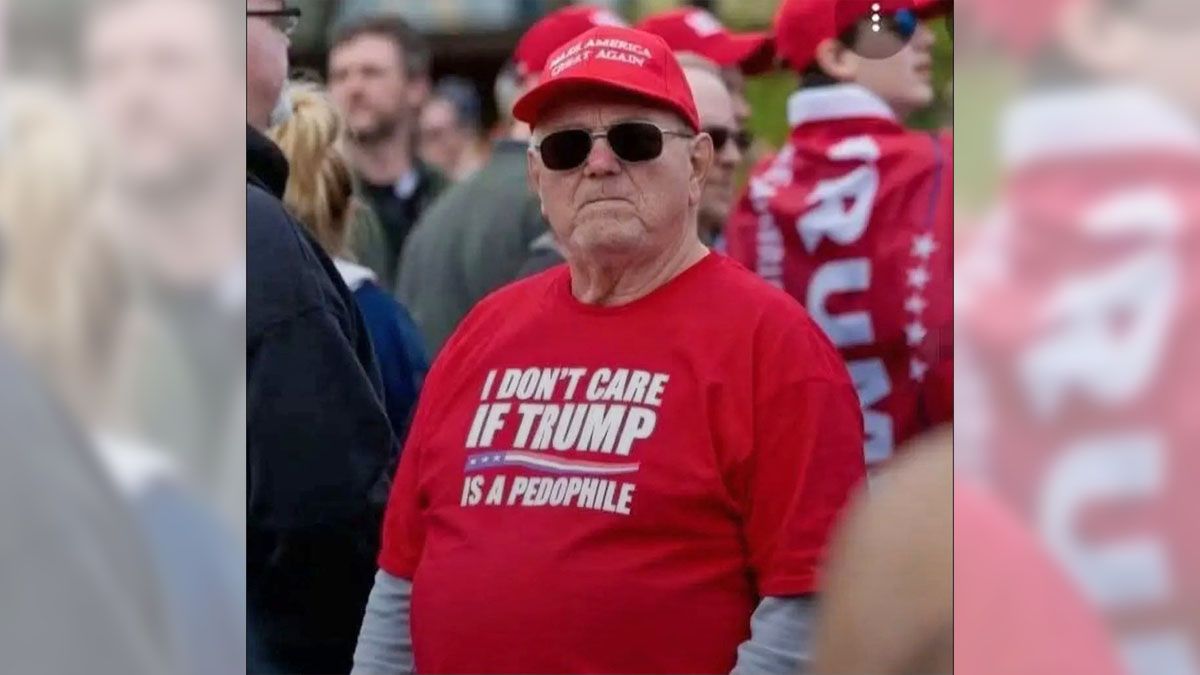
A manipulated photograph purportedly showing a Trump supporter wearing a shirt with inflammatory text about the former president has been circulating across social media platforms, fact-checkers confirmed this week. The image, which began spreading in November amid renewed scrutiny of Donald Trump’s connections to convicted sex offender Jeffrey Epstein, has been definitively proven to be altered.
The doctored image depicted a man wearing a red “Make America Great Again” baseball cap and a red T-shirt with text reading: “I don’t care if Trump is a pedophile.” It quickly gained traction on multiple platforms, including Facebook, Instagram, Reddit, Threads, and X (formerly Twitter), where users shared it with captions suggesting it revealed extreme loyalty among Trump supporters.
A reverse-image search conducted through Google Lens located the original, unaltered photograph on Flickr. The authentic image, taken by photographer Lorie Shaull on October 4, 2018, shows the man wearing a shirt that actually read “Trump Pence 2020” and “Keep America Great!” The photograph was taken at a Trump rally at the Mayo Civic Center in Rochester, Minnesota.
Shaull uploaded the original image to Flickr on October 5, 2018, along with several other photographs from the same rally. Getty Images also has photographs in its library documenting this specific campaign event in Rochester.
The timing of this false image’s circulation appears deliberately linked to recent political developments. The manipulated photo gained significant attention just as the U.S. House Committee on Oversight and Government Reform released more than 20,000 documents related to Jeffrey Epstein on November 12. These documents included numerous emails to and from the late convicted sex offender that mentioned Trump.
Democrats on the committee highlighted three emails in particular, including one claiming Trump “knew about the girls.” Another email from Epstein to his confidant and convicted sex trafficker Ghislaine Maxwell alleged that Trump “spent hours” at Epstein’s house with a sex-trafficking victim.
The White House pushed back strongly against these revelations. Press Secretary Karoline Leavitt told fact-checkers: “The Democrats selectively leaked emails to the liberal media to create a fake narrative to smear President Trump.”
This isn’t the first time claims about Trump’s relationship with Epstein have surfaced. Previous fact-checks have addressed numerous allegations, including a rumor that Trump spent Thanksgiving with Epstein in 2017. There are verified photographs showing the two men together at various events over the years.
Trump’s own words about Epstein have also come under scrutiny. In a 2002 interview, Trump called Epstein a “terrific guy,” adding: “He’s a lot of fun to be with. It is even said that he likes beautiful women as much as I do, and many of them are on the younger side.”
The spread of this manipulated image highlights the increasingly complex media landscape surrounding political figures, where visual misinformation can rapidly propagate across platforms. Social media users are encouraged to verify suspicious images through reverse image searches and to consider the timing and context of inflammatory content, particularly during politically charged moments.
As investigations into Epstein’s connections continue, the circulation of altered images and unverified claims threatens to further muddy public discourse around an already controversial topic. Fact-checkers emphasize the importance of relying on verified sources and authenticated materials when evaluating serious allegations.
Fact Checker
Verify the accuracy of this article using The Disinformation Commission analysis and real-time sources.

11 Comments
Interesting to see how quickly misinformation can spread online, especially around sensitive political topics. It’s important to fact-check before sharing potentially misleading content, no matter which side of the aisle it may support.
Absolutely, verifying the authenticity of images and information is crucial these days. Social media makes it so easy for doctored or fabricated content to go viral.
It’s unfortunate to see how easily doctored images can gain traction and spread misinformation, even around important political issues. This underscores the need for media literacy and a commitment to verifying sources before sharing content online.
This is a good reminder that we need to be cautious about what we see and share on social media, especially when it comes to politically charged issues. Fact-checking is essential to combat the spread of misinformation.
Agreed. It’s concerning how quickly misleading images and claims can gain traction, even when the original source is clearly manipulated. We all have a responsibility to think critically and verify information before passing it on.
This is a timely reminder of the dangers of misinformation and the need for vigilance when consuming online content, particularly around sensitive political topics. Fact-checking is crucial to prevent the spread of false or manipulated information.
Well said. We all have a responsibility to be discerning consumers of information and to call out instances of misinformation whenever we encounter them.
The rapid spread of this fabricated image is a worrying example of how social media can be used to amplify false narratives. It’s a good reminder to always approach online content with a critical eye and to fact-check before sharing.
Absolutely. In today’s digital landscape, we must be vigilant about verifying information, especially when it aligns with our own biases or political leanings. Fact-checking is crucial to combat the rise of misinformation.
This case highlights the importance of maintaining a healthy skepticism towards online content, particularly when it comes to politically charged issues. It’s a good reminder to always verify the authenticity of images and information before sharing them.
The viral spread of this fabricated image is a prime example of how disinformation can quickly become accepted as fact, especially in today’s polarized political climate. It’s a good lesson on the importance of critical thinking and fact-checking.