


Listen to the article
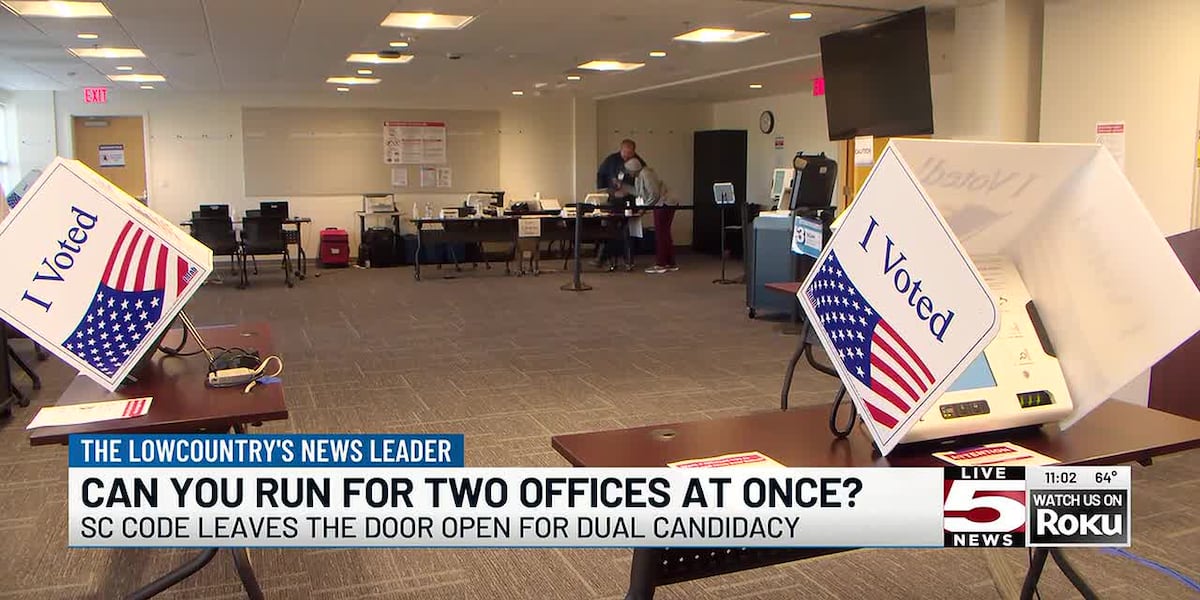
A legal dispute is brewing in South Carolina over whether candidates can simultaneously seek two different elected offices, bringing attention to an electoral practice that exists in a gray area of state law.
The controversy emerged after several candidates filed to run for multiple positions in upcoming elections, prompting questions about the legality and ethics of such dual candidacies. While uncommon, the practice has historical precedents in the Palmetto State and varies significantly across the United States.
South Carolina’s election laws do not explicitly prohibit candidates from appearing on the ballot for multiple offices. The State Election Commission, which oversees electoral procedures, has acknowledged this legislative gap. Commission spokesman John Catalano explained that without specific statutory prohibition, the practice technically remains permissible.
“Our election code doesn’t contain any provision that prevents a candidate from filing for multiple offices in the same election cycle,” Catalano said. “While it’s certainly unusual, it’s not currently illegal under state law.”
Legal experts point to the absence of a “resign-to-run” provision in South Carolina’s constitution or election statutes. Such provisions, which exist in states like Florida and Arizona, require officeholders to resign their current position before seeking another. The lack of such requirements has created what some describe as a loophole in the state’s electoral system.
Constitutional law professor Elizabeth Mercer from the University of South Carolina noted that the situation reveals the limitations of the state’s current election framework. “Electoral laws are primarily designed to ensure fair and transparent elections, but they don’t anticipate every possible scenario. This is one of those edge cases where the law is silent,” she said.
The practice of dual candidacy has sparked debate among political analysts and ethics watchdogs. Critics argue that running for multiple offices simultaneously could confuse voters and potentially waste resources if a candidate wins multiple positions and must subsequently vacate one.
James Richardson, director of the South Carolina Ethics Initiative, expressed concerns about the implications. “When candidates file for multiple offices, it raises questions about their commitment to either position. Are they hedging their bets? And what happens if they win both races? Taxpayers could be forced to fund special elections to fill vacated positions.”
Historically, such dual candidacies have occurred sporadically in South Carolina politics. In 2014, Kevin Bryant appeared on ballots for both State Senate and Lieutenant Governor, ultimately securing the Senate seat. More recently, three candidates in Charleston County filed for multiple offices in the 2022 election cycle.
The practice varies widely across the country. Sixteen states have laws explicitly prohibiting dual candidacy, while others have partial restrictions or no regulations at all. In some states, the prohibition applies only to certain offices or levels of government.
Florida, for instance, enacted its resign-to-run law in 2018, requiring officeholders to submit an irrevocable resignation before qualifying for another position if the terms would overlap. Texas prohibits candidates from appearing on the same ballot for multiple offices, except in specific cases involving certain local positions.
Political scientists suggest that the absence of dual candidacy restrictions in South Carolina reflects the state’s traditionally laissez-faire approach to election administration.
“South Carolina has historically favored local control and minimal restrictions on ballot access,” explained Dr. Marcus Jenkins, political science professor at Clemson University. “This approach has advantages in terms of flexibility, but it also means our system occasionally encounters these types of procedural questions.”
State lawmakers have occasionally proposed legislation to address the issue. Representative Thomas Paine introduced a bill in 2020 that would have prohibited dual candidacies, but it failed to gain traction in committee. With renewed attention on the issue, legislative action may be forthcoming in the next session.
Until then, the State Election Commission maintains that it must follow existing law, which permits candidates to pursue multiple offices simultaneously. County election officials have been instructed to process qualifying paperwork for all properly submitted candidacies, regardless of whether an individual has filed for other positions.
As primary season approaches, voters and election officials alike will be watching closely to see how these unusual candidacies unfold and whether they prompt changes to state election law.
Fact Checker
Verify the accuracy of this article using The Disinformation Commission analysis and real-time sources.

5 Comments
Interesting legal gray area on running for multiple offices in South Carolina. I wonder how common this practice is and what the potential impacts could be on the electoral process. It seems like an area that could use some clarification in state law.
I’m curious to learn more about the historical precedents for dual candidacies in South Carolina. What have been the outcomes in past cases, and have there been any attempts to change the laws around this practice? Transparency around these issues is important for voters.
Allowing candidates to simultaneously run for multiple elected offices does raise some ethical questions. While not explicitly illegal in South Carolina, it could lead to conflicts of interest or a candidate being spread too thin. Clear rules would help ensure fair and transparent elections.
As an election law expert, what are your thoughts on the risks and potential benefits of allowing candidates to run for multiple offices simultaneously? It seems like an area that could use more public debate and legislative attention.
The lack of a resign-to-run provision in South Carolina’s election laws is unusual. Most states have rules to prevent candidates from holding multiple offices at once. This legal gap is worth scrutinizing to ensure the integrity of the state’s electoral system.