


Listen to the article
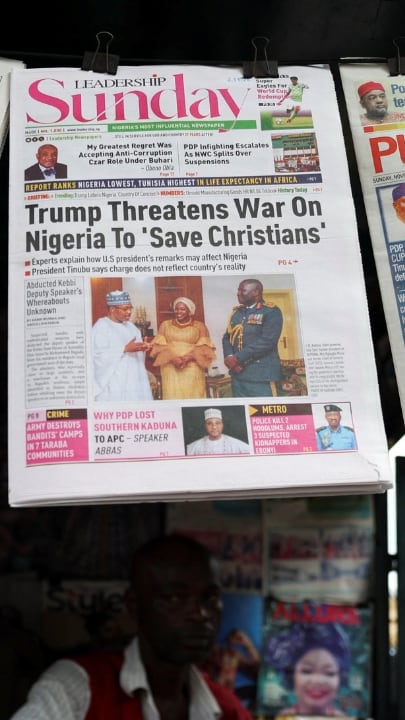
Christians in Nigeria are facing an increasingly dire threat as armed groups continue to target religious communities across the country’s northern and central regions, according to numerous security reports and witness testimonies.
The situation has intensified in recent years, with Boko Haram, Islamic State West Africa Province (ISWAP), and armed bandit groups escalating attacks against Christian villages, churches, and religious leaders. These assaults have claimed thousands of lives and displaced entire communities in what observers describe as a complex crisis with both religious and socioeconomic dimensions.
“The pattern of violence is undeniable,” said Emmanuel Ogebe, a Nigerian human rights lawyer who documents cases of religious persecution. “While these groups also attack moderate Muslims and government targets, Christians face disproportionate targeting, especially in areas where they represent a minority population.”
Security analysts note that Boko Haram, whose name roughly translates to “Western education is forbidden,” has explicitly stated its goal of establishing an Islamic state governed by strict Sharia law. Since its insurgency began in 2009, the group has destroyed hundreds of churches and killed thousands of Christians, particularly in Nigeria’s northeastern states.
In the Middle Belt region, where Nigeria’s predominantly Muslim north meets the largely Christian south, farming communities have experienced waves of attacks from armed groups often identified as Fulani militants. While these conflicts have roots in resource competition between herders and farmers, religious identity frequently determines which communities are targeted.
“What began as competition for land has increasingly taken on sectarian overtones,” explained Dr. Nduka Otiono, a Nigerian scholar at Carleton University. “Communities are often attacked based on their faith identity, with Christian farmers bearing the brunt of organized violence.”
The Nigerian government has consistently downplayed the religious dimension of these attacks, preferring to characterize them as criminal activity or intercommunal conflict. However, international monitoring organizations tell a different story.
Open Doors, which tracks Christian persecution globally, ranked Nigeria as the seventh most dangerous country for Christians in its 2023 World Watch List. The United States Commission on International Religious Freedom has repeatedly recommended that Nigeria be designated as a “Country of Particular Concern” for religious freedom violations.
“The government’s reluctance to acknowledge the religious component hampers effective response,” said Dede Laugesen, executive director of Save the Persecuted Christians. “Security forces are often slow to respond to attacks on Christian villages, and perpetrators rarely face justice.”
Recent attacks highlight the ongoing crisis. In Plateau State, more than 200 people, predominantly Christians, were killed in a series of coordinated attacks on rural villages during Christmas week 2023. Earlier that year, gunmen attacked a Catholic church in Ondo State during Sunday service, killing at least 40 worshippers.
Church leaders report that clergy members are increasingly targeted for kidnapping and assassination. The Christian Association of Nigeria estimates that more than 300 churches have been destroyed in the past five years alone.
Not all victims of extremist violence in Nigeria are Christians. Boko Haram has attacked mosques and killed Muslims who oppose their ideology or cooperate with the government. Additionally, criminal gangs operating in northwestern Nigeria conduct mass kidnappings and village raids that affect communities regardless of faith.
However, evidence suggests that Christians face specific targeting based on their religious identity, particularly in areas where they constitute a minority population. Survivors frequently report that attackers shouted religious slogans during assaults or gave victims the opportunity to convert to Islam to save their lives.
The situation has forced thousands of Christians to flee to displacement camps or relocate to southern Nigeria. Those who remain often worship in damaged buildings under armed guard.
International response has been mixed. While religious freedom advocates call for increased pressure on Nigeria’s government to protect vulnerable communities, others caution that overemphasizing the religious dimension could further inflame tensions in a country already divided along ethnic and religious lines.
As Nigeria prepares for upcoming regional elections, security experts warn that violence targeting religious communities may escalate if adequate protective measures aren’t implemented. For the millions of Christians living in affected regions, the threat remains a daily reality that shows little sign of abating.
Fact Checker
Verify the accuracy of this article using The Disinformation Commission analysis and real-time sources.

12 Comments
This crisis has severe implications for regional stability and security. The Nigerian government and international community must take decisive action to counter the threat of extremist groups, protect vulnerable populations, and promote sustainable development and reconciliation.
The reports of these attacks are deeply troubling. It’s critical that the international community closely monitors the situation and holds all parties accountable for human rights abuses. Comprehensive solutions that address the root causes of this conflict are urgently needed.
You raise a valid point. Sustained international attention and pressure will be crucial to finding a lasting resolution to this crisis and ensuring the protection of all Nigerians, regardless of their faith.
The reports of entire Christian communities being displaced due to these attacks are heartbreaking. The Nigerian government and international partners must prioritize protecting civilians and ensuring humanitarian aid reaches the affected regions.
Absolutely, the humanitarian toll of this crisis cannot be overlooked. Urgent action is required to provide shelter, food, and medical care for the displaced populations.
This is a very concerning situation. The targeted attacks against Christian communities in Nigeria are deeply troubling. It’s critical that the government and international community work to protect religious minorities and end the cycle of violence.
You’re right, this crisis has severe humanitarian consequences. Urgent action is needed to safeguard vulnerable populations and address the root causes driving these attacks.
Boko Haram’s agenda to establish an Islamic state through violence is extremely alarming. The disproportionate targeting of Christians is a grave human rights violation that cannot be tolerated. Interfaith dialogue and inclusive governance are crucial to resolving this conflict.
I agree, the religious dimension of this crisis must be addressed alongside the socioeconomic factors. A comprehensive, multi-stakeholder approach is needed to achieve lasting peace and security.
The targeting of Christian leaders and places of worship is particularly disturbing. Religious freedom and the sanctity of sacred spaces must be protected. All parties involved should work towards a peaceful resolution that respects the rights and dignity of all Nigerians.
I agree, the attacks on religious institutions and figures are a grave affront to fundamental human rights. Interfaith cooperation and dialogue are essential to addressing this crisis.
It’s deeply concerning to see the escalation of violence against religious minorities in Nigeria. This is a complex issue with historical, political, and economic dimensions that must be carefully examined. Fact-based reporting and impartial analysis are crucial to understanding the full scope of this crisis.