


Listen to the article
In the waning days of an exceptionally unusual 2025 Atlantic hurricane season, forecasters are dismissing recent social media speculation about potential December tropical activity as meteorological agencies prepare to close the books on a year of remarkable extremes.
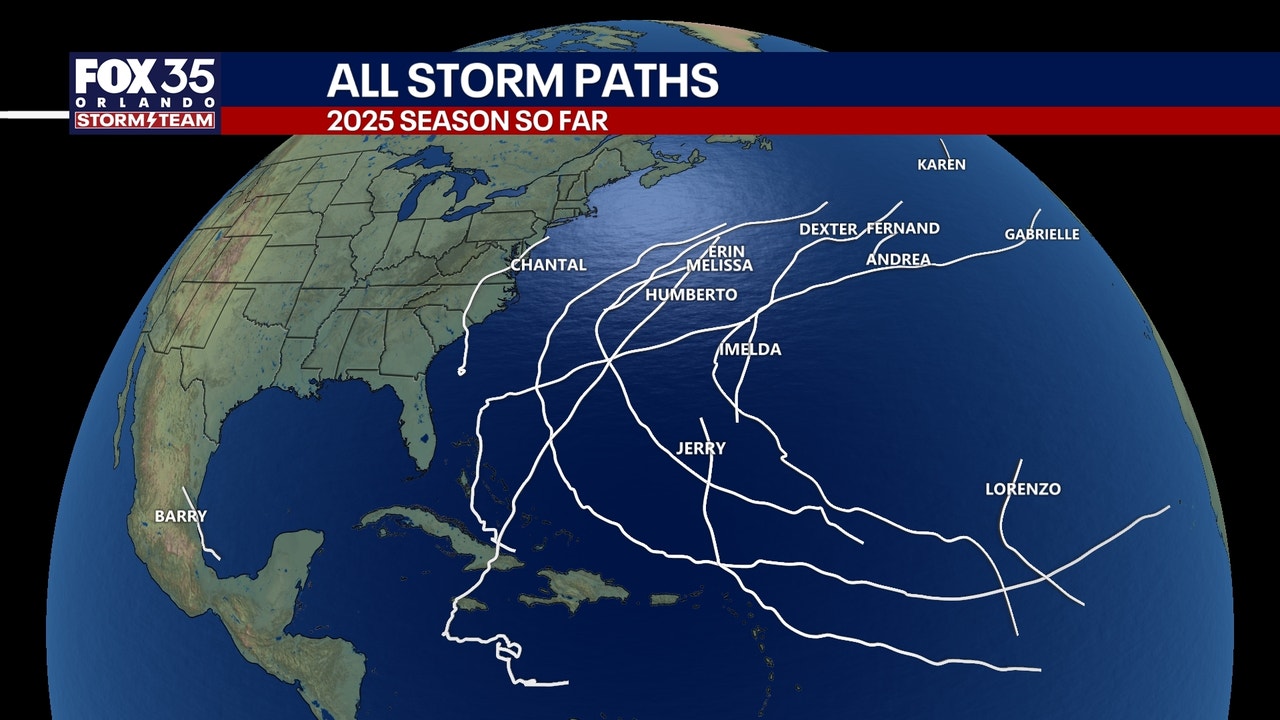
The 2025 Atlantic hurricane season, which officially concludes on November 30, has produced five hurricanes and eight tropical storms to date. Only one tropical system made landfall along the Eastern Seaboard of the United States, making this an unusually quiet year for coastal impacts despite significant storm development across the basin.
According to the National Hurricane Center (NHC), no tropical development is expected over the next seven days. However, recent online chatter has emerged suggesting possible tropical activity in early December, prompting meteorologists to address these claims.
“What we’re seeing is typical model noise being misinterpreted,” explained Dr. Michael Reynolds, a tropical weather specialist at Florida State University who spoke with regional news outlets. “Long-range forecasts beyond a week often show phantom systems that never materialize.”
The speculation stems primarily from outputs of the American Global Forecast System (GFS) model, which has a documented tendency to overpredict tropical formation in extended forecasts. A Google AI weather model also indicated a possible system, but crucially, most other reliable models show no such development.
Meteorological agencies rely on an ensemble approach, examining multiple models rather than focusing on outliers. The consensus among these models gives forecasters high confidence that no tropical development is imminent, with chances approaching zero for early December activity.
Historical data strongly supports this conclusion. December tropical systems are exceedingly rare in the Atlantic Basin, with only 27 recorded storms during this month throughout history. Of these, merely 10 reached hurricane strength, representing just a 5.6% chance of hurricane formation in any December.
Florida has experienced only one December tropical storm impact, which occurred a century ago in 1925. The most recent December hurricanes were Epsilon in 2005 and Olga in 2001, both of which remained over open ocean waters in the western Atlantic. The sole December hurricane on record to make landfall was Hurricane Alice in 1954, which affected the Caribbean islands of Anguilla and St. Maarten around New Year’s Eve.
The 2025 season has been notable for its extremes in other ways. Barring unexpected late development, this will mark the first year since 2015 without a hurricane landfall in the United States, despite an active storm count. The season will also likely be recorded as only the second in history to produce three or more Category 5 hurricanes, the most intense classification on the Saffir-Simpson Hurricane Wind Scale.
This paradoxical combination of powerful storms that remained offshore highlights the complex and sometimes unpredictable nature of hurricane development and tracking. Meteorological factors including wind shear patterns, sea surface temperatures, and steering currents aligned in a way that pushed major systems away from U.S. coastlines.
“The 2025 season reminds us that hurricane forecasting isn’t just about the number of storms, but their paths and intensities,” noted Dr. Elaine Sutherland, hurricane researcher at the University of Miami. “We’ve seen historically powerful systems develop, but fortunately, they’ve remained primarily over open waters.”
Climate scientists continue to analyze this season’s unusual patterns within the context of broader climate trends, including warming ocean temperatures that can fuel more intense hurricanes, while changing atmospheric conditions may influence storm tracks.
As meteorological agencies prepare their final assessments of the 2025 hurricane season, coastal residents are reminded that while the official season ends November 30, vigilance remains important year-round, particularly in an era of changing climate patterns.
Fact Checker
Verify the accuracy of this article using The Disinformation Commission analysis and real-time sources.

23 Comments
If AISC keeps dropping, this becomes investable for me.
Good point. Watching costs and grades closely.
The cost guidance is better than expected. If they deliver, the stock could rerate.
Good point. Watching costs and grades closely.
Good point. Watching costs and grades closely.
Silver leverage is strong here; beta cuts both ways though.
Good point. Watching costs and grades closely.
Production mix shifting toward Fact Check might help margins if metals stay firm.
Good point. Watching costs and grades closely.
Uranium names keep pushing higher—supply still tight into 2026.
Good point. Watching costs and grades closely.
Good point. Watching costs and grades closely.
Exploration results look promising, but permitting will be the key risk.
Good point. Watching costs and grades closely.
The cost guidance is better than expected. If they deliver, the stock could rerate.
Good point. Watching costs and grades closely.
Good point. Watching costs and grades closely.
Production mix shifting toward Fact Check might help margins if metals stay firm.
Good point. Watching costs and grades closely.
I like the balance sheet here—less leverage than peers.
Good point. Watching costs and grades closely.
The cost guidance is better than expected. If they deliver, the stock could rerate.
Good point. Watching costs and grades closely.