


Listen to the article
Iranian Cloud Stealing Claims Resurface Amid Regional Tensions
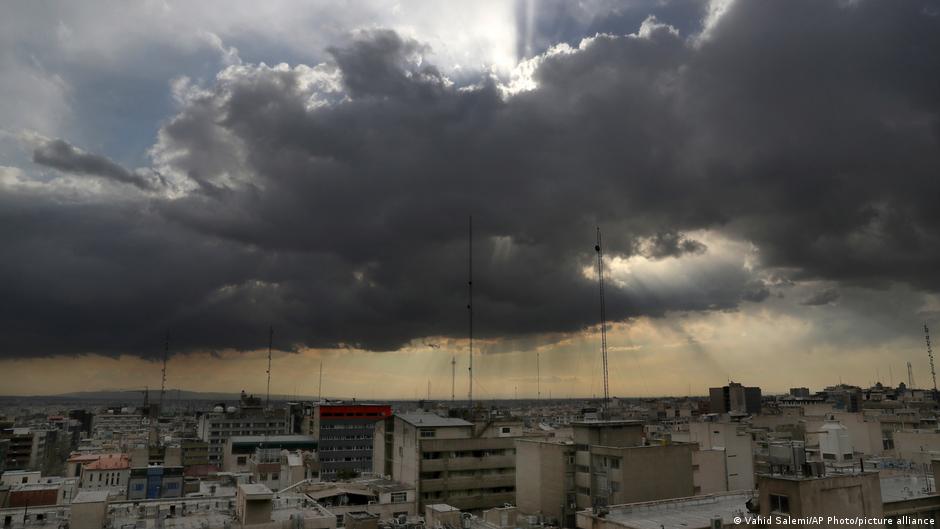
A bizarre conspiracy theory that first emerged in 2018 has gained new traction amid heightened Middle East tensions, with social media users claiming that Iran’s recent weather patterns are evidence of regional “weather warfare.”
Back in 2018, an Iranian general suggested that Israel was “stealing Iran’s clouds,” causing drought conditions. He later retracted his statement after Iran’s own meteorological organization contradicted him, according to state media reports.
Now, a similar narrative has resurfaced with significantly broader reach. Social media posts garnering millions of views claim that a “weather war” is underway, pointing to filled dams and snow-covered highways as supposed evidence of climate interference in the region.
The viral conspiracy theory centers on cloud seeding technology and specifically targets the Research Program for Rain Enhancement Science in the United Arab Emirates (UAE) as the alleged culprit.
One widely shared post, viewed 3.4 million times, claimed: “Wow, Iran bombed the ‘Cloud-Seeding’ radars in the UAE and suddenly the temperature shifted by 5 degrees in Tehran (unheard of) and it now it’s raining and snowing.” This claim appears to have originated from a now-deleted post by the Iranian embassy in Afghanistan, according to reporting by a major Iranian newspaper.
Meteorologists and climate scientists consulted by DW have thoroughly debunked these claims. A forecast from the World Meteorological Organization had already predicted “moderate/locally heavy rain and thunderstorms” with potential for flash floods in northwestern and western Iran for April 18-21, perfectly explaining the precipitation events.
Furthermore, the viral video purportedly showing unusual snow in Tehran was actually filmed at the Imam Reza shrine in Mashhad, a city situated at nearly 1,000 meters elevation between two mountain ranges, where April snowfall is not uncommon according to historical weather data.
Climate experts note that Iran regularly experiences periods of intense precipitation following drought conditions – a pattern that climate change is exacerbating. In December 2025, Iran experienced severe flash floods and river overflow, according to the United Nations Office for the Coordination of Humanitarian Affairs.
Regarding the alleged attack on UAE facilities, there is no evidence supporting these claims. The UAE’s Research Program for Rain Enhancement Science (UAEREP) has been operational since 1990, openly funding global research and conducting cloud seeding operations. A search of news reports and wire services reveals no coverage of any Iranian strike against this civilian infrastructure. Moreover, UAEREP’s social media accounts have remained active, posting updates about Earth Day celebrations and conference participation after the alleged attack.
Cloud seeding technology itself is far more limited than conspiracy theorists suggest. Dating back to the mid-20th century, it involves releasing agents like silver iodide or sodium chloride into clouds using planes or ground-based launchers to encourage precipitation in clouds already likely to produce rain.
“The key thing here is it doesn’t make rain out of nothing,” explained Edward Gryspeerdt, a professor in atmospheric physics at Imperial College London. “You can’t have a clear sky, suddenly seed it, and get clouds and rain appearing. You need these clouds to exist already on the edge of raining, and you’re just kind of tipping them over the edge.”
Armin Sorooshian, a University of Arizona researcher familiar with UAEREP’s work, emphasized the significant scale mismatch between cloud seeding capabilities and regional weather patterns: “The scale of what we’re talking about — of weather patterns and increased precipitation in Iran — is so much larger than what can be accomplished with a seeding facility. It just doesn’t make sense.”
Current scientific literature suggests cloud seeding can increase precipitation by only 5-20% on a micro scale, making it impossible to influence weather patterns across entire regions or countries.
“Even if they worked, they would still be at a very small scale,” Gryspeerdt noted. “They’re not at the scale where they can change atmospheric flow patterns, for example, and shift rain far across the planet.”
The resurging conspiracy theory highlights how geopolitical tensions can fuel misinformation, particularly around environmental phenomena that coincide with regional conflicts. As climate change continues to create more extreme weather events worldwide, distinguishing between natural weather patterns and human intervention becomes increasingly important for public understanding.
Fact Checker
Verify the accuracy of this article using The Disinformation Commission analysis and real-time sources.

4 Comments
I’m curious to learn more about the technical details and evidence around these cloud seeding allegations. Identifying the actual causes of Iran’s weather patterns requires a careful, impartial analysis, not politically-charged rhetoric. Hopefully the fact-checking in this article provides a helpful starting point.
Interesting that these cloud seeding claims have resurfaced in Iran. Seems like the government is looking for scapegoats rather than addressing the region’s real climate challenges. I wonder what the scientific consensus is on the effects of cloud seeding technologies.
It’s concerning to see these conspiracy theories gaining traction, especially given the regional tensions. Claims of “weather warfare” sound more like political rhetoric than scientific fact. Hopefully the meteorological agencies can provide some clarity on the actual causes of Iran’s weather patterns.
As someone interested in climate and weather science, I’m skeptical of these accusations against the UAE’s rain enhancement program. Cloud seeding is a complex topic, and I’d want to see robust evidence before jumping to conclusions about its regional impacts. Fact-checking is crucial here.