


Listen to the article
In a heated exchange over tanker safety off British Columbia’s coast, Green Party Leader Elizabeth May’s viral video “debunking” Conservative MP Andrew Scheer contains several misleading claims about maritime navigation and safety on Canada’s North Coast, according to industry experts and public records.
May’s video, which includes a hand-drawn map of B.C.’s coastline, begins with her addressing “slow learners” about oil tanker safety in the region. However, her central arguments about shipping hazards appear to rely on outdated information and selective geography that don’t reflect modern maritime operations.
A key claim in May’s argument suggests that oil tankers would be forced to navigate through the allegedly dangerous Hecate Strait. Maritime records and shipping protocols tell a different story. Prince Rupert’s deep-sea traffic primarily uses Dixon Entrance, a wide channel along the Alaska-B.C. boundary, rather than Hecate Strait.
Vessels bound for Prince Rupert pick up marine pilots at Triple Island on this route, adding local expertise to the crew as required by Canadian law. According to Canada’s general pilotage regulations, Triple Island serves as the mandatory pilot boarding station for the port—confirming that the established navigation system is designed for ships using Dixon Entrance.
Container ships on multi-port routes that include stops in Prince Rupert, Vancouver, and U.S. destinations sometimes travel through Hecate Strait when heading southbound for efficiency. However, crude oil tankers, which typically make single-cargo journeys from a loading terminal directly to overseas destinations in Asia or the Gulf of Mexico, would have no reason to use this route.
Scheer’s argument that U.S. tankers “travel through the exact same place” as where Canadian exports would go is equally misleading. Alaska’s crude tankers from Valdez do not use Dixon Entrance or Hecate Strait but instead sail far offshore down the Gulf of Alaska and along the outer edge of Haida Gwaii, only approaching shore near Washington state refineries.
May’s assertion that the North Coast contains “one of the most dangerous waterways on the planet” is not substantiated by hydrographic publications, pilotage manuals, or Transport Canada risk assessments. The frequently quoted claim about Hecate Strait being “the fourth most dangerous body of water on the planet” appears to originate from a reference in Paddling Magazine rather than scientific or maritime safety literature.
Industry sources familiar with vessel traffic in the region told The Hub they’ve never heard the waterway described in such extreme terms during their careers. The Prince Rupert Port Authority itself describes the harbor as a “deep, ice-free inlet with easy access that can be entered at all times and in all seasons,” though the port declined to comment for this story.
BC Ferries maintains scheduled passenger service between Prince Rupert and Haida Gwaii year-round, further challenging the narrative of uniquely hazardous conditions.
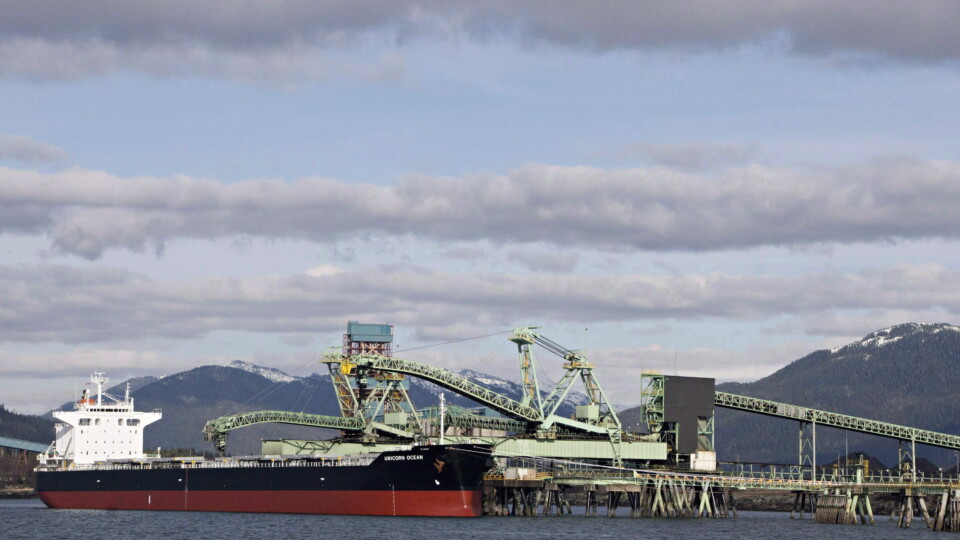
The port of Prince Rupert already handles liquified petroleum gas (LPG) carriers under strict safety protocols, including tug escorts through narrow channels. Modern tankers feature double hulls, redundant power systems, advanced GPS-aided navigation, and operate under mandatory pilotage requirements.
In submissions to a Senate committee regarding Bill C-48 (the Oil Tanker Moratorium Act), the Prince Rupert Port Authority noted that independent assessments have ranked its approaches among the lowest-risk marine corridors on the West Coast—significantly safer than the congested shipping lanes around Vancouver.
The original 1972 tanker moratorium was a voluntary arrangement that emerged during tensions with the United States over the Trans-Alaska Pipeline. Policy decisions eventually pushed loaded tankers far offshore based on worst-case drift scenarios involving vessel power loss.
Critics point out that this framework was established more than half a century ago, long before modern safety practices, GPS navigation, real-time weather modeling, and advanced communication systems.
While marine transport certainly carries risks, the debate about potentially modifying the tanker ban deserves fact-based arguments rather than scare tactics. Economic considerations—including the costs of mandatory tug escorts, smaller tanker requirements, operational challenges posed by geography, and the need to integrate Indigenous marine guardians—represent more substantial hurdles to North Coast oil exports than the environmental arguments May presents in her video.
Fact Checker
Verify the accuracy of this article using The Disinformation Commission analysis and real-time sources.

6 Comments
This fact check highlights the complexities involved in assessing risks and navigational challenges on Canada’s North Coast. Relying on outdated or incomplete information can lead to flawed conclusions.
It’s good to see industry experts and public records being consulted to provide a more accurate picture of the maritime operations and safety protocols in place.
The Hecate Strait claim appears to be misleading based on the information provided. It’s crucial that policy discussions are grounded in accurate, current data about shipping routes and safety procedures.
Requiring marine pilots at key points is an important safety measure. The article’s details on the actual shipping patterns and protocols used raise questions about the credibility of the initial claims.
Fact-checking is important, especially on complex issues like tanker safety. It’s good to see the details being examined closely rather than relying on outdated or selective information.
Navigational protocols and modern maritime operations seem to tell a different story than the claims made. This highlights the need for objective, up-to-date analysis.