


Listen to the article
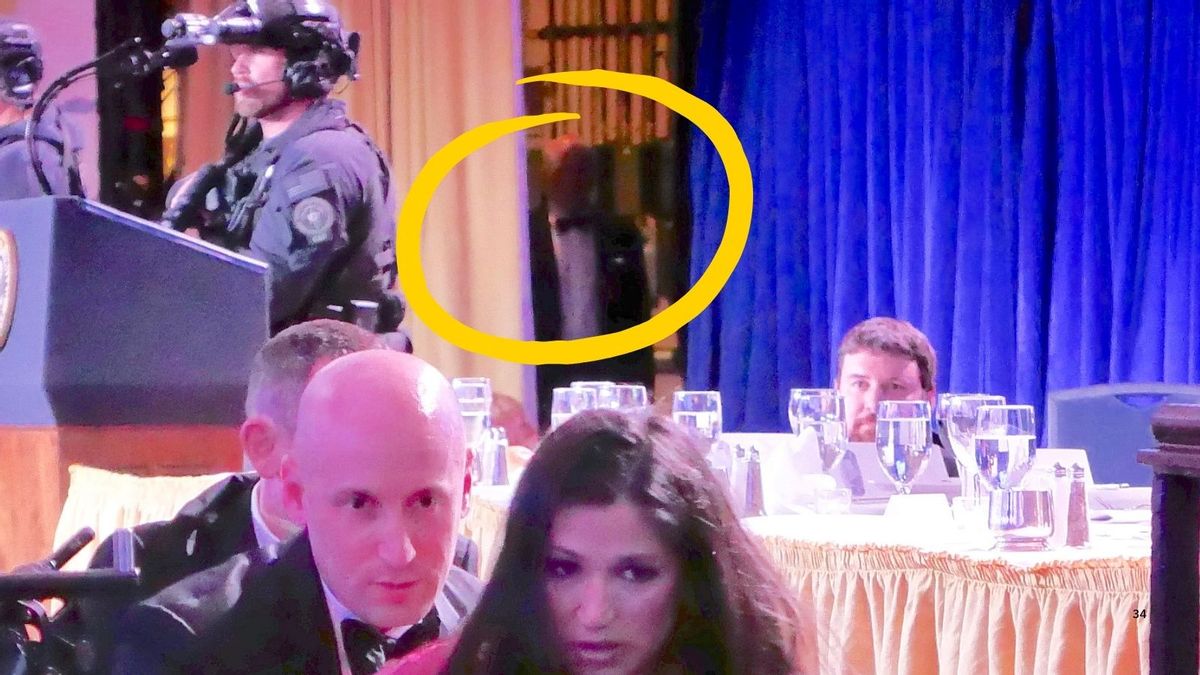
In the aftermath of the shooting incident at the White House Correspondents’ Association dinner on April 25, 2026, a misleading image began circulating on social media platforms, falsely claiming to show former President Donald Trump observing events from behind a curtain at the Washington Hilton’s International Ballroom.
The widely shared photo captured a moment during the chaotic evacuation following the shooting. In the foreground, a Secret Service agent can be seen escorting Stephen Miller, the deputy White House chief of staff, and his pregnant wife Katie Miller toward an exit. However, the focus of the controversy became a figure partially visible in the background, standing behind the stage curtain.
Social media users rapidly spread claims that this figure was Trump himself, with some going further to suggest this was evidence that the administration had staged the shooting as a “false flag” operation. These posts collectively garnered millions of views across multiple platforms including Facebook, Instagram, TikTok, YouTube, and X (formerly Twitter).
Fact-checkers investigating the claim determined the photo was genuine but miscaptioned. Video footage captured from the same angle by Pancho Bernasconi, Getty Images’ vice president of global news, clearly reveals that the man behind the curtain was not Trump. High-resolution analysis of the video shows a man with a noticeably different physical appearance – slimmer build, different facial features, and wearing white accessories on his left lapel that resembled a pocket square or handkerchief.
Multiple videos documenting the immediate aftermath of the shooting show Secret Service agents swiftly removing both Vice President JD Vance and Trump from the stage in opposite directions. No available footage indicates that either man stopped or turned around during the evacuation process, contradicting the narrative that Trump had positioned himself to observe events from behind a curtain.
One particularly viral video pushing the false narrative received over 5 million views across various platforms. The misleading content featured text reading: “Riddle me this. There’s an active shooter threat within yelling distance of the President of the United States of America & Secret Service evacuates him backstage so he can get a better view? What protocol is this?”
The rapid spread of this misinformation highlights the challenges of verification in the digital age, particularly during high-profile security incidents. In crisis situations, initial photos and videos can be easily misinterpreted or deliberately miscaptioned to support conspiracy theories.
Law enforcement authorities have charged a suspect with attempted assassination following the incident. The shooting at the annual dinner, which traditionally brings together journalists, politicians, and celebrities, shocked attendees and viewers alike.
The White House has not yet responded to inquiries about the miscaptioned photo or the conspiracy theories suggesting the administration staged the incident. Officials are likely focused on the ongoing investigation into the shooting and security protocols surrounding presidential events.
This incident serves as a reminder of the importance of verifying information before sharing it on social media, especially during breaking news events. Video evidence from multiple angles, when properly analyzed, often provides crucial context that static images lack.
The investigation into the actual shooting continues as authorities work to determine the full circumstances surrounding the incident and any potential security lapses that may have contributed to it.
Fact Checker
Verify the accuracy of this article using The Disinformation Commission analysis and real-time sources.

12 Comments
This claim about Trump seems like an unfounded conspiracy theory. The image is misleading, but the fact-checkers have debunked it as false. We should be careful about spreading unverified information, especially around sensitive events like this shooting incident.
I agree, it’s important to rely on credible sources and fact-checks when evaluating claims, rather than jumping to conclusions based on partial evidence.
I appreciate the fact-checkers taking the time to investigate this claim and set the record straight. It’s easy for misinformation to spread quickly online, so it’s crucial we have trusted sources to turn to.
Well said. Fact-checking is an essential part of maintaining an informed and accountable public discourse, especially around high-profile events like this.
This is a good reminder to be wary of sensational claims, even if they seem to align with our preexisting beliefs or political leanings. Responsible journalism and fact-checking are crucial for preventing the spread of misinformation.
Exactly. We should all strive to be critical consumers of information, rather than blindly accepting narratives that confirm our own biases.
This shooting incident sounds quite serious. I’m glad the fact-checkers were able to clarify the details around that misleading image. It’s important we have reliable information, especially for events that could impact national security.
Completely agree. Spreading misinformation, even inadvertently, can have serious consequences. We need to be diligent about separating fact from fiction, especially on sensitive topics.
It’s concerning to see how quickly misinformation can spread online, especially around events with national security implications. I’m glad the fact-checkers were able to debunk this specific claim, but it highlights the need for increased media literacy and fact-checking efforts.
Well said. Combating the spread of misinformation requires a multi-faceted approach, including empowering the public to think critically about the information they encounter online.
Interesting that the image sparked so much speculation online, despite being debunked by fact-checkers. It’s a good reminder to be cautious about viral social media claims, even when they seem juicy or sensational.
Absolutely. In the age of misinformation, it’s crucial that we take the time to verify claims before amplifying them, no matter how intriguing they may be.