


Listen to the article
A viral song titled “Godi Media” that has been circulating on social media is not the work of a famous Sikh singer named BV Singh as claimed, but rather an AI-generated creation designed to spread political content, an investigation has revealed.
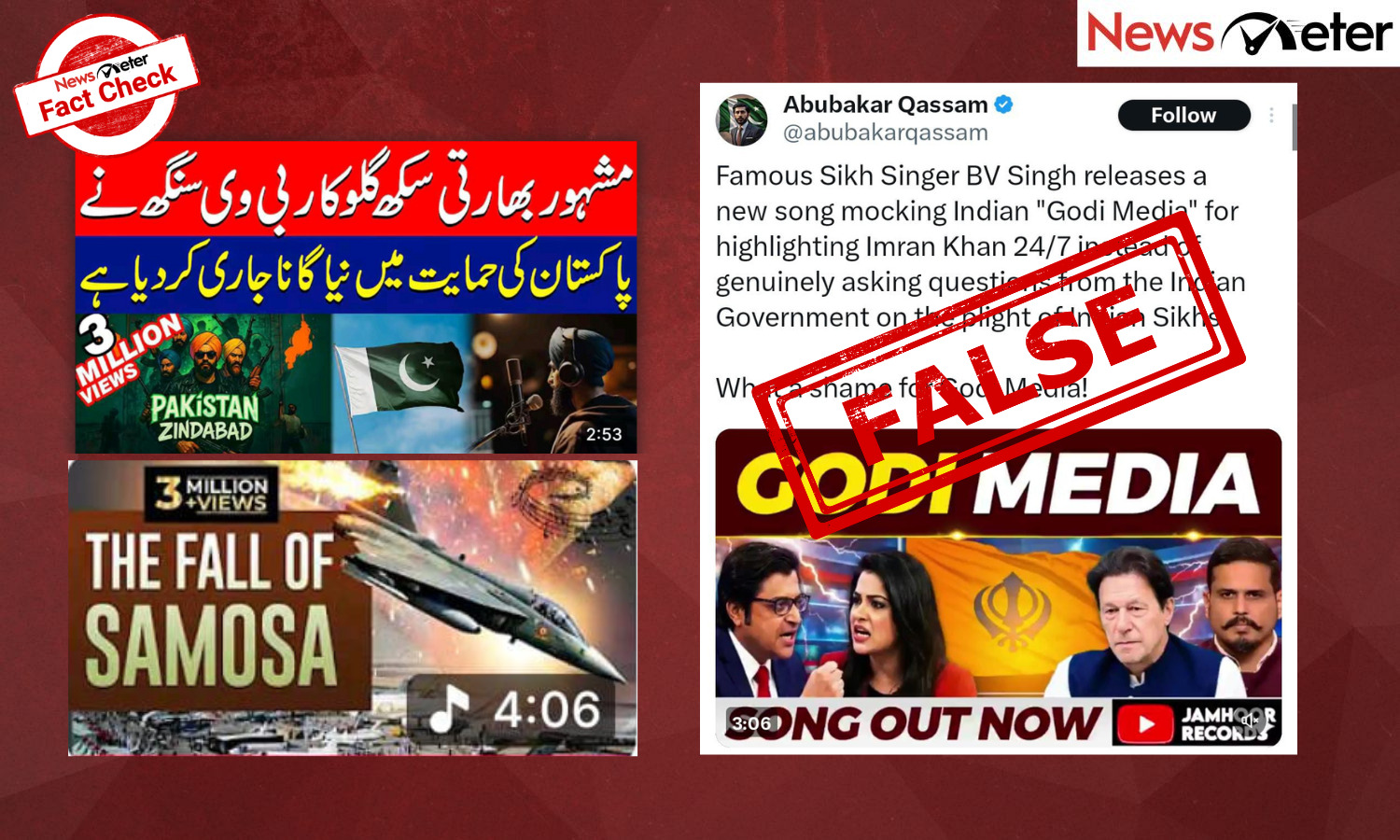
The video began gaining traction when users shared it on social media platforms, claiming it was a new release by a prominent Sikh vocalist criticizing Indian media outlets. One user on X (formerly Twitter) wrote, “Famous Sikh Singer BV Singh releases a new song mocking Indian ‘Godi Media’ for highlighting Imran Khan 24/7 instead of genuinely asking questions from the Indian Government on the plight of Indian Sikhs.”
The three-minute music video allegedly released by “Jamnoor Records” makes multiple references to farmers’ protests and suggests that Indian media diverts attention from Punjab’s agricultural crisis by focusing on the former Pakistani Prime Minister Imran Khan. The post quickly garnered supportive comments from users who appeared to validate the existence of the supposed artist.
However, a detailed fact-check has determined the claim to be entirely fabricated. No singer by the name of BV Singh exists in the mainstream music industry. Searches across major music platforms including Apple Music, Spotify, Gaana, and JioSaavn yielded no results for an artist by this name or any songs attributed to such a performer.
Technical analysis of the audio using Hiya Audio Intelligence, a tool designed to detect artificially generated content, confirmed that the vocals in the song are synthetic. The assessment found only a 10 percent match with human vocal markers, strongly indicating AI generation.
The YouTube channel Jamnoor Records, which uploaded the song on December 1 with the title “Viral Punjabi Song | GODI MEDIA | BV SINGH | Jamnoor Records,” has since become inaccessible due to government orders. The channel description had claimed the singer was from Amritsar, India, and the album was titled “Voice of Punjab” – details that appear to have been fabricated to lend credibility to the content.
This is not the first instance of such content appearing online. Another song allegedly by the same non-existent artist titled “Pakistan Zindabad” was uploaded to YouTube on July 16 by a channel called “JD News.” This track similarly featured anti-government sentiments and was also determined to be AI-generated, with only a 2 percent match to human vocal patterns.
The investigation found that Jamnoor Records had published numerous AI-generated music videos under various fictional artist names, all sharing strong anti-Indian government messaging. Among these was a song mocking the crash of an Indian Air Force Tejas fighter jet during the Dubai Air Show, and a Telugu music video with derogatory content aimed at the Prime Minister and other government ministers.
The proliferation of such sophisticated AI-generated content raises concerns about the use of artificial intelligence to create politically charged material that can rapidly spread misinformation. The case highlights the growing challenge of distinguishing authentic content from artificially created media, particularly when distributed with fabricated attributions to lend legitimacy.
Authorities have not commented on whether they are investigating the origins of these AI-generated songs or if any action will be taken against channels distributing such content beyond the removal orders already issued.
Fact Checker
Verify the accuracy of this article using The Disinformation Commission analysis and real-time sources.

9 Comments
It’s disheartening to see how easily misinformation can spread, even when it’s packaged as a catchy song. We need to stay vigilant and fact-check claims before sharing them, no matter how appealing they may seem.
It’s concerning to see how AI-generated content is being used to create false narratives and mislead the public. We need stronger measures to combat the proliferation of this kind of disinformation.
This is a good example of why we should always fact-check claims, even when they seem to align with our own views. Spreading unverified information, even inadvertently, can contribute to the spread of misinformation.
I’m glad the investigation uncovered that this viral song is not actually from a real artist as claimed. It’s worrying how easily misinformation can spread on social media these days.
Absolutely, we need to be extra vigilant these days about verifying the source and authenticity of content, especially when it has a clear political agenda.
While I appreciate the intent behind this ‘Godi Media’ song, the fact that it’s AI-generated and not from a real artist is quite disappointing. We should be wary of falling for these types of fabricated claims.
I agree. Even if the message resonates with us, we have to be careful not to amplify content that is ultimately false or misleading, regardless of its political leanings.
This is a good reminder that we need to be critical consumers of online content, especially when it comes to politically charged issues. Verifying the source and authenticity of information is so important.
Interesting fact check on this supposed ‘Godi Media’ song. Seems like another case of AI-generated content trying to spread political misinformation. Good to see this being debunked.