


Listen to the article
False Claims of U.S. Pilot Captured by Iran Debunked Through Digital Forensics
Claims that Iran captured a United States fighter jet pilot in early April 2026 have been thoroughly debunked by a collaborative investigation between Tempo and the Deepfakes Analysis Unit (DAU) of the Trusted Information Alliance.
The false narrative, which spread widely across social media platforms including Threads, Facebook, Instagram, X, and YouTube, alleged that Iran’s Islamic Revolutionary Guard Corps (IRGC) had shot down an F-15E Strike Eagle aircraft and taken its pilot prisoner. Some posts claimed the pilot would be exchanged for 10,000 Palestinian detainees.
Digital forensic analysis revealed that the supposed evidence consisted primarily of AI-generated imagery and unrelated footage from completely different events.
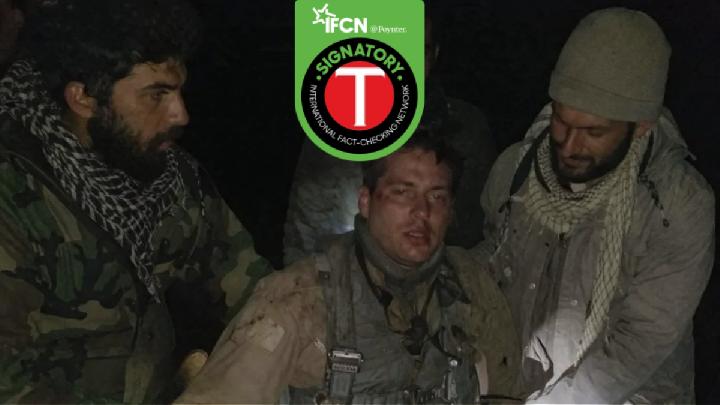
The investigation traced the origin of the main image to Farsnews, an IRGC-affiliated agency that first published the purported photo of a captured military personnel on April 5. Though the original post was deleted, digital traces of the image remained indexed on search engines and continued circulating with captions claiming “US pilot captured alive” in Arabic.
Tempo’s investigation with DAU identified multiple visual inconsistencies in the image. These included an unnaturally widened edge of the soldier’s uniform on the left side and anatomical anomalies in the fingers of the soldier on the right. Lighting patterns in the image were also deemed unnatural, with illumination appearing predominantly from the left side and rear.
“The image has the potential to be created using AI, although it is quite difficult to detect,” a DAU analyst stated on April 13.
When subjected to the AI or NOT detection tool, the image received a 79 percent probability score for containing AI-generated elements. The analysis suggested several potential AI models that may have been used to create the image, including Nano Banana (27 percent probability), Stable Diffusion (21 percent), MidJourney (14 percent), and Flux (14 percent).
A second piece of supposed evidence—a video showing a parachute landing—was also determined to be unrelated to any U.S.-Iran incident. Fact-checkers identified the footage as showing members of Libya’s special forces unit Al-Saiqa (also known as Thunderbolt) in Benghazi on March 2, 2026. According to Nabdapp, the soldier in the video was being welcomed by his team after suffering a leg fracture during the landing.
The Turkey-based fact-checking organization Teyit confirmed that the video has been in circulation since early March 2026, originating from a Libya Review report, and has no connection whatsoever to claims about Iran capturing American military personnel.
While The Times reported that Iran’s military did shoot down a United States F-15E jet in southwestern Iran during this period, Washington confirmed that the pilot was evacuated shortly after the incident. The weapon systems officer (WSO)—a colonel—reportedly evaded capture by hiding for several days, climbing mountains up to two kilometers high before signaling rescue teams with a flare.
According to reports, the Central Intelligence Agency strategically spread various rumors as distractions during the rescue operation, which involved hundreds of special forces personnel supported by dozens of fighter jets and U.S. military helicopters.
The comprehensive verification by Tempo’s fact-checking team conclusively determined that the narrative claiming Iran captured a United States F-15E fighter jet pilot or crew member is false. This case highlights the increasing sophistication of disinformation campaigns utilizing artificial intelligence to fabricate convincing but entirely fictional narratives during geopolitical tensions.
As regional conflicts continue to generate international concern, the incident serves as a reminder of the critical importance of digital literacy and professional fact-checking in an era where AI-generated content can be weaponized to inflame diplomatic situations and manipulate public opinion.
Fact Checker
Verify the accuracy of this article using The Disinformation Commission analysis and real-time sources.

8 Comments
While I’m glad the claims about the US pilot capture were debunked, the broader issue of military tensions and information warfare between the US and Iran remains concerning. Maintaining factual, balanced reporting on these issues is crucial.
Interesting fact check on the alleged capture of a US fighter pilot by Iran. It’s good to see the claims thoroughly debunked through digital forensic analysis. Spreading misinformation, even about military conflicts, can be very harmful.
Agreed, it’s crucial to verify claims like these before they spread further. Fact-checking is essential to counter the proliferation of false narratives, especially those related to sensitive geopolitical issues.
This is an important development in the ongoing tensions between the US and Iran. While I’m glad the claims about the pilot capture were proven false, the fact that such misinformation was able to spread widely is concerning.
You’re right, the rapid spread of this false narrative on social media platforms is worrying. It highlights the need for robust fact-checking and media literacy efforts to combat the growing challenge of online disinformation.
The use of AI-generated imagery and unrelated footage to support the false narrative about the captured US pilot is quite alarming. This incident underscores the importance of digital forensics in exposing deepfakes and other forms of manipulated media.
Absolutely. The proliferation of AI-powered disinformation techniques is a growing threat that requires continued investment in advanced fact-checking and analysis capabilities to stay ahead of the curve.
I appreciate the thorough investigation that went into debunking these claims. It’s a good reminder that we need to be vigilant about verifying information, especially when it involves sensitive military or political matters.