


Listen to the article
In a growing trend of online deception, holiday shoppers looking for unique garden gifts are encountering an array of seemingly exotic hosta plants in stunning colors that experts say simply don’t exist.
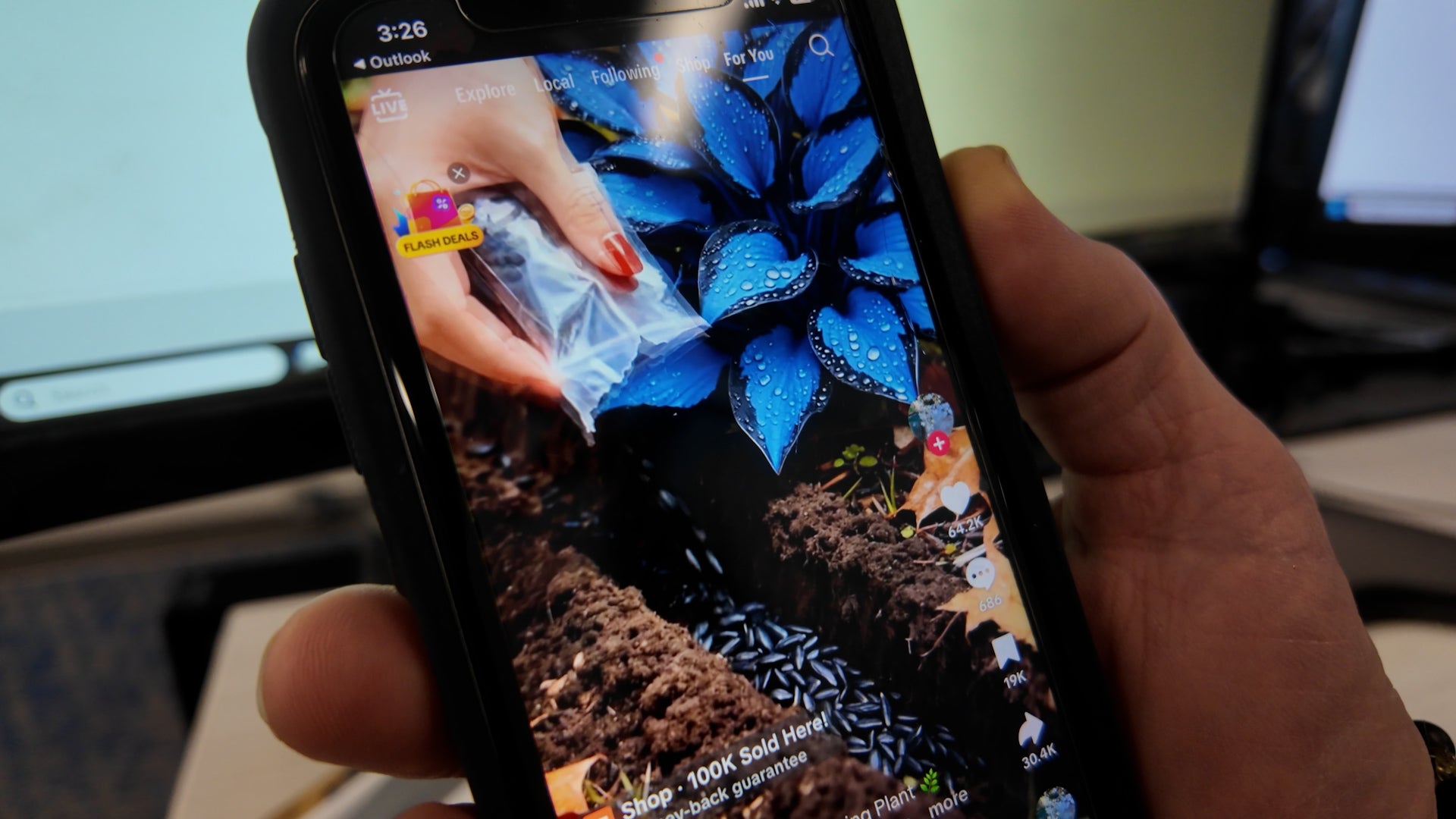
Advertisements across major online retailers including Amazon and Walmart are promoting hostas in spectacular shades of red, purple, blue, and even “cosmic blue” and “deep black.” One TikTok advertisement boldly claims, “Plant it by your front door in December and your home instantly becomes the Christmas show stopper of the entire street.”
These vibrant, eye-catching plants stand in stark contrast to the more subdued varieties familiar to experienced gardeners—raising immediate red flags for horticulture experts.
Bill Hegeman, co-president of the Genesee Valley Hosta Society, doesn’t mince words when shown these listings. “Definitely all fake,” he declares. Hegeman, who along with his wife cultivates more than 500 different hosta varieties in their yard, explains that while hostas do come in various colors and patterns, nothing in nature resembles the wildly colorful specimens advertised online.
“Hosta is a perennial. It’s a shade tolerant perennial,” Hegeman explains, adding that variegated or multicolored hostas don’t reliably reproduce their patterns from seeds. When asked what might happen if consumers planted these purported seeds, Hegeman responds with skepticism: “Heaven only knows. Maybe you’re going to have a weed garden.”
Further investigation revealed inconsistencies in the marketing materials themselves. Two different advertisements for supposedly identical plants show completely different seeds, another indication of fraudulent practices.
The digital manipulation behind these deceptive images was confirmed by Christopher Schwartz, a research scientist at Rochester Institute of Technology who works with the Deepfake Detection Project. After examining the videos and photographs, Schwartz identified tell-tale signs of artificial intelligence manipulation.
“Whenever AI is used to manipulate or generate, influence a piece of content, there will be trace evidence of that process left behind,” Schwartz explains. His analysis found numerous unnatural elements, including oddly shaped hands and leaves, and peculiar water physics in a TikTok video showing someone watering the plant.
“There’s just a lot of unnaturalness in the physics of the video,” Schwartz notes, confirming through both visual assessment and machine perception techniques that the content was AI-generated.
This case represents a growing challenge for consumers navigating online marketplaces, where artificial intelligence tools have made it increasingly easy to create convincing but entirely fictional products. The hosta seed scam appears to be part of a broader pattern, with other flowering plants similarly misrepresented through digital manipulation.
The trend is particularly concerning for the gardening industry, which has seen increased interest from consumers during and after the pandemic. Online plant and seed sales have grown substantially in recent years, creating opportunities for unscrupulous sellers to target inexperienced gardeners unfamiliar with what’s botanically possible.
Garden experts recommend consumers purchase plants and seeds from reputable nurseries or garden centers rather than unverified online sellers. When shopping online, checking with local horticultural societies or extension offices can help verify whether advertised plant varieties actually exist.
Attempts to contact the TikTok account holder and representatives from online marketplaces listing these products have not received responses.
For hopeful gardeners fascinated by these colorful hostas, the reality may be disappointing, but legitimate hosta varieties still offer impressive diversity, with over 3,000 registered cultivars featuring various patterns of green, blue, gold, and white—just not the rainbow of colors promised by these digital fakes.
Fact Checker
Verify the accuracy of this article using The Disinformation Commission analysis and real-time sources.

14 Comments
Production mix shifting toward Fact Check might help margins if metals stay firm.
Good point. Watching costs and grades closely.
Uranium names keep pushing higher—supply still tight into 2026.
Nice to see insider buying—usually a good signal in this space.
Good point. Watching costs and grades closely.
Interesting update on Fact Check: Experts Warn Against Fraudulent Exotic Hosta Seeds Sold Online. Curious how the grades will trend next quarter.
Uranium names keep pushing higher—supply still tight into 2026.
Good point. Watching costs and grades closely.
Uranium names keep pushing higher—supply still tight into 2026.
Good point. Watching costs and grades closely.
Good point. Watching costs and grades closely.
I like the balance sheet here—less leverage than peers.
Good point. Watching costs and grades closely.
Good point. Watching costs and grades closely.