


Listen to the article
False Claims Circulate About New York Mayoral Frontrunner’s Political Ideology
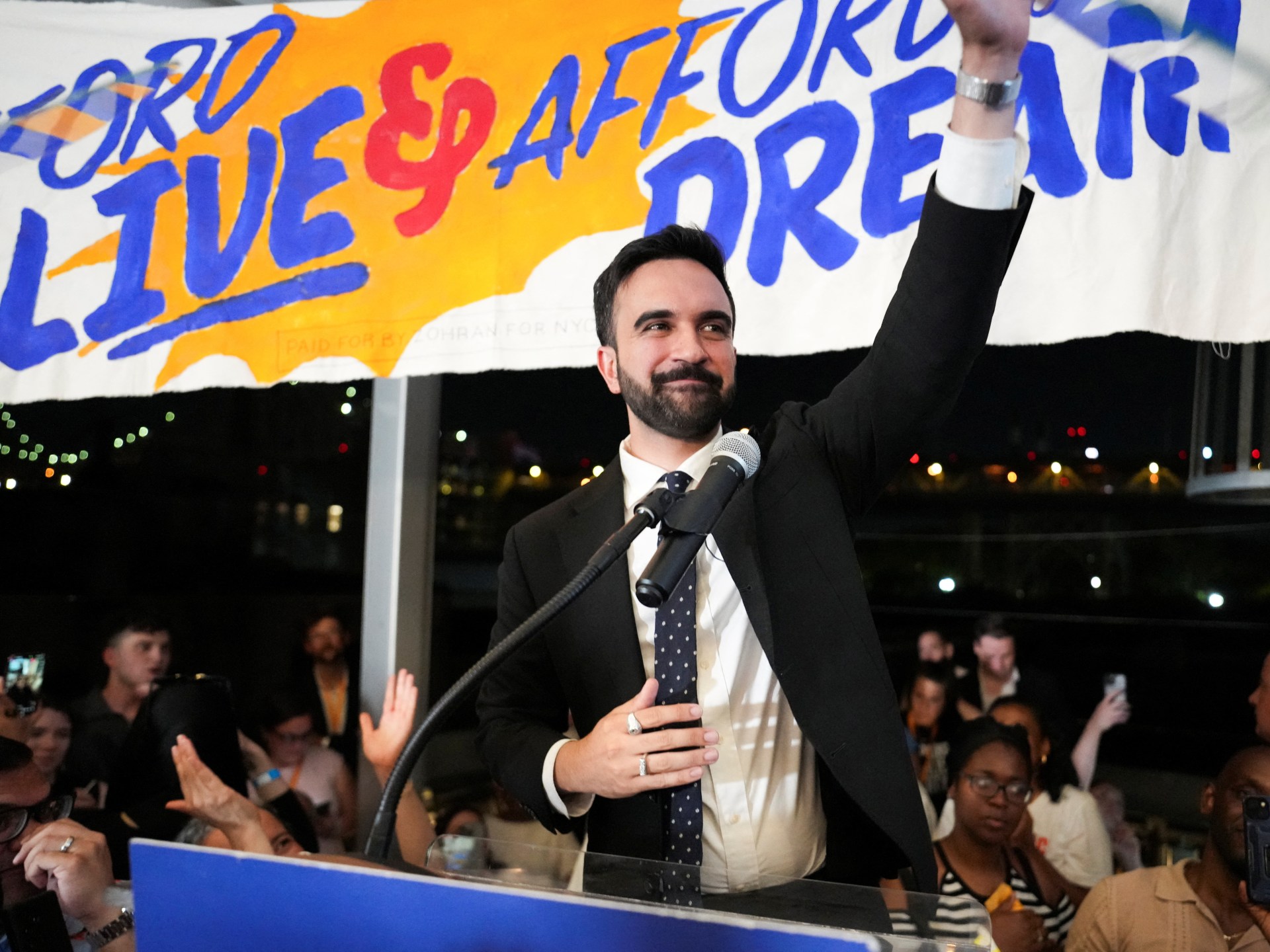
Zohran Mamdani, the 33-year-old who has emerged as the frontrunner in New York City’s Democratic mayoral primary, has become the target of misleading political labels as high-profile conservatives falsely characterize him as a communist rather than the democratic socialist he identifies as.
The controversy erupted after Mamdani made national headlines on June 24 when former New York Governor Andrew Cuomo conceded the primary. As the city completes its ranked choice voting process, Mamdani is expected to secure the Democratic nomination, positioning him to face Republican candidate Curtis Sliwa and incumbent Mayor Eric Adams, who is running as an independent, in the November election.
Former President Donald Trump escalated the rhetoric on his Truth Social platform, calling Mamdani “a 100% Communist Lunatic.” The characterization was echoed by other prominent conservatives, including Representative Elise Stefanik, conservative podcast host Nick Sortor, and media figure Ben Shapiro, who declared on his podcast that “a communist is likely to be the next mayor of New York City.”
Political science experts, however, have rejected these characterizations as fundamentally inaccurate.
“Mamdani is NOT a communist,” explained Anna Grzymala-Busse, Stanford University professor of international studies, in correspondence with fact-checkers. “Communism involves a centrally planned economy, with no market forces. Prices and quantities are set by a central government authority. There is no democratic political competition, and instead a single party rules the country. He is not calling for any of this.”
Mamdani, who currently represents part of Queens in the New York State Assembly, has been endorsed by the New York City Democratic Socialists of America, of which he is a member. His platform focuses on addressing affordability issues in housing, transportation, and food access—not eliminating private property or markets.
Among Mamdani’s proposals are rent stabilization measures, creating city-owned grocery stores (starting with one in each borough, modeled after municipality-owned stores in Kansas), free public buses, expanded child care services, and increases to both the corporate tax rate and minimum wage.
Geoffrey Kurtz, associate professor of political science at the Borough of Manhattan Community College, called the communist characterization “an absurd slander,” noting the significant differences between democratic socialism and communism.
Democratic socialism, as practiced in many Western democracies, typically involves robust social programs and public services within a market-based economy—not the elimination of private property or one-party political rule that defines communist systems.
Ted Henken, a Baruch College professor, pointed out that Mamdani’s proposals represent targeted interventions to address New York City’s high cost of living rather than a wholesale government takeover of industries. His city-run grocery store idea, for example, would complement existing private businesses rather than replace them.
“The New Yorkers who support him seem to do so not because of any communist ideology on his or their part, but because he proposes to address this crisis of affordability,” Henken explained.
The accusations appear to follow a historical pattern in American politics of labeling progressive Democrats as communists or communist sympathizers—a tactic that dates back decades but has found renewed vigor in response to the rising prominence of democratic socialists like Senator Bernie Sanders.
Oxana Shevel, a Tufts University associate professor of comparative politics, noted that many of Mamdani’s proposals are common in other democratic nations: “Many western democracies – from France to Canada – have policies such as free or heavily subsidized child care and public transit.”
According to Harvey Klehr, an Emory University expert on American communism, democratic socialism emerged specifically as an alternative to communism, rejecting core communist concepts such as hostility to representative democracy and state ownership of all production.
While Mamdani’s policy proposals certainly merit robust debate on their merits and feasibility, experts across disciplines agree that labeling them as communist represents a fundamental mischaracterization of both his platform and political ideology.
Fact Checker
Verify the accuracy of this article using The Disinformation Commission analysis and real-time sources.
