


Listen to the article
The false rumor that began circulating in early 2026 claiming Jeffrey Epstein exchanged emails with Israeli Prime Minister Benjamin Netanyahu about a “torture video” has been definitively debunked, according to a thorough investigation of recently released Department of Justice documents.
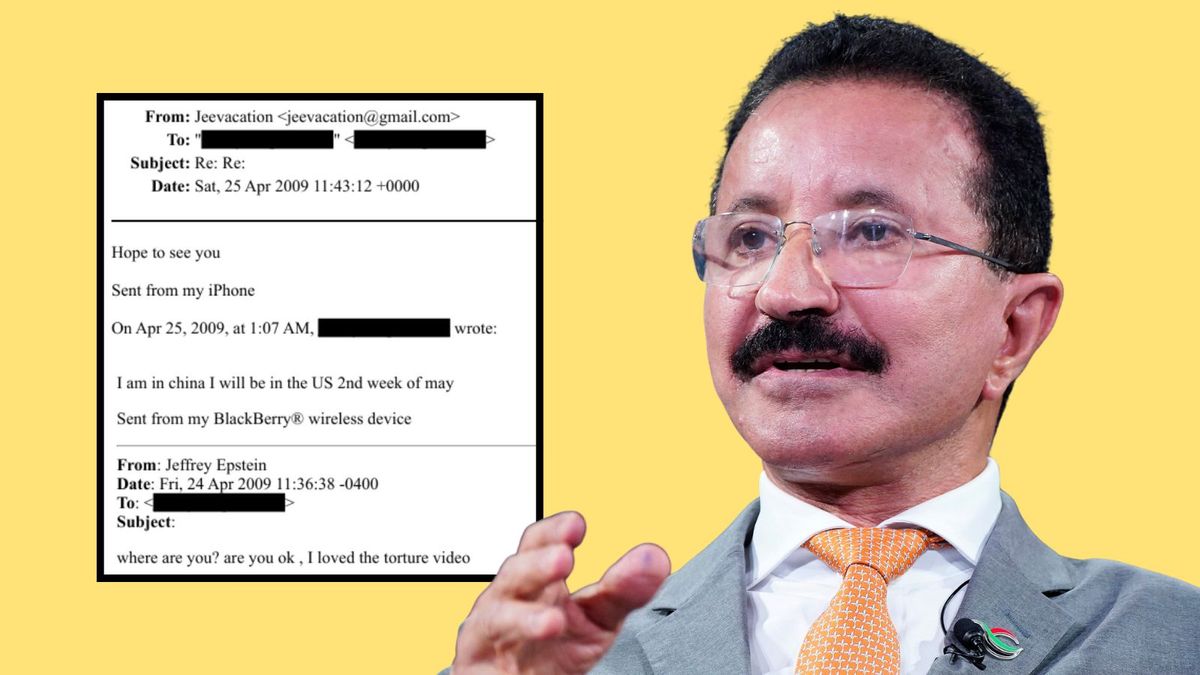
In February 2026, millions of files related to the late sex offender Jeffrey Epstein were released by the U.S. Department of Justice, revealing numerous email exchanges between the disgraced financier and various prominent individuals. Shortly after the release, social media users began sharing an April 2009 email in which Epstein wrote: “where are you? are you ok, i loved the torture video” to an unidentified recipient who responded: “I am in china I will be in the US 2nd week of may.”
Several posts claimed the redacted recipient was Netanyahu, pointing to purported evidence that the Israeli prime minister was in China during April 2009 and would be in the United States in May of that year, matching the timeline in the email exchange.
However, official records contradict this assertion entirely. On April 23, 2009 – just one day before the email in question – Netanyahu was documented meeting with Chinese Foreign Minister Yang Jiechi in Jerusalem, not in China as the false narrative suggested. This meeting was confirmed by archived records from the Chinese Ministry of Foreign Affairs.
The actual recipient of Epstein’s disturbing email was revealed in mid-February by Rep. Thomas Massie (R-Ky.), who identified the person as Sultan Ahmed Bin Sulayem, a Dubai-based business tycoon. Deputy Attorney General Todd Blanche subsequently confirmed this identification. Following this revelation, Bin Sulayem resigned from his position as chairperson of DP World, a global logistics company.
The timeline further discredits the Netanyahu connection. According to DOJ records, Epstein sent the email on April 24, 2009, and followed up the next day saying, “Hope to see you,” after the recipient mentioned visiting the U.S. in May. While Netanyahu did visit Washington in mid-May 2009 to meet with then-President Barack Obama and congressional leaders, it’s highly implausible Epstein could have arranged a meeting with the Israeli leader during this period.
During 2008-2009, Epstein was serving an 18-month sentence in Palm Beach County, Florida, for sex crimes involving a minor. Although he was controversially permitted to leave jail during daytime hours as part of a work-release program, his movements remained restricted. He ultimately served 13 months of his sentence before being released in July 2009.
The false Netanyahu claim represents just one of many misleading narratives that have emerged since the Epstein files were made public. The case illustrates how quickly misinformation can spread when partial information is taken out of context, especially involving high-profile political figures.
The DOJ’s decision to release the Epstein files has reignited public interest in the case of the financier, who died in federal custody in 2019 while awaiting trial on sex trafficking charges. The documents continue to be scrutinized by journalists and investigators seeking to understand the full extent of Epstein’s network and activities.
This particular false claim about Netanyahu joins a growing list of debunked rumors surrounding the Epstein case, highlighting the importance of verifying information through multiple credible sources before accepting social media assertions as fact, particularly when they involve serious allegations against public figures.
Fact Checker
Verify the accuracy of this article using The Disinformation Commission analysis and real-time sources.

9 Comments
While Jeffrey Epstein was clearly involved in many dubious activities, this particular claim about Netanyahu seems to be unfounded. It’s important to separate fact from fiction.
This is a concerning allegation, but I’m glad it has been thoroughly debunked. It’s important to verify claims, especially about high-profile figures, before spreading them further.
I’m glad the authorities were able to thoroughly examine the evidence and determine that this email exchange never actually occurred. Maintaining public trust requires transparency and accountability.
Fact-checking is crucial in today’s information landscape. I appreciate the diligence of investigators in tracking down the truth behind this rumor.
Agreed. Spreading unsubstantiated claims, even about public figures, can have serious consequences. Reliable sources are key.
Rumors and conspiracy theories can spread rapidly online, making careful verification all the more important. This report demonstrates the value of rigorous journalistic investigation.
Absolutely. In an age of instant information sharing, we must be vigilant about distinguishing truth from fiction. Well-researched fact-checking is crucial.
This is a timely reminder of the need to approach sensational claims with a critical eye. Fact-checking and verifying sources should be standard practice, especially for sensitive topics.
While high-profile figures often face a barrage of unsubstantiated claims, it’s heartening to see that this particular allegation has been conclusively disproven. Responsible reporting is essential.