


Listen to the article
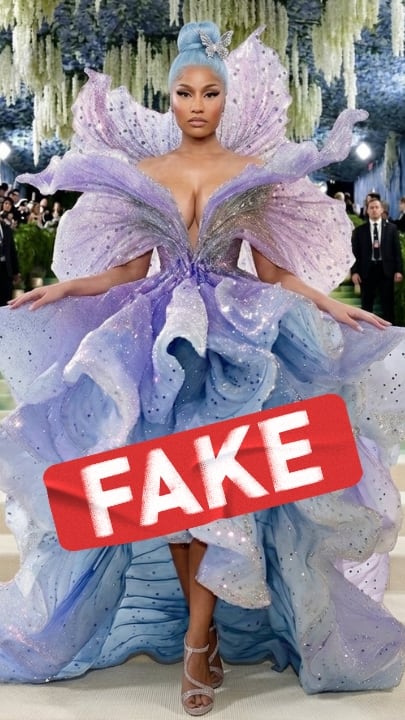
Several digitally manipulated images purporting to show celebrities at Monday’s Met Gala have gone viral on social media, prompting confusion among fans about who actually attended the prestigious fashion event.
The images, created using artificial intelligence tools, show celebrities including Nicki Minaj, Lady Gaga, and Beyoncé in elaborate outfits supposedly worn at the annual fundraising gala for the Metropolitan Museum of Art’s Costume Institute in New York City.
One widely circulated image depicted rapper Nicki Minaj in an ornate golden dress with an elaborate headdress. However, Minaj did not attend this year’s event, as confirmed by multiple media outlets that documented the official guest list. The rapper was last seen at the Met Gala in 2019.
Similarly, a fabricated image of Lady Gaga wearing an architectural black and white ensemble gained significant traction online. Gaga, who has become known for her theatrical Met Gala appearances in previous years, was absent from this year’s celebration. Her last appearance was in 2019 when she made headlines with four outfit changes on the red carpet.
Social media users expressed confusion after seeing the manipulated images, with many questioning which celebrity appearances were authentic. “I can’t tell what’s real anymore,” wrote one Twitter user who shared side-by-side comparisons of real and AI-generated Met Gala looks.
Fashion journalist Vanessa Friedman noted the concerning trend. “The proliferation of these fake images represents a new challenge for event coverage,” she said. “When AI-generated content is this convincing, it undermines public trust in visual media and creates confusion about what actually occurred.”
The 2023 Met Gala, which took place on May 1, honored designer Karl Lagerfeld with the theme “Karl Lagerfeld: A Line of Beauty.” The exclusive event drew numerous celebrities including Rihanna, Kim Kardashian, Jennifer Lopez, and Bad Bunny, all of whom were documented by official photographers.
Technology experts point to the increasing sophistication of AI image generation tools as the reason for the convincing nature of these fake images. Dr. Emma Collins, a digital media researcher at Columbia University, explained that these tools can now create highly realistic images that mimic specific styles and contexts.
“What we’re seeing is the democratization of image manipulation technology that previously required extensive professional skills,” Collins said. “Now, with just a text prompt, anyone can generate a convincing image of a celebrity at an event they never attended.”
The spread of these fabricated images comes amid growing concerns about AI-generated content and its potential to spread misinformation. Social media platforms have struggled to address the influx of such content, with many lacking robust systems to detect and label AI-generated images.
Meta, the parent company of Instagram and Facebook where many of these images circulated, recently announced plans to develop better tools to identify AI-created content, though implementation remains incomplete.
Fashion industry insiders have expressed concern about how these fake images might impact the cultural significance of events like the Met Gala. “These fabrications dilute the artistic and cultural impact of the actual fashion statements made at the event,” said Michelle Wilson, a fashion historian. “When people can’t distinguish between what was actually created and what was generated by AI, it undermines the creative work of designers and stylists.”
The Metropolitan Museum of Art has not officially commented on the circulation of fake Met Gala images, but has maintained an archive of official photographs on its website to document the authentic attendees and their fashion choices.
Media literacy advocates are using this incident to highlight the importance of critical consumption of visual content. “This is a perfect teaching moment,” said Marcus Ramirez of the Digital Media Literacy Coalition. “We need to encourage people to verify images through multiple sources, especially for high-profile events where official documentation exists.”
As AI technology continues to advance, experts predict this problem will only grow more prevalent, making the ability to discern authentic visual content increasingly important for media consumers.
Fact Checker
Verify the accuracy of this article using The Disinformation Commission analysis and real-time sources.

8 Comments
Interesting to see the confusion around these fake Met Gala photos. It’s a good reminder to be skeptical of online images, especially those that seem too outrageous to be true. Fact-checking is important to prevent the spread of misinformation.
As someone who follows celebrity fashion, I find these AI-generated Met Gala photos fascinating, even if they’re not real. The technology behind them is quite impressive, though of course the images themselves are misleading. Curious to see how this kind of manipulation evolves.
It’s a shame these manipulated photos are misleading fans about who actually attended the Met Gala. While the outfits look creative, it’s important to verify the authenticity of celebrity fashion before sharing. Glad the article is setting the record straight.
These AI-generated Met Gala photos are certainly eye-catching, but I’m glad the article is setting the record straight. It’s crucial we don’t blindly believe everything we see online, even if the images look realistic. Maintaining trust in news reporting is key.
Kudos to the Disinformation Commission for debunking these fake Met Gala photos. In an era of rampant online misinformation, it’s crucial that outlets like this fact-check viral content and separate truth from fiction. Helps maintain trust in celebrity news reporting.
Glad to see the Disinformation Commission taking the time to thoroughly debunk these fake Met Gala photos. In an age of rampant online misinformation, their work to separate truth from fiction is crucial. Helps maintain trust in celebrity journalism.
As someone who follows celebrity fashion, I have to say these manipulated Met Gala photos are quite convincing. But I appreciate the article taking the time to clarify what’s real and what’s not. Fact-checking is so important, especially for viral content.
While the manipulated Met Gala photos are visually striking, it’s good the article is setting the record straight. Fake images can spread quickly online and cause real confusion, so I’m glad the facts are being clarified here. Important for fans to get accurate information.