


Listen to the article
Dickson, Not Jonathan, Founded Nigeria Democratic Congress Party
Former Bayelsa State Governor and current Senator for Bayelsa West, Seriake Dickson, has been confirmed as the founder of the Nigeria Democratic Congress (NDC), contradicting claims that former President Goodluck Jonathan established the political party.
The clarification comes after misleading information circulated on social media platform X, where a user incorrectly attributed the party’s formation to Jonathan. Multiple sources and statements from Dickson himself confirm his role as the party’s founder.
In recent interviews, Dickson has openly described the NDC as his “baby,” stating that he founded the party alongside associates from across Nigeria. His departure from the People’s Democratic Party (PDP), where he had been a prominent figure, was reportedly motivated by what he characterized as prolonged internal crises that the party’s leadership failed to resolve effectively.
“The decision to establish a new political platform came after careful consideration of the ongoing challenges within the PDP,” a source close to the senator explained. “Senator Dickson believes the NDC offers a fresh alternative in Nigeria’s political landscape.”
The party’s registration process has not been without controversy. Dickson recently provided detailed clarification on the NDC’s formation history following allegations from Umar Ardo, a chieftain of the All Democratic Alliance, who claimed the party lacked proper registration with the Independent National Electoral Commission (INEC).
According to Dickson, the registration process began in 2017 but was temporarily halted when INEC, under the leadership of Mahmood Yakubu, suspended the registration of new political parties. “The application had already been initiated at a time when Dr. Ardo wasn’t even contemplating registering a political party,” Dickson stated.
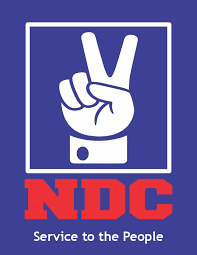
The registration encountered further obstacles when it resumed after INEC lifted its embargo. The commission initially rejected the NDC’s application due to concerns about the party’s proposed logo – a two-finger sign that INEC deemed too similar to the All Progressives Congress (APC) broom symbol.
“We were genuinely surprised by this objection,” Dickson said. “Despite our willingness to modify the logo to address these concerns, INEC maintained its position.”
Faced with this setback, the NDC pursued legal action against what Dickson termed “unlawful exclusion.” The court ultimately ruled in the party’s favor, affirming their constitutional right to freedom of association and directing INEC to register the party.
“INEC complied with the court order and issued our registration certificate,” Dickson explained. “The commission has not appealed this judgment, and the period allowed for appeals has elapsed. Only INEC would have had the legal standing to contest this decision.”
The NDC has reportedly begun formal political activities, including notifying INEC of its National Executive Committee meetings. Political analysts suggest the emergence of the NDC could further fragment Nigeria’s opposition landscape ahead of future elections, particularly in the oil-rich Niger Delta region where both Dickson and Jonathan maintain significant influence.
The controversy highlights the fluid nature of Nigerian party politics, where new political formations regularly emerge, often led by prominent figures who have broken away from established parties. It also underscores the rigorous process political parties must navigate to achieve official recognition in Nigeria’s electoral system.
No evidence supports the claim that Goodluck Jonathan had any role in establishing the NDC, confirming that assertions linking the former president to the party’s formation are false.
Fact Checker
Verify the accuracy of this article using The Disinformation Commission analysis and real-time sources.

8 Comments
This fact-check serves as a good reminder to be cautious about claims made on social media and to always seek out authoritative and verified sources of information, especially when it comes to political matters.
Absolutely, cross-checking information and not blindly accepting what’s shared on social media is crucial to maintain a well-informed electorate.
Interesting to see the clarification on who really founded the NDC party in Nigeria. It’s important to get the facts straight, especially when it comes to political parties and their origins.
I’m curious to learn more about the motivations and goals behind the founding of the NDC party. What specific issues or reforms is it aiming to address in the Nigerian political system?
The decision by Dickson to establish the NDC party after leaving the PDP due to internal crises seems like a strategic move to offer a fresh alternative in the Nigerian political landscape.
This is a good example of how misinformation can spread on social media. I’m glad the sources were able to confirm that it was Seriake Dickson, not Goodluck Jonathan, who founded the NDC party.
Agreed, verifying the facts is crucial to prevent the spread of false narratives, especially around important political institutions like political parties.
It’s good to see the media taking the time to thoroughly investigate and clarify the origins of the NDC party. Accurate reporting on political matters is essential for a healthy democracy.