


Listen to the article
Fact Check: Queen Camilla Trump Comments Video Exposed as AI Fabrication
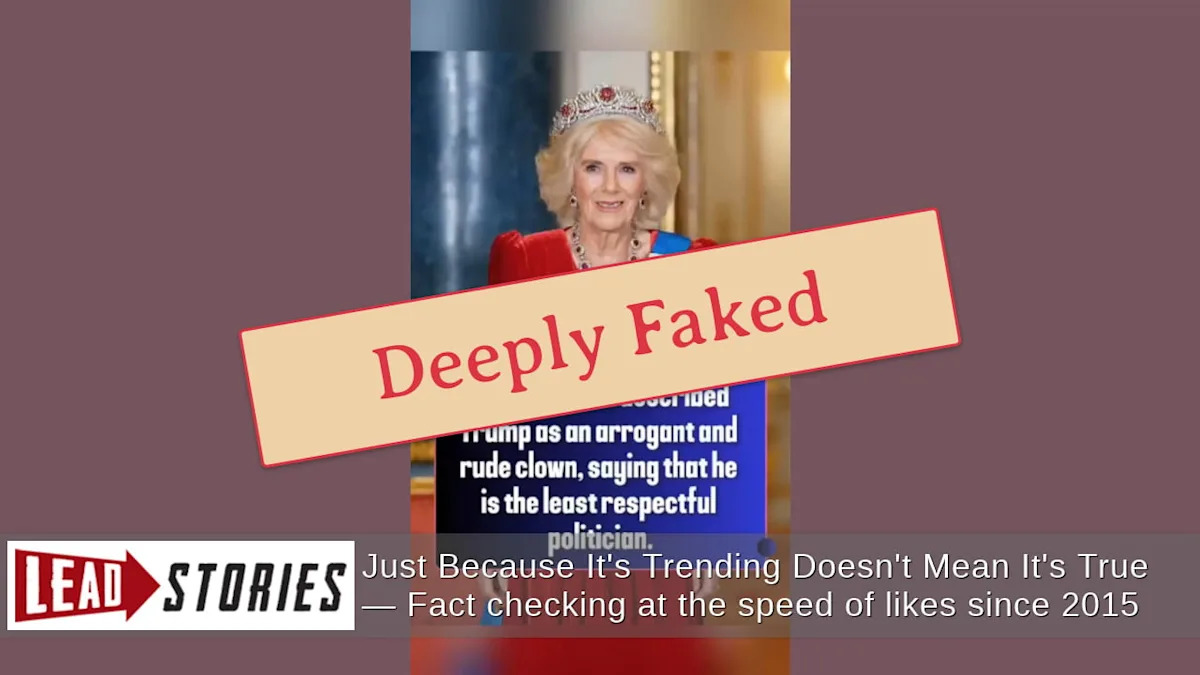
A video circulating on social media claiming to show Queen Camilla calling former U.S. President Donald Trump an “arrogant and rude clown” has been conclusively debunked as an AI-generated fabrication, according to multiple verification sources.
The deceptive clip first appeared on TikTok from an account called “bestjane088” on April 30, before spreading to Facebook through the “world News” account. Despite its convincing appearance at first glance, technical analysis reveals telltale signs of artificial manipulation.
Hive Moderation’s AI-Generated Content Detection tool assessed the video with 99.8% confidence that it was artificially created, not genuine footage. This high confidence score from a respected detection platform provides strong evidence against the video’s authenticity.
Further supporting the fabrication conclusion, the original TikTok post was explicitly labeled by its creator as “AI-generated,” with this disclaimer visible in the bottom-left corner of the video. This transparent admission by the original poster contradicts any claims of authenticity when the content was subsequently shared across other platforms.
Close examination of the footage reveals technical inconsistencies typical in AI-generated videos. The Queen’s lip movements don’t precisely sync with the spoken words, and her voice exhibits a slightly mechanical cadence characteristic of voice cloning technology. These subtle but detectable flaws are consistent with current limitations in deepfake technology.
Perhaps most telling is the complete absence of coverage from any credible news outlets. A comprehensive search across major news databases including Google News and Yahoo! News returned zero results for any incident involving Queen Camilla making derogatory remarks about Donald Trump. Given the diplomatic significance of such comments from a senior British royal about a former U.S. president, legitimate statements of this nature would have generated immediate and widespread media coverage.
The Royal Family maintains strict protocols regarding political neutrality, particularly concerning foreign leaders. Any authentic remarks of this nature would represent an extraordinary breach of royal protocol and would have triggered significant diplomatic consequences between the UK and the United States.
This incident highlights the growing sophistication of AI-generated media and its potential to create convincing but entirely fictional scenarios involving public figures. As deepfake technology becomes more accessible, distinguishing between authentic and manipulated content increasingly requires specialized detection tools and critical media literacy skills.
Social media platforms continue to grapple with the challenge of identifying and labeling AI-generated content. While TikTok had properly labeled the original video as AI-generated, this crucial context was lost when the content migrated to Facebook, allowing it to be presented as authentic to a new audience.
Digital misinformation experts warn that politically charged deepfakes are likely to proliferate as election seasons approach in various countries. They recommend that viewers maintain heightened skepticism toward emotionally provocative content, especially videos showing public figures making uncharacteristic or inflammatory statements.
For concerned viewers, several verification steps are recommended: check if reputable news sources have reported the event, look for disclosure labels on the content, and utilize AI detection tools that are increasingly available to the public.
Fact Checker
Verify the accuracy of this article using The Disinformation Commission analysis and real-time sources.

10 Comments
Kudos to the original TikTok poster for transparently acknowledging that the video was AI-generated. That level of honesty helps combat the spread of misinformation. We need more people willing to call out synthetic content when they create or share it.
It’s concerning to see how advanced AI technology has become in creating convincing deepfakes. This Queen Camilla video serves as a stark reminder to always verify information, especially when it involves public figures or seems too sensational to be true.
Interesting that this video was exposed as an AI-generated fabrication. It’s important to be vigilant about deepfakes and other manipulated media, especially when it comes to public figures. Good to see the debunking effort.
While the video may have looked realistic at first, the high confidence score from the AI detection tool is a clear indication that this was an artificial fabrication. It’s a good thing the origins of this content were exposed.
This seems like a clear-cut case of AI-fabricated footage. The technical analysis and explicit disclaimer from the creator provide strong proof against the video’s authenticity. It’s a good lesson in the dangers of manipulated media.
It’s good that this AI-generated video was quickly debunked. Fact-checking and using detection tools are crucial to maintaining trust in media and public discourse. We must remain vigilant against the spread of misinformation, even when it appears convincing.
This is a textbook example of why we need to be so careful about the information we consume online. Even when something seems plausible, it’s crucial to verify its authenticity before sharing or believing it. Great work by the debunking team.
The high confidence score from the AI detection tool is quite compelling evidence that this video is not authentic. It’s a good reminder that we can’t always trust what we see and hear, especially on social media. Fact-checking is so important.
The creator’s transparency in labeling the video as AI-generated is commendable. We need more people willing to own up to creating synthetic content, rather than letting it spread as if it were real. Kudos to the fact-checkers for catching this one.
It’s concerning how convincing AI-generated content can appear these days. Verification tools are crucial to identify fabrications like this video of Queen Camilla. We must stay informed and skeptical of online claims, no matter how realistic they seem.