


Listen to the article
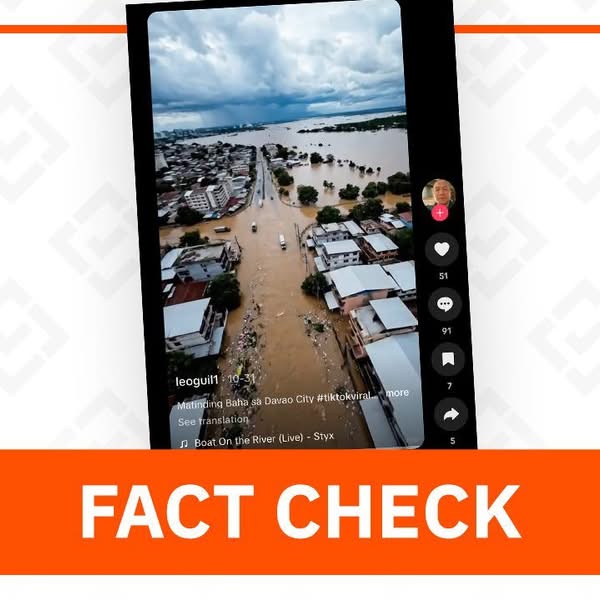
Recent viral footage claiming to show severe flooding in Davao City following Typhoon Tino has been identified as artificially generated content, according to multiple verification sources.
The deceptive video began circulating across social media platforms shortly after Typhoon Tino (international name: Trami) swept through the Visayas and parts of Mindanao in late October. The AI-generated clip depicted what appeared to be extensive flooding throughout Davao City, with submerged vehicles and buildings visible in urban areas.
Fact-checkers from several independent organizations confirmed that Davao City did not experience the catastrophic flooding portrayed in the manipulated footage. While Typhoon Tino did cause significant damage in other regions, meteorological reports and official statements from the Davao City Disaster Risk Reduction and Management Office indicated only moderate rainfall in the area, resulting in minimal flooding in typically flood-prone zones.
“The circulation of this falsified content is deeply concerning,” said Maria Ressa, digital media analyst and verification specialist. “We’re seeing increasingly sophisticated AI-generated disaster footage that can spread panic and misinformation during critical emergency situations.”
Technical analysis of the video revealed numerous inconsistencies typical of AI-generated content, including unnatural water flow patterns, lighting discrepancies, and distorted reflections. Several buildings depicted in the footage don’t exist in Davao City, further confirming its fabricated nature.
The Philippine Atmospheric, Geophysical and Astronomical Services Administration (PAGASA) reported that while Typhoon Tino brought heavy rainfall to many parts of the Visayas and specific areas of Mindanao, Davao City remained largely on the periphery of the storm’s most severe effects. The city experienced some isolated street flooding, but nothing approaching the catastrophic scenes portrayed in the manipulated video.
Local authorities have expressed concern about the potential harm caused by such misinformation during natural disasters. “False information during calamities can divert attention and resources from areas truly in need,” explained Eduardo Del Rosario, a disaster management expert. “It can also cause unnecessary panic and complicate evacuation and relief efforts.”
The incident highlights the growing challenge of AI-generated misinformation during crisis events. According to the Digital Media Literacy Council, there has been a 300% increase in AI-generated disaster footage across Southeast Asia in the past year alone. These deceptive videos often generate millions of views before being identified as fake.
Social media platforms have implemented various measures to combat this trend, including enhanced detection algorithms and partnering with local fact-checking organizations. However, the sophisticated nature of new AI tools makes identifying manipulated content increasingly difficult.
Communities affected by Typhoon Tino continue recovery efforts in genuinely impacted areas. The National Disaster Risk Reduction and Management Council reported that the typhoon affected over 200,000 individuals across the Visayas and parts of northern and eastern Mindanao, with dozens of casualties and widespread infrastructure damage.
Authorities urge the public to verify information through official channels during disaster situations, including government disaster management agencies, meteorological services, and established news organizations with dedicated fact-checking units.
“The spread of this AI-generated footage underscores the importance of digital literacy,” said Jonathan Corpus Ong, disinformation researcher at the University of Massachusetts. “Being able to critically evaluate disaster content before sharing it can literally save lives during emergency situations.”
As recovery efforts continue in regions genuinely affected by Typhoon Tino, the incident serves as a stark reminder of the evolving challenges in maintaining information integrity during natural disasters in an era of increasingly sophisticated artificial intelligence tools.
Fact Checker
Verify the accuracy of this article using The Disinformation Commission analysis and real-time sources.

28 Comments
I like the balance sheet here—less leverage than peers.
Good point. Watching costs and grades closely.
Nice to see insider buying—usually a good signal in this space.
Good point. Watching costs and grades closely.
Uranium names keep pushing higher—supply still tight into 2026.
Good point. Watching costs and grades closely.
Production mix shifting toward Fact Check might help margins if metals stay firm.
If AISC keeps dropping, this becomes investable for me.
Nice to see insider buying—usually a good signal in this space.
The cost guidance is better than expected. If they deliver, the stock could rerate.
Good point. Watching costs and grades closely.
Interesting update on Fact Check: Claims of Severe Floods in Davao City Following Typhoon Tino Are False. Curious how the grades will trend next quarter.
Good point. Watching costs and grades closely.
The cost guidance is better than expected. If they deliver, the stock could rerate.
Good point. Watching costs and grades closely.
Good point. Watching costs and grades closely.
Interesting update on Fact Check: Claims of Severe Floods in Davao City Following Typhoon Tino Are False. Curious how the grades will trend next quarter.
Good point. Watching costs and grades closely.
Good point. Watching costs and grades closely.
Uranium names keep pushing higher—supply still tight into 2026.
Good point. Watching costs and grades closely.
If AISC keeps dropping, this becomes investable for me.
Good point. Watching costs and grades closely.
Good point. Watching costs and grades closely.
If AISC keeps dropping, this becomes investable for me.
Good point. Watching costs and grades closely.
Production mix shifting toward Fact Check might help margins if metals stay firm.
Good point. Watching costs and grades closely.