


Listen to the article
Interstellar Comet 3I/Atlas Survives Solar Passage, Debunking Explosion Rumors
Recent claims circulating across social media platforms that interstellar comet 3I/Atlas exploded during its close approach to the Sun have been conclusively refuted by the scientific community. Astronomers confirm that despite temporary visibility issues, the comet remains intact and continues on its projected trajectory.
The rumors began spreading rapidly after the comet briefly disappeared from view, leading to speculation that it had been destroyed by the Sun’s intense heat. Some social media users shared unverified images and videos purportedly showing the comet breaking apart, while more extreme claims connected the event to unfounded alien theories or alleged secret NASA operations.
“What we’re seeing is a perfectly normal astronomical phenomenon,” explained Dr. Elena Vasquez, astronomer at the Space Research Institute. “When comets pass through perihelion—their closest point to the Sun—they become temporarily obscured from Earth’s vantage point. This creates an optical illusion of disappearance, not destruction.”
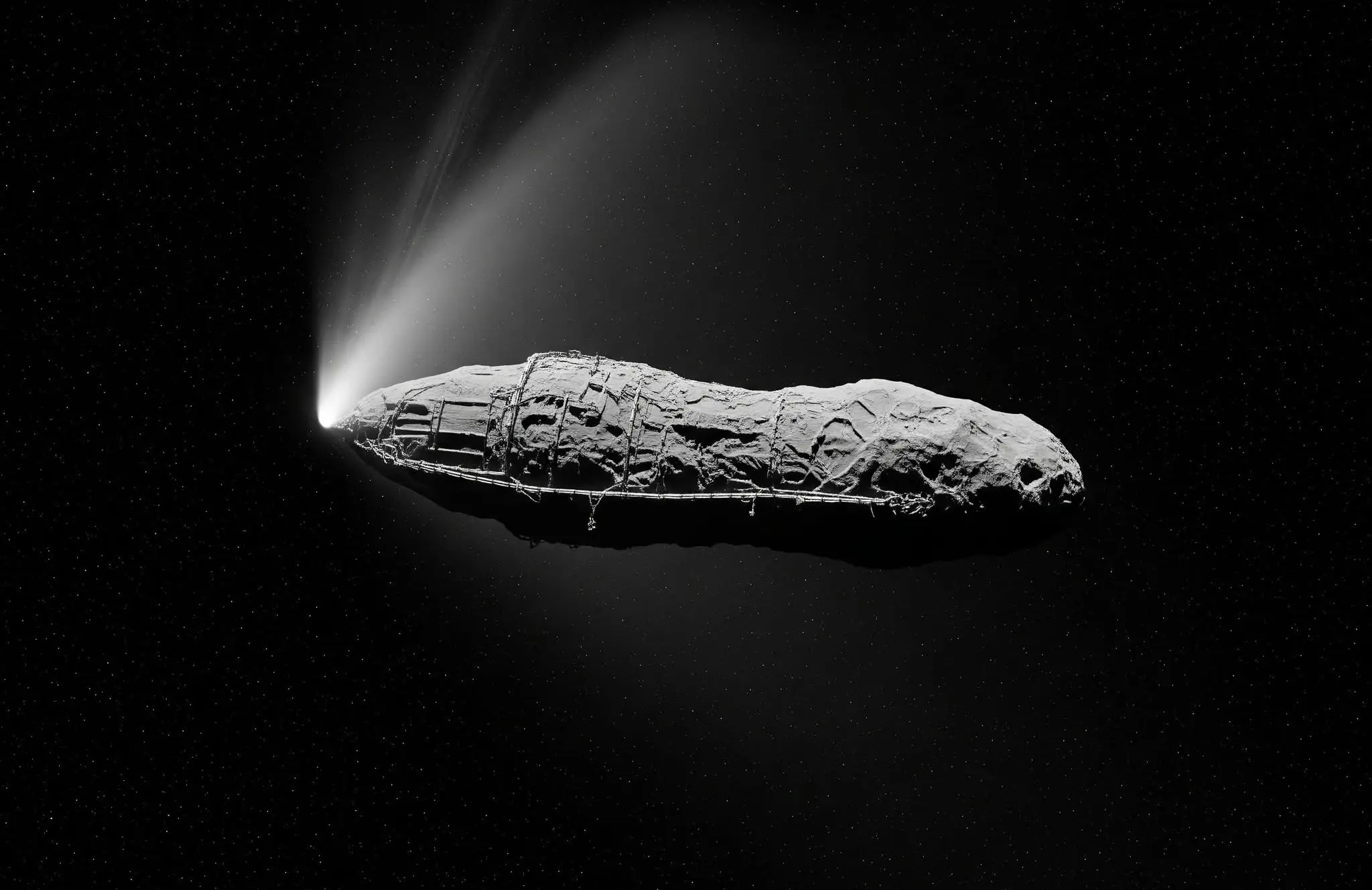
3I/Atlas has generated significant scientific interest since its discovery as only the third confirmed interstellar object ever observed entering our solar system. Unlike regular comets that originate from the Oort Cloud at our solar system’s edge, interstellar visitors provide rare opportunities to study material formed around other stars.
The comet’s brief disappearance coincided with its passage behind the Sun, where the overwhelming brightness of our star made observations impossible for Earth-based telescopes. This common occurrence in comet observations often leads to temporary tracking difficulties before the object reappears on the other side of its solar approach.
Changes in the comet’s appearance following its solar passage have likely contributed to the confusion. Several observers noted variations in its brightness and tail characteristics after reemerging from behind the Sun.
“Comets frequently undergo transformation when they approach the Sun,” said Dr. James Morrison of the International Astronomical Union. “Solar radiation affects the volatile materials on a comet’s surface, potentially altering its visual appearance without destroying it. These changes can include temporary diminishing of the tail or fluctuations in brightness.”
Recent images from major observatories confirm the comet has indeed reappeared, though with some visible alterations. Its diminished brightness and modified tail structure represent normal responses to intense solar radiation rather than evidence of a catastrophic event.
The incident highlights the growing challenge of distinguishing between credible scientific information and misinformation in the digital age. Sensationalized claims about astronomical events often spread rapidly through social media channels before scientific verification can occur.
“Interstellar objects naturally generate excitement, but that also makes them targets for speculation and misinformation,” noted science communicator Rebecca Williams. “The temporary disappearance created a perfect opportunity for rumors to flourish in the absence of clear information.”
Astronomers worldwide are now conducting follow-up observations of 3I/Atlas, analyzing its composition, structure, and behavior after perihelion. The data collected will provide valuable insights into the nature of materials that formed around distant stars.
As one of the rare interstellar visitors to our solar system—following ‘Oumuamua in 2017 and comet Borisov in 2019—3I/Atlas continues to offer scientists an unprecedented opportunity to study matter from beyond our cosmic neighborhood.
“Each interstellar object teaches us something new about planet formation around other stars,” explained Dr. Morrison. “These visitors bring material from entirely different stellar environments, giving us a window into distant worlds we could never otherwise study.”
While the comet will gradually fade from view as it continues its journey back to interstellar space, astronomers expect to gather significant data in the coming weeks that may help unlock mysteries about the composition and origins of planetary systems throughout our galaxy.
Fact Checker
Verify the accuracy of this article using The Disinformation Commission analysis and real-time sources.

9 Comments
Fascinating to see the scientific community come together to debunk the explosion rumors around Comet 3I/Atlas. It’s a good reminder to always verify claims, especially those involving space phenomena, before jumping to conclusions.
Agreed. The temporary obscuring of the comet’s view is a known astronomical occurrence, not some kind of cataclysmic event. Glad the experts were able to set the record straight.
The persistence of these kinds of explosion rumors, even when contradicted by evidence, is a bit disheartening. But I’m glad the article provides a thorough, fact-based rebuttal. Science communication is crucial in the digital age.
You’re right. Fact-checking and debunking misinformation takes a lot of work, but it’s essential to maintain public trust in science. The researchers’ clear explanations are much appreciated.
As someone with a keen interest in space exploration, I find the continued journey of Comet 3I/Atlas quite fascinating. The temporary obscuring is a natural phenomenon, not some kind of dramatic event. Glad to see the experts setting the record straight.
Absolutely. The ability of comets to withstand the intense heat and gravitational forces of passing close to the Sun never ceases to amaze me. Science should always triumph over unsubstantiated speculation.
It’s good to see the scientific community rapidly responding to dispel the explosion rumors around Comet 3I/Atlas. Maintaining public trust in space science is crucial, especially in the age of rampant misinformation online.
Great to see the facts laid out clearly here. Comet 3I/Atlas surviving its close solar passage is an impressive feat of celestial mechanics. The scientific community’s swift response to the misinformation is reassuring.
Definitely. Cutting through the noise of unverified claims on social media is so important, especially when it comes to astronomy and space science. Kudos to the researchers for their diligence.