


Listen to the article
Social media claims regarding UK Defence Minister John Healey’s council tax underpayment have been clarified after Westminster City Council took responsibility for the administrative error.
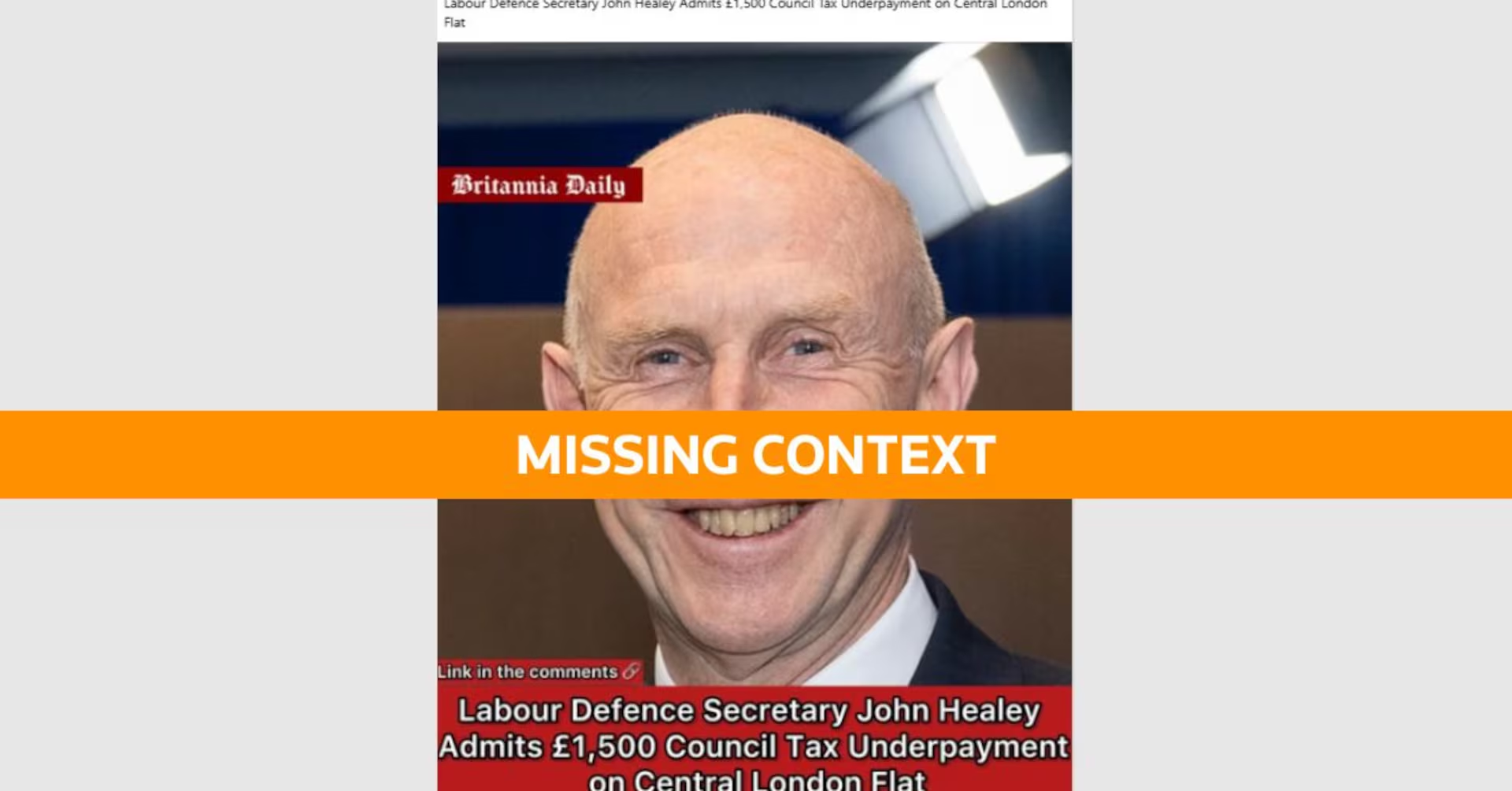
The controversy emerged when posts on Facebook and X alleged that Healey had underpaid approximately £1,500 in council tax on his Westminster flat. One widely shared post, which garnered over 320,000 views on X, claimed: “It’s astonishing: John Healey, Labour MP for Rawmarsh & Conisbrough and now Defence Secretary, has admitted he underpaid around £1,500 in council tax on his Westminster flat. According to reports, he only paid half of what he actually owed.”
The posts suggested Healey was personally at fault, with critics questioning whether someone serving in the Cabinet should properly manage their tax affairs. However, Westminster City Council has since issued a statement taking full responsibility for the mistake.
“The Secretary of State filled in the form correctly and registered the address as a second home,” a council spokesperson confirmed. “There was an oversight by the council, and we did not register it as a second home. This led to an incorrect council tax notice being issued. We apologise for the error.”
The Ministry of Defence also addressed the situation, stating that Healey “fulfilled all his obligations as a tenant by notifying Westminster Council of the second home status of the tenancy on the council tax registration form when the tenancy began.” The ministry confirmed that the underpayment has been rectified.
As a non-London-based MP, Healey is entitled to claim accommodation costs in London according to the Independent Parliamentary Standards Authority (IPSA), which oversees MPs’ expenses. IPSA records show Healey paid £1,469 in council tax to Westminster City Council for the 2025/26 financial year.
The confusion arose because Westminster City Council introduced a 100% surcharge for second homes in April, meaning Healey was liable for an additional £1,469. When the council failed to register his property correctly as a second home, it resulted in the underpayment.
This incident comes amid a series of housing-related controversies affecting senior members of the Labour government in recent months. In October, Chancellor Rachel Reeves apologized after it emerged she had not obtained the necessary license to rent out her London property, though her letting agent later admitted responsibility for the oversight.
More seriously, Angela Rayner resigned as Deputy Prime Minister in September following allegations she avoided £40,000 in tax. Rayner expressed regret for not seeking specialized tax advice. In August, Rushanara Ali stepped down as minister for homelessness after facing accusations of evicting tenants from her property and subsequently raising the rent substantially, although she maintained she had followed all legal requirements.
The Healey case differs from these previous scandals as Westminster City Council has explicitly acknowledged its administrative error rather than any wrongdoing on the minister’s part. The council’s statement makes clear that Healey had correctly declared his property status, but the council failed to process this information appropriately.
Political opponents had initially seized on the story as part of a narrative suggesting financial impropriety among Labour government ministers, but the council’s admission of fault provides important context missing from the viral social media claims.
Fact Checker
Verify the accuracy of this article using The Disinformation Commission analysis and real-time sources.

14 Comments
This seems like an understandable mix-up on the council’s part rather than any intentional underpayment by the minister. It’s good they’re being transparent about their own error.
Agreed, the council taking accountability for their oversight is an important clarification. Maintaining objectivity when examining these types of issues is critical.
While the initial claims sounded concerning, the council’s admission of responsibility paints a clearer picture. It’s wise to withhold judgment until the full details are known.
Agreed, the council’s acknowledgment of their error is a important clarification. Maintaining objectivity when examining these types of issues is critical.
This seems like an understandable administrative mistake by the council, rather than any wrongdoing by the minister. It’s good they’re taking responsibility and providing transparency.
Absolutely, the council taking accountability here is the right thing to do. Rushing to judgment without all the facts can lead to unfair accusations.
The council’s statement helps provide crucial context that was missing from the initial claims. Fact-checking is so important to avoid spreading misinformation, even about public officials.
Agreed, the council’s acknowledgment of their own error is an important clarification. Maintaining objectivity and getting all the details is key in these situations.
This seems like an administrative error on the council’s part rather than any intentional underpayment by the minister. It’s important to get the full context before jumping to conclusions about someone’s tax affairs.
Agreed, the council taking responsibility for the mistake is an important clarification. Transparency around these kinds of issues is crucial.
It’s good to see the council taking accountability for their own oversight in this case. Rushing to judgment without all the facts can lead to unfair scrutiny of public officials.
Absolutely, the council’s statement helps provide much-needed context. Fact-checking is important to avoid spreading misinformation, even about high-profile figures.
While the initial claims sounded concerning, it’s good to see the council taking responsibility for their own administrative oversight. Rushing to judgment without all the facts can lead to unfair scrutiny.
Absolutely, the council’s statement helps provide much-needed context. Fact-checking is crucial to avoid perpetuating misinformation, even about high-profile figures.