


Listen to the article
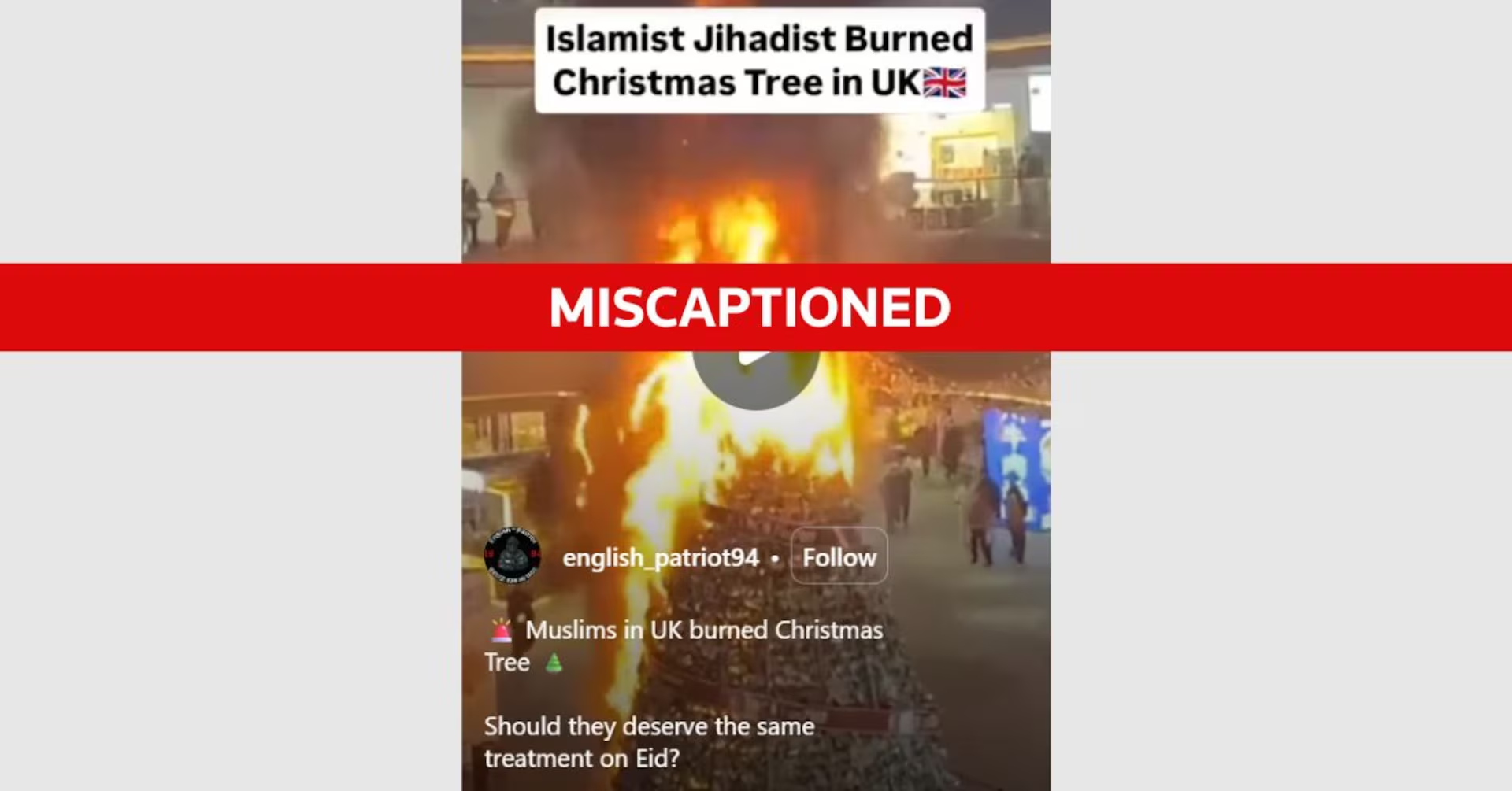
Viral footage of a Christmas tree engulfed in flames has been falsely characterized on social media as an anti-Christian attack by Muslims in the United Kingdom, according to a Reuters fact-check investigation.
The video, which has circulated widely on Instagram with captions such as “Muslim in UK burned Christmas Tree” and inflammatory questions like “Should they deserve the same treatment on Eid?”, actually depicts an electrical fire at a shopping center in China’s Sichuan province that occurred in December 2024.
Reuters’ investigation traced the footage to Sanli Plaza, a shopping center in Chengdu, the capital city of Sichuan. The plaza had previously posted footage of the same Christmas tree during its lighting ceremony on December 8, 2024, on its official WeChat profile. The distinctive design and surroundings of the tree in both videos confirm they show the same location.
The fire erupted on Christmas Day 2024, approximately three weeks after the lighting ceremony. Chinese local media initially reported that a Sanli Plaza spokesperson suggested the blaze might have been caused by a customer discarding a cigarette butt near the tree.
However, subsequent investigation by local fire authorities determined the actual cause was far more mundane. On December 28, 2024, the fire department issued an official statement concluding that a short circuit in the Christmas tree’s electrical wiring had sparked the fire. Officials explicitly ruled out both deliberate arson and “leftover embers” as potential causes.
The misrepresentation of the incident highlights an ongoing challenge with misinformation on social media platforms, particularly content that attempts to inflame religious and cultural tensions. By falsely attributing the fire to Muslims in Britain, the posts appeared designed to provoke anti-Muslim sentiment during the Christmas holiday period.
This type of misinformation can be particularly damaging as it exploits existing social divides and religious tensions. In recent years, fact-checking organizations have noted an increase in false claims targeting religious and ethnic minorities, especially during significant cultural or religious holidays when emotions can run high.
The spread of such content underscores the importance of verification before sharing videos on social media. In this case, the misattribution not only wrongly blamed an entire religious community for an incident that never occurred in Britain but also obscured the actual safety issue—faulty electrical wiring in holiday decorations.
Electrical fires in Christmas decorations are not uncommon. Safety experts regularly warn about the hazards of overloaded circuits, damaged wiring, and extended use of lighting designed for temporary display. In many countries, fire departments issue annual safety guidelines specifically addressing the increased fire risks during holiday seasons when decorative lighting is more prevalent.
Neither Sanli Plaza nor the local fire department in Chengdu responded immediately to requests for comment on the incident. The Reuters Fact Check team, which conducted the investigation, regularly monitors and debunks viral misinformation as part of their broader fact-checking initiatives.
The incident serves as a reminder of how easily context can be stripped from visual content online, allowing it to be repurposed to support false narratives that can fuel division and prejudice.
Fact Checker
Verify the accuracy of this article using The Disinformation Commission analysis and real-time sources.

9 Comments
This is a concerning example of how social media can be used to spread misinformation and stir up harmful rhetoric. It’s important that we all remain vigilant and seek out credible sources to verify information, especially on sensitive topics.
Absolutely. Fact-checking is essential to counter the spread of misinformation on social media. We must be careful not to jump to conclusions or perpetuate false narratives, even unintentionally.
Interesting that this incident was falsely characterized as an anti-Christian attack. It’s good the facts were checked and the real cause identified as an electrical fault. We should be careful about jumping to conclusions without all the information.
This is a prime example of how social media can be used to spread false narratives and stir up tensions. I commend the Reuters investigation for providing the full context and correcting the misinformation.
It’s concerning to see how misinformation can spread so quickly on social media, especially around sensitive topics like religion and culture. Fact-checking is crucial to prevent the spread of harmful narratives.
You’re absolutely right. Social media amplifies the spread of misinformation, which can lead to dangerous rhetoric and even real-world consequences. Rigorous fact-checking is essential to combat this.
This is a good reminder of the importance of verifying information, especially when it comes to sensitive issues that could stir up tensions. The Reuters investigation helps provide the full context and clarify what actually happened.
It’s unfortunate that this incident was exploited to push a false narrative. I’m glad the authorities were able to determine the true cause of the fire and debunk the misinformation. Fact-checking is crucial in these situations.
I’m glad the authorities were able to thoroughly investigate the incident and determine the true cause of the fire. It’s concerning to see how quickly misinformation can spread, and the importance of reliable fact-checking.