


Listen to the article
Claims of UK Cash Payment Ban Debunked by Tax Authority
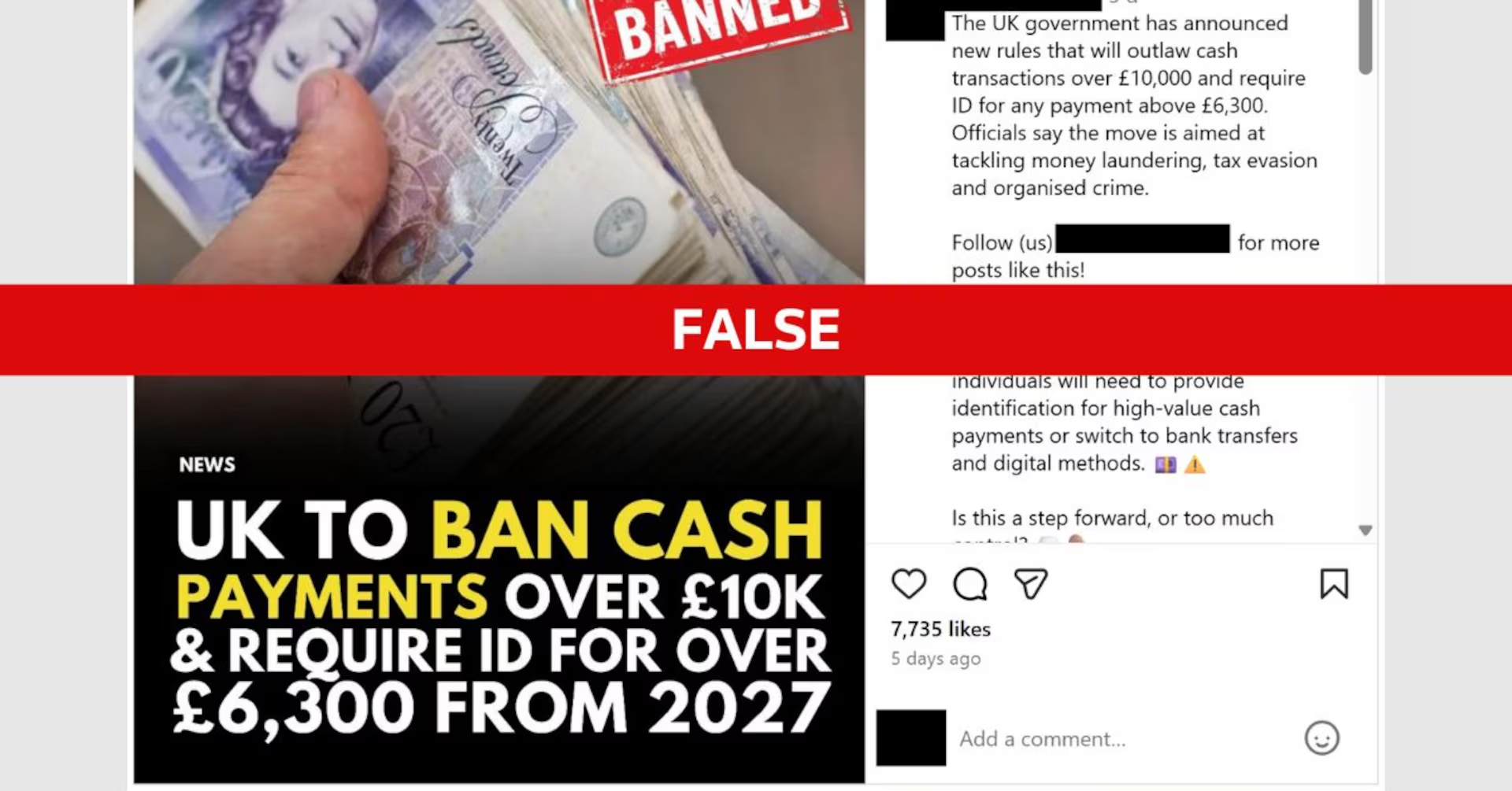
British citizens will not face restrictions on cash payments over £10,000 or mandatory identity checks for transactions exceeding £6,300 from 2027, despite recent social media claims suggesting otherwise. His Majesty’s Revenue and Customs (HMRC) has categorically rejected these assertions, calling them “completely false and designed to cause undue alarm and fear.”
The misinformation began circulating after an Instagram post on November 22 claimed: “UK TO BAN CASH PAYMENTS OVER £10K & REQUIRE ID FOR OVER £6,300 FROM 2027.” A thorough review of current UK government legislation and policy statements by Reuters found no evidence of such planned restrictions.
This false claim appears to conflate existing anti-money laundering regulations with potential new restrictions. Under current UK rules, businesses accepting cash payments of €10,000 (approximately £8,760) or more for goods must register with HMRC as “high value dealers” and conduct appropriate customer due diligence. However, this registration requirement for businesses is distinctly different from an outright ban on cash transactions for consumers.
The rumor may have originated from confusion with recent European Union regulations. In 2024, the EU adopted new rules establishing a €10,000 limit for cash payments across member states and requiring identification checks for transactions above €3,000 (about £2,600). Crucially, these EU regulations do not apply to the United Kingdom following Brexit.
Instead of restricting cash usage, the UK has moved in the opposite direction by strengthening cash access protections. In 2023, the British government enacted the Financial Services and Markets Act, which includes provisions specifically designed to preserve access to cash services throughout the country. This legislation mandated the Financial Conduct Authority (FCA) to oversee rules ensuring the continued availability of cash withdrawal and deposit facilities nationwide.
The government’s commitment to protecting cash access comes amid growing concerns about the declining use of physical currency and the potential impact on vulnerable populations. As digital payment methods continue to gain popularity, ensuring that citizens who rely on or prefer cash transactions aren’t left behind has become a policy priority.
Cash usage in the UK has decreased significantly over the past decade, accelerated by the COVID-19 pandemic, which prompted a shift toward contactless and digital payments. However, approximately 5.4 million adults still rely heavily on cash for daily transactions, according to research by the FCA. These individuals often include elderly citizens, those in rural areas with limited banking facilities, and people with lower incomes.
Financial inclusion advocates have welcomed the government’s approach to protecting cash access rather than imposing restrictions. Sarah Coles, personal finance analyst at Hargreaves Lansdown, noted in a recent industry publication that “ensuring cash remains viable is essential for those who depend on it, particularly vulnerable consumers who may struggle with digital alternatives.”
The false social media claims about cash payment bans highlight the ongoing challenge of misinformation related to financial regulations. Similar rumors have circulated in other countries where discussions about limiting large cash transactions as an anti-money laundering measure have taken place.
For Britons concerned about the future of cash, the government’s current policy direction indicates a commitment to maintaining access rather than implementing new restrictions on how consumers can spend their money.
Fact Checker
Verify the accuracy of this article using The Disinformation Commission analysis and real-time sources.

8 Comments
It’s concerning to see misinformation like this circulating, but I’m glad the authorities were able to provide a clear and definitive response. Maintaining transparency around financial regulations is important for public trust.
While anti-money laundering measures are necessary, any restrictions on consumer cash payments should be approached with great caution. I’m glad the UK has not announced plans for such sweeping changes.
Interesting fact check. I’m glad the UK government has not announced any plans to restrict cash payments for consumers. That would have been quite concerning. It’s important to verify claims like these before they spread further.
This fact check serves as a good reminder to be skeptical of claims made on social media, especially around financial regulations. I appreciate the effort to provide the facts and clear up any confusion.
This seems like an example of misinformation being amplified on social media. I appreciate the thorough review by Reuters to debunk the claims. Maintaining trust in government policies is crucial, especially around financial matters.
Restricting cash payments could have significant implications for certain segments of the population. I’m glad the UK government has not announced any plans to implement such measures, at least for now.
This is a good reminder to be cautious about claims made on social media, especially around government policies. I’m glad the UK tax authority was able to quickly refute these false rumors.
While anti-money laundering regulations for businesses are important, an outright ban on cash transactions for consumers would be quite heavy-handed. I’m glad the UK authorities have clarified that no such plan is in the works.