


Listen to the article
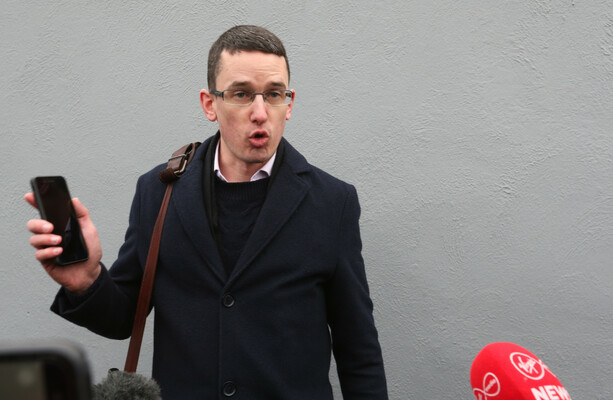
In a case that has sparked widespread attention across Ireland, teacher Enoch Burke returned to custody at Mountjoy Prison this week following his refusal to comply with a court order barring him from Wilson’s Hospital School in County Westmeath.
Burke’s legal troubles have been consistently mischaracterized on social media and by some international media outlets as imprisonment for opposing transgender ideology or refusing to use preferred pronouns. However, court records and legal proceedings tell a more nuanced story about the actual reasons for Burke’s incarceration.
The controversy began in May 2022 when the school requested that teachers refer to a transitioning student by their preferred name and pronouns. Burke, citing his evangelical Christian beliefs, objected to this request. While this disagreement formed the initial backdrop to the case, it’s not what ultimately led to his imprisonment.
In August 2022, following several incidents where Burke reportedly disrupted school events and confronted the principal over the transgender policy, Wilson’s Hospital School suspended him pending a disciplinary process. Despite this suspension, Burke continued to appear at the school premises, prompting the school to seek and obtain a court injunction prohibiting him from entering the grounds.
Burke’s deliberate and repeated violation of this court order – not his views on gender identity – resulted in his first stint in Mountjoy Prison for contempt of court in September 2022. He was released that December but resumed attending the school in January 2023, leading to his return to prison.
Justice Alexander Owens of the High Court has explicitly clarified the matter, stating: “Mr Burke is not in prison because he would not address a student by a different pronoun. He may be of that view, but that is not why he is in prison. He is in prison because he will not obey a court order.”
The school formally dismissed Burke from his teaching position in January 2023. Despite this dismissal and the standing court order, Burke has continued to appear at the school, maintaining that the original suspension was invalid because it related to his religious beliefs.
Legal experts note that the case highlights important distinctions in Irish law between freedom of expression and the requirement to obey court orders. Dr. Conor O’Mahony, a law professor at University College Cork, explained, “While everyone has the right to hold personal beliefs, court orders must be obeyed regardless of whether one agrees with them. The proper channel for disagreement is through legal appeals, not defiance.”
The case has drawn attention from international conservative media outlets, with some framing it as religious persecution. However, Irish legal observers emphasize that the imprisonment stems solely from contempt of court, a standard legal consequence for violating judicial orders in many jurisdictions.
Burke’s family has a history of controversial public positions and legal disputes. His siblings and parents have been involved in various high-profile protests and legal challenges related to religious and social issues in Ireland.
The Workplace Relations Commission is separately examining Burke’s complaint of religious discrimination against the school, though these proceedings have been complicated by the ongoing contempt of court issues.
The case occurs against the backdrop of evolving policies in Irish schools regarding transgender students. The Department of Education has been developing guidelines for schools on gender identity issues, though comprehensive national policy has yet to be finalized.
As Burke remains in custody with no indication he intends to purge his contempt, legal experts note that Irish courts typically avoid indefinite imprisonment in such cases. However, Justice Owens has pointed out that Burke “holds the key to his own cell” by simply agreeing to comply with the court order.
The saga underscores the complex intersection of religious freedom, educational policies, and the rule of law in contemporary Ireland, while serving as a reminder that contempt of court – not ideological positions – remains the central legal issue in Burke’s imprisonment.
Fact Checker
Verify the accuracy of this article using The Disinformation Commission analysis and real-time sources.

14 Comments
While I respect Mr. Burke’s personal beliefs, the school has a duty to maintain a safe and inclusive environment for all students. His continued disruptive behavior, even after suspension, appears to be the primary reason for his incarceration, not his stance on transgender issues per se. Balancing individual rights and institutional responsibilities is always challenging.
That’s a fair assessment. The article makes it clear that the school’s transgender policy was the initial trigger, but Mr. Burke’s ongoing defiance of the suspension order and disruptive actions are what ultimately led to his imprisonment. These are the core legal issues the court is addressing.
It’s important to get the facts right in this case, rather than relying on social media narratives. The article provides helpful context showing that Mr. Burke’s imprisonment is not solely over transgender issues, but rather his ongoing defiance of the school’s suspension order and disruptive behavior. Reasonable people can disagree on these topics, but the legal process should be allowed to play out.
Absolutely. While the initial disagreement was over the school’s transgender policy, the court seems to be focused on Mr. Burke’s refusal to comply with the suspension order and his disruptive actions. Those are the core legal issues at hand, regardless of one’s views on the underlying policy.
It’s important to get the facts right, rather than relying on social media narratives. The article provides helpful context showing that Mr. Burke’s imprisonment is not solely over transgender issues, but rather his ongoing disruptive behavior at the school. Reasonable people can disagree on these topics, but the legal process should be allowed to play out.
Absolutely, facts and due process are crucial here. While the transgender policy may have been the initial trigger, the court seems to be focused on Mr. Burke’s defiance of the suspension order and ongoing disruptions. These are the core legal issues at hand.
This is a complex and sensitive case that highlights the tensions between individual beliefs and institutional responsibilities. I respect Mr. Burke’s right to his religious convictions, but schools also have a duty to create an inclusive environment for all students. Hopefully, the parties can find a constructive path forward through open dialogue and mutual understanding, rather than resorting to confrontation and legal action.
Well said. These situations rarely have simple solutions, as there are valid concerns and principles on multiple sides. The key will be for all parties to approach this with empathy, good faith, and a commitment to finding common ground that respects everyone’s interests, even if they disagree on some fundamental issues.
This is a challenging situation that highlights the complexities around balancing individual rights, school policies, and the rule of law. I hope the parties involved can find a constructive path forward that respects all perspectives and prioritizes the wellbeing of students. Open and thoughtful dialogue will be key.
Agreed. These situations are rarely black and white, and require nuanced consideration of the various interests and principles at play. A collaborative approach focused on finding common ground seems the best way to resolve this matter.
This is a nuanced and sensitive case that highlights the complexities around balancing individual beliefs, institutional responsibilities, and the rule of law. While I respect Mr. Burke’s right to his religious convictions, schools must also create an inclusive environment for all students. Hopefully, the parties can find a constructive path forward through open dialogue and mutual understanding.
Agreed. These situations rarely have simple solutions, as there are valid concerns and principles on multiple sides. The key will be for all parties to approach this with empathy, good faith, and a commitment to finding common ground that respects everyone’s interests.
This is a complex and sensitive case that highlights the tensions between individual beliefs and institutional policies. While I respect Mr. Burke’s right to his religious convictions, schools have a duty to create an inclusive environment for all students. Hopefully, this situation can be resolved through open dialogue and mutual understanding.
I agree, these cases often involve difficult tradeoffs between personal freedoms and institutional responsibilities. Navigating them requires empathy, nuance, and a commitment to finding common ground.