


Listen to the article
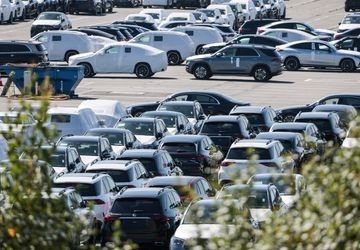
Record-high car prices in the U.S. are creating a cascade of financial challenges for consumers, with mounting auto loan debt and rising vehicle repossessions signaling growing economic strain across the country.
Average new vehicle transaction prices have climbed to nearly $48,000, according to recent data from Kelley Blue Book, marking a 30% increase since 2019. This dramatic price surge has pushed many consumers to take on larger loans with extended terms, often stretching to 72 or 84 months.
“We’re seeing unprecedented levels of automotive debt,” said Michael Robertson, chief economist at the Consumer Financial Research Institute. “The average auto loan has increased by more than $7,000 in just three years, forcing buyers to extend loan terms to keep monthly payments manageable.”
Industry analysts point to several factors driving the price surge. Supply chain disruptions during the pandemic severely limited vehicle production, while pent-up consumer demand and inflation pushed prices to record levels. Even as manufacturing has normalized, prices have remained stubbornly high.
The fallout is becoming increasingly apparent. Auto loan delinquencies have risen to their highest level in over a decade, with approximately 6% of subprime borrowers now at least 60 days behind on payments. This represents a 35% increase compared to pre-pandemic levels.
Vehicle repossessions, meanwhile, have surged by nearly 20% year-over-year, according to data from Cox Automotive. Repo companies across major metropolitan areas report operating at full capacity, with some adding staff to handle the influx.
“We’re repossessing vehicles from people who have never missed payments before,” said James Hernandez, owner of Reliable Recovery Services in Chicago. “These aren’t just buyers with poor credit history anymore. We’re seeing middle-class families who simply can’t keep up with the payments amid rising costs across the board.”
The ripple effects extend beyond individual consumers to the broader automotive industry. Used car prices, which typically provide an affordable alternative to new vehicles, have also climbed significantly, though they’ve moderated somewhat in recent months. This has effectively eliminated what was traditionally a more budget-friendly option for many buyers.
Financial institutions are feeling the impact as well. Several major banks have reported increasing their loan loss provisions specifically to account for troubled auto loans. JPMorgan Chase recently disclosed a 28% increase in auto loan charge-offs compared to the previous year.
The Federal Reserve’s interest rate policies have compounded these challenges. After multiple rate hikes to combat inflation, the average interest rate on new car loans now hovers around 7%, compared to under 4% just a few years ago. For used vehicles, rates frequently exceed 10%, particularly for buyers with less-than-perfect credit.
Mercedes-Benz, BMW, and other luxury manufacturers have noted a softening in demand, especially in entry-level luxury segments where buyers are more likely to be stretching their finances. This has prompted some dealers to offer more aggressive incentives on certain models, though overall transaction prices remain elevated.
Consumer advocates warn that the situation could worsen without significant market corrections or policy interventions. “We’re witnessing a perfect storm of high prices, rising interest rates, and stagnant wages for many Americans,” said Elena Washington of the Consumer Protection Alliance. “Without meaningful relief, we expect delinquencies and repossessions to continue climbing through next year.”
Some economists see the auto market as a potential early warning sign of broader economic challenges. “When consumers begin defaulting on car loans, which typically take priority over other debt obligations due to transportation needs, it signals deeper financial distress,” noted Robertson.
For prospective car buyers, experts recommend exploring alternatives when possible, including extending the life of current vehicles through proper maintenance, considering certified pre-owned options with manufacturer warranties, or even exploring car-sharing services in areas where they’re available.
The automotive market’s trajectory remains uncertain, though most analysts agree that a return to pre-pandemic pricing appears unlikely in the near term, leaving consumers to navigate what has become an increasingly challenging financial landscape.
Fact Checker
Verify the accuracy of this article using The Disinformation Commission analysis and real-time sources.

6 Comments
It’s troubling to see the average auto loan increase by over $7,000 in just 3 years. This suggests the car market is becoming increasingly unaffordable for many Americans, which could have broader economic implications.
Agreed, the rise in delinquencies is a worrying sign. Households are clearly struggling under the weight of these larger loans and higher costs.
While the price surge may benefit automakers and dealers in the short term, the long-term consequences of rising debt and repossessions could be quite damaging for the economy. Consumers need relief, not added financial burdens.
This is a concerning trend, with record-high car prices straining consumers’ budgets and leading to growing debt levels and repossessions. It highlights the economic challenges many families are facing due to supply chain issues and inflation.
I’m curious to see how automakers and policymakers respond to address this growing issue. Consumers need more affordable options to meet their transportation needs.
Absolutely, the price surge has created a perfect storm, forcing buyers to take on larger loans with extended terms just to keep monthly payments manageable.