


Listen to the article
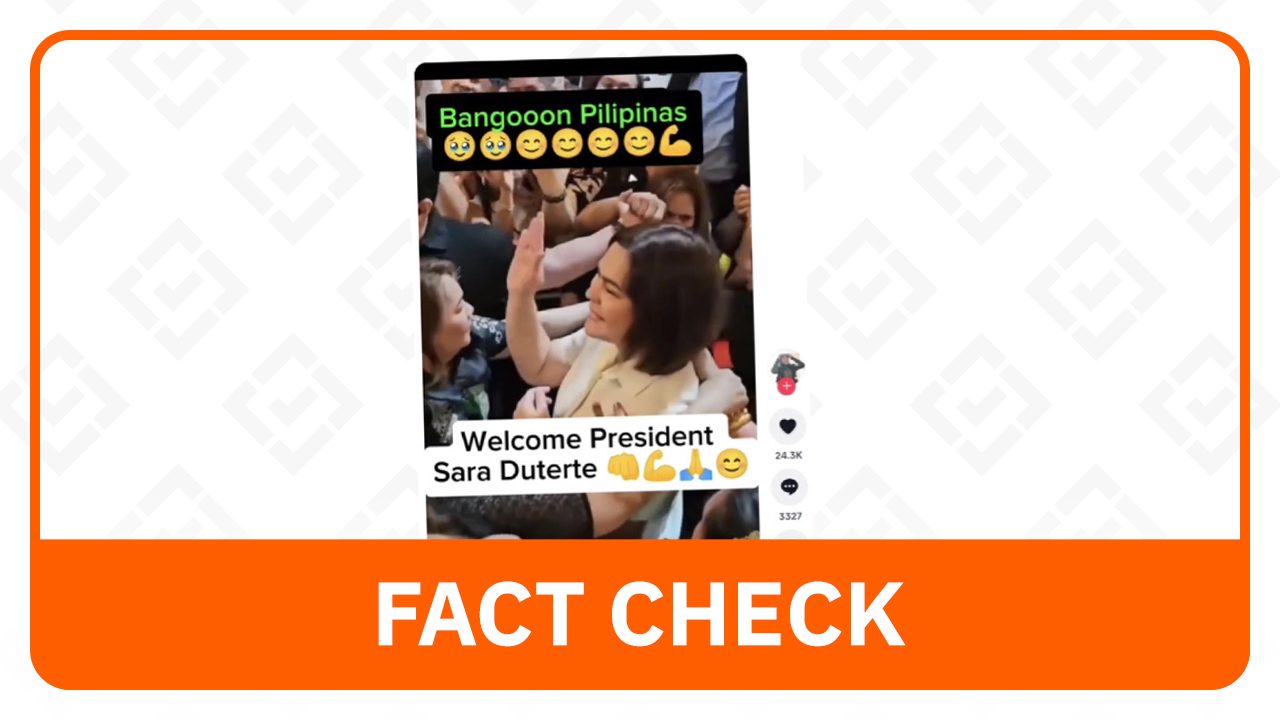
In a striking example of misinformation, a viral TikTok video falsely claiming that Vice President Sara Duterte has become the new president of the Philippines has garnered significant traction online, despite having no factual basis.
The video, which has amassed over 141,700 views, 24,300 likes, and thousands of shares and comments, shows Duterte being warmly greeted by a crowd of supporters. An overlay text proclaims “Bangon, Pilipinas (Rise, Philippines). Welcome President Sara Duterte,” misleading many viewers into believing a transition of power had occurred.
However, Ferdinand “Bongbong” Marcos Jr. remains the duly elected president of the Philippines, continuing to fulfill his official duties. No constitutional conditions for presidential succession have been met. According to Article VII, Section 8 of the 1987 Philippine Constitution, the Vice President can only assume the presidency in cases of “death, permanent disability, removal from office, or resignation of the President” — none of which have transpired.
The footage used in the misleading video was actually taken during Duterte’s diplomatic visit to Kuwait on August 16, 2025, where she met with overseas Filipino workers. The content has been deliberately taken out of context to fabricate a false narrative about the country’s leadership.
Political analysts suggest the circulation of this misinformation likely stems from recent tensions in Philippine politics, particularly following serious allegations made by former congressman Zaldy Co against President Marcos and former House Speaker Martin Romualdez.
In a series of videos released between November 14-16, Co accused the administration of orchestrating P100 billion worth of budget insertions in the 2025 national budget. His allegations included claims that President Marcos personally received P25 billion in kickbacks, with Co presenting photographs of luggage allegedly containing cash deliveries to official residences.
Malacañang Palace has categorically denied these allegations, dismissing Co’s claims as “hearsay” without substantial evidence. Palace Press Officer Undersecretary Claire Castro further clarified during a November 18 media briefing that “resignation is not an option” for Marcos, while suggesting that calls for his removal were politically motivated, primarily coming from Duterte’s support base.
The controversy intensified on November 28 when Vice President Duterte told reporters she was prepared to assume the presidency should Marcos resign. This statement was promptly condemned by Malacañang as a “form of political destabilization,” further highlighting the growing rift between the country’s top two officials.
The spread of this false claim underscores a concerning trend in Philippine social media, where political misinformation can rapidly gain traction. Comments on the viral video revealed many Filipinos appeared to believe the fabricated claim, with some expressing gratitude and hope that the “news” was true.
Media literacy advocates have pointed to this incident as yet another example of how easily manipulated content can contribute to political confusion in the digital age, particularly in a country with high social media usage rates like the Philippines.
As political tensions continue to simmer, fact-checkers emphasize the importance of verifying information from official sources before accepting or sharing politically charged claims on social media platforms.
Fact Checker
Verify the accuracy of this article using The Disinformation Commission analysis and real-time sources.

12 Comments
While the Duterte family is prominent in Philippine politics, this report makes it clear that Bongbong Marcos remains the legitimate president. Spreading misinformation, even inadvertently, can have real consequences for public understanding and democratic processes.
This report serves as a reminder of the importance of media literacy and critical thinking when consuming online content. Verifying claims, especially those that seem sensational or too good to be true, is crucial to avoid falling for misinformation.
The misinformation around Duterte potentially becoming president is a concerning example of how false narratives can gain traction, even in the face of clear constitutional and factual evidence to the contrary. Fact-checking and media literacy are crucial to maintaining a well-informed public.
The Philippines has a complex political landscape, and it’s understandable that there could be confusion around leadership transitions. However, it’s crucial that the public has accurate information from reliable sources to understand the true state of affairs.
Absolutely. Fact-checking and responsible journalism are essential to maintain transparency and prevent the spread of harmful misinformation, especially around high-stakes political issues.
Interesting report on the misinformation around Duterte potentially becoming president in the Philippines. It’s important to verify claims like this and not spread unsubstantiated rumors, even if they seem plausible. Fact-checking is crucial in today’s information landscape.
While the video may have seemed convincing, the fact-checking in this report clearly shows that Bongbong Marcos remains the president of the Philippines. It’s a good lesson in the need to be skeptical of unverified claims, no matter how compelling they may appear.
Yes, the report highlights the danger of misinformation spreading rapidly online. It’s a good reminder to always cross-check information from multiple reliable sources before believing or sharing it.
This highlights the need for greater media literacy and critical thinking around online content. It’s easy for misinformation to spread rapidly, especially on social media. Responsible reporting and public awareness are key to combating the spread of false narratives.
I agree, verifying information sources and being cautious about unverified claims is so important these days. Fact-checking should be a reflex, not an afterthought.
While the video may have been convincing, the report’s thorough fact-checking confirms that Bongbong Marcos remains the rightful president of the Philippines. It’s a valuable lesson in the importance of verifying information from reliable sources before believing or sharing it.
This report serves as an important wake-up call about the pervasiveness of misinformation, even around high-profile political figures and events. It underscores the need for vigilance and critical thinking when consuming online content, no matter how compelling it may seem.