


Listen to the article
In a rare display of bipartisan cooperation, the U.S. House passed a resolution condemning socialism, describing it as historically connected to dictatorship, economic failure, and widespread human suffering. The measure received strong Republican backing while 86 Democrats crossed party lines to support it—an unusual alignment in today’s deeply divided political landscape.
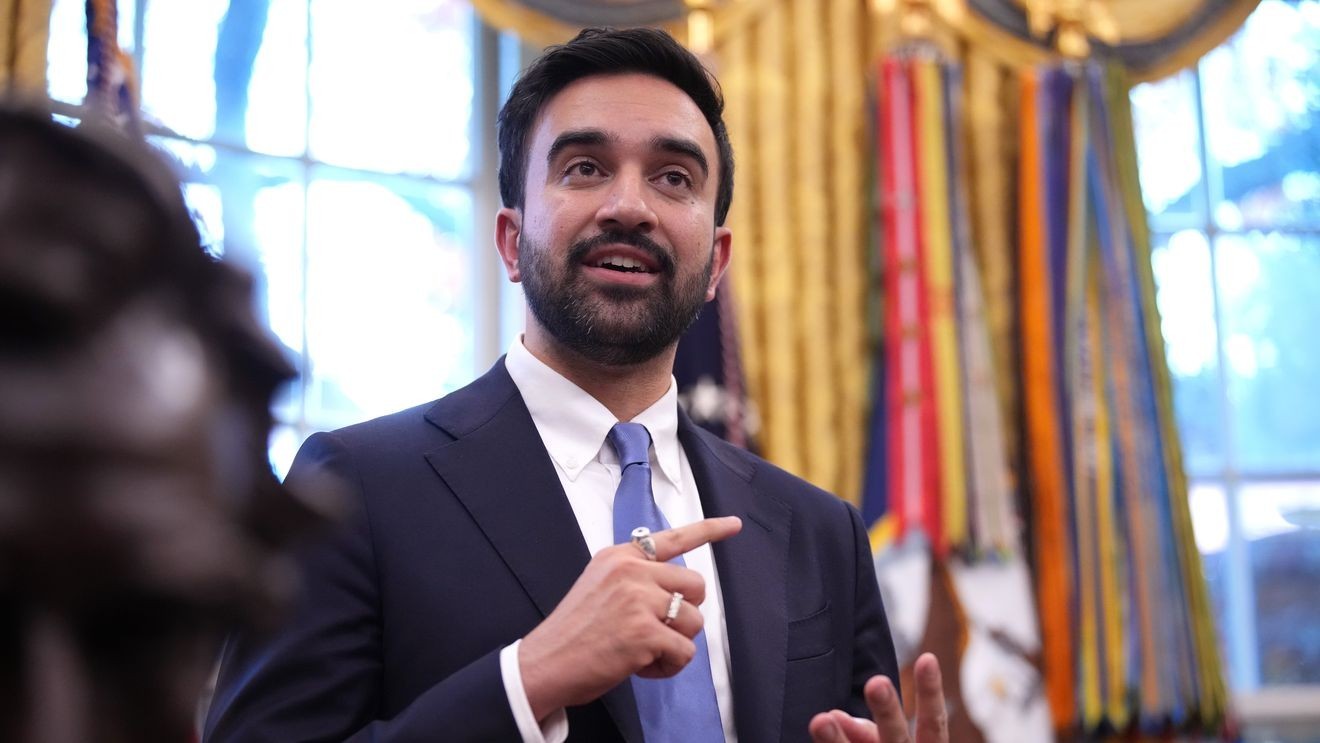
The resolution, introduced by Rep. María Salazar’s office, explicitly states that Congress “opposes the implementation of socialist policies in the United States.” Political observers noted the curious timing of the vote, which followed shortly after New York City Mayor-elect Zohran Mamdani’s controversial visit to the White House, a meeting that had already created tensions within Democratic ranks.
Among the notable Democratic supporters was House Minority Leader Hakeem Jeffries, whose vote appears connected to his ongoing friction with Mamdani. Jeffries had previously withheld his endorsement during Mamdani’s primary campaign, offering only what critics described as a “lukewarm” endorsement just before early voting began.
Even after Mamdani secured the nomination, Jeffries told The New York Times they maintained “areas of principled disagreement.” A key point of contention centered on Mamdani’s initial reluctance to distance himself from the activist slogan “Globalize the Intifada,” which many Jewish leaders and critics interpret as advocating violent uprising rather than legitimate political expression. According to ABC 7 New York, Jeffries publicly criticized Mamdani’s handling of the issue, describing the rhetoric as “unacceptable.”
Jeffries’ support for the anti-socialism resolution, coming days after Mamdani’s White House visit, aligns with his broader effort to separate the Democratic Party from far-left, activist-driven messaging.
The congressional resolution also raises a fundamental question about socialism’s current global presence. According to World Atlas, only five countries still formally identify as socialist or communist: China, Cuba, Vietnam, Laos, and North Korea. However, even within this small group, few operate under anything resembling traditional socialist models.
Most of these governments have survived precisely because they’ve implemented significant capitalist reforms. China operates under what Investopedia describes as a hybrid “socialist market economy,” while Vietnam has pursued economic liberalization since 1986, as documented by the Council on Foreign Relations.
The classical Marxist definition of socialism has become increasingly blurred over time. Britannica notes that Marx described socialism as a transitional phase where the working class controls government and economy, private property continues to exist, and workers receive compensation based on effort. Communism represented the ultimate stage: classless, stateless, without private property, where goods are produced solely based on need. This pure form of communism has never been fully realized anywhere in the world.
American political discourse frequently references Nordic countries—Sweden, Denmark, Finland, and Norway—as examples of “socialism.” However, these nations themselves have consistently rejected this characterization.
Denmark’s Prime Minister Lars Løkke Rasmussen publicly pushed back against American politicians who labeled his country socialist, stating unequivocally, according to Investors’ Business Daily: “Denmark is not a socialist country. We have a market economy.”
Nordic governments maintain extensive welfare programs funded through high taxation, open markets, and robust private-sector growth, but they do not practice government ownership of industry. The Heritage Foundation’s Index of Economic Freedom regularly ranks Nordic economies among the world’s most competitive and market-oriented systems.
What Americans often describe as “socialism” in Europe is more accurately characterized as regulated capitalism with comprehensive social safety nets, rather than socialist economics in the traditional sense.
This congressional resolution serves as both a political statement and a reflection of America’s ongoing debate about economic systems, government’s role, and the definition of loaded terms in contemporary politics.
Fact Checker
Verify the accuracy of this article using The Disinformation Commission analysis and real-time sources.

10 Comments
Interesting that Congress would take this stance amid the ongoing debate around socialism. I’m curious to hear more about the reasoning behind this resolution and how it may impact policy discussions going forward.
Yes, the timing does seem rather curious. I wonder if there are any deeper political dynamics at play here that are driving this move.
As someone with an interest in mining and commodities, I’m curious how this could impact the broader energy and natural resource sectors. Do you think it could affect policies or regulations in those industries?
That’s a good question. It’s possible this could lead to changes in things like subsidies, taxes, or permitting for mining and energy projects. But a lot would depend on the specific policies that get proposed.
I’m a bit skeptical of the resolution’s claims about the historical record of socialism. While there have certainly been problematic examples, there are also more moderate socialist policies that have had positive impacts in many countries. I hope this doesn’t shut down nuanced discussions.
That’s a fair point. The historical record on socialism is complex, and simplistic condemnations often overlook important context and nuance.
While I can understand the concerns around socialist policies, I hope this resolution doesn’t stifle important discussions about economic inequality and potential reforms. These are complex issues without easy answers.
That’s a fair point. We’ll have to see how this plays out and whether it leads to more productive debates or just further polarization.
As an investor in mining and energy stocks, I’m interested to see how this could affect sentiment and policies in those sectors. While I’m not a fan of heavy-handed socialism, I do think there’s a role for government to play in supporting and regulating these industries.
That’s a good perspective. Striking the right balance between government involvement and market forces is always a tricky issue in these sectors.