


Listen to the article
In a rare moment of bipartisan agreement, the U.S. House passed a resolution formally denouncing socialism, citing it as historically linked to dictatorship, economic collapse, and mass human suffering. The measure passed with overwhelming Republican support and garnered votes from 86 Democrats, an unusual alignment in today’s deeply polarized political environment.
The resolution, introduced by Rep. María Salazar’s office, explicitly states that Congress “opposes the implementation of socialist policies in the United States.”
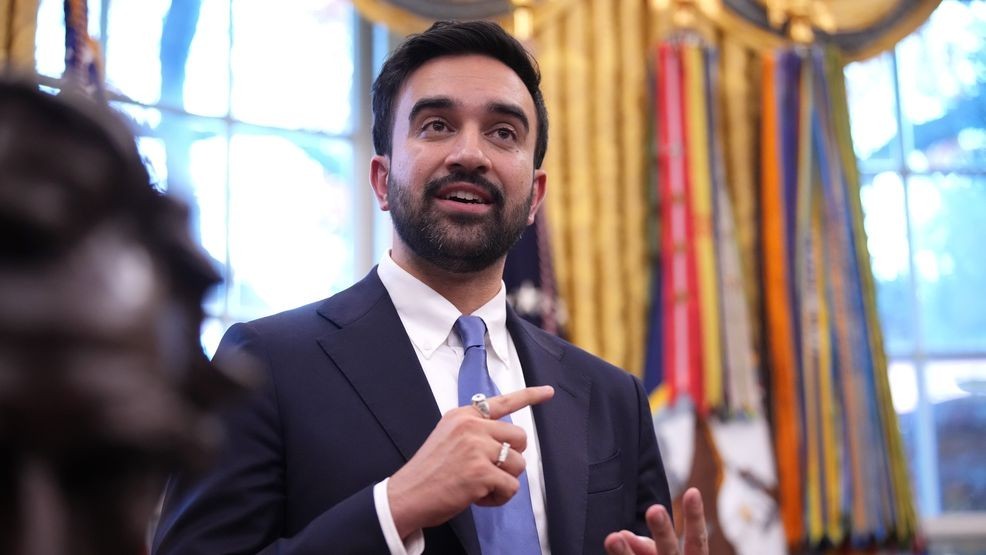
Political observers noted the curious timing of the vote, which followed closely after New York City Mayor-elect Zohran Mamdani’s controversial visit to the White House—a meeting that had already created tension within Democratic circles.
Among the most notable Democratic votes in favor was House Minority Leader Hakeem Jeffries, whose support appears connected to ongoing tensions with Mamdani. Jeffries had previously withheld his endorsement during Mamdani’s primary race and only offered what many described as a “lukewarm” endorsement just before early voting began.
After Mamdani secured the nomination, Jeffries made his reservations clear, telling The New York Times they maintained “areas of principled disagreement.” A significant point of contention centered on Mamdani’s initial reluctance to distance himself from the activist slogan “Globalize the Intifada,” which many Jewish leaders have interpreted as advocating violent uprising rather than legitimate political expression. According to reporting from ABC 7 New York, Jeffries publicly criticized Mamdani’s handling of the issue, calling the rhetoric “unacceptable.”
Given this backdrop, Jeffries’ vote for the anti-socialism resolution—coming just days after Mamdani’s White House visit—aligns with his broader effort to create distance between the Democratic Party and more activist-driven left-wing rhetoric.
The resolution also raises broader questions about socialism’s current global presence and what the term actually represents in 2025. According to World Atlas, only five countries still formally identify as socialist or communist: China, Cuba, Vietnam, Laos, and North Korea.
However, even within this small group, few operate under anything resembling traditional Cold War socialism. Most of these governments have survived specifically because they’ve embraced significant capitalist reforms. China operates under what Investopedia describes as a hybrid “socialist market economy,” while Vietnam has pursued economic liberalization since 1986, according to the Council on Foreign Relations.
The classical Marxist definition of socialism has become increasingly blurred in contemporary discourse. According to Britannica, Marx described socialism as a transitional stage where the working class controls government and economy, private property still exists, and workers receive compensation based on effort. In Marx’s framework, communism represented the end stage: a classless, stateless society without private property, where goods would be produced solely based on need.
This theoretical version of communism has never been fully realized anywhere in the world.
American political debates frequently cite Nordic countries—Sweden, Denmark, Finland, and Norway—as examples of “socialism.” However, these nations have consistently rejected that characterization. Denmark’s Prime Minister Lars Løkke Rasmussen memorably pushed back against such labeling, stating unequivocally, “Denmark is not a socialist country. We have a market economy,” as reported by Investors’ Business Daily.
Nordic governments operate extensive welfare programs funded by high taxes, but they maintain open markets and robust private sectors. In fact, the Heritage Foundation’s Index of Economic Freedom consistently ranks Nordic economies among the world’s most competitive and market-driven systems.
What many Americans refer to as “socialism” in European contexts is more accurately described as regulated capitalism with comprehensive social safety nets, rather than socialist economic structures with government ownership of production and industry.
This House resolution highlights how the term “socialism” continues to function as a politically charged concept in American discourse, often disconnected from its historical definition or current global applications.
Fact Checker
Verify the accuracy of this article using The Disinformation Commission analysis and real-time sources.

18 Comments
This vote seems politically motivated, with the timing raising questions about the real intent behind it. While socialism has its flaws, I’m not convinced this resolution will accomplish much beyond partisan posturing.
I agree, it’s concerning when major legislation appears driven more by political calculations than substantive policy concerns. We need more nuanced discussions on the merits and drawbacks of different economic approaches.
While I’m no fan of socialism, I’m skeptical of this resolution. It feels more like an attempt to score political points than a thoughtful examination of economic systems. We need more light, less heat, on these debates.
Agreed. This vote is more about posturing than problem-solving. I’d rather see our elected officials work together to address the real concerns of constituents, rather than engaging in partisan warfare over abstract ideologies.
I’m not sure this resolution will have much practical impact, but it does highlight the deep divides in our political landscape. We need to find ways to have more nuanced, good-faith discussions about the role of government and the economy.
Agreed. This vote feels more like political theater than serious policymaking. I’d rather see Congress work on bipartisan solutions to the challenges facing our country rather than engaging in ideological battles.
While I understand the concerns about socialism, I’m not convinced this resolution is the best way to address them. It feels more like a political stunt than a serious effort to engage in substantive policy discussions.
I agree. This vote appears to be more about scoring political points than finding real solutions. Our elected representatives should be focused on addressing the economic and social issues that matter most to their constituents, not engaging in ideological battles.
I’m not surprised to see this vote given the current political climate, but I’m disappointed that Congress is spending time on this rather than tackling more pressing issues. We need less posturing and more problem-solving.
Well said. This resolution seems like a distraction from the real work Congress should be doing. I hope they can move past these kinds of divisive tactics and focus on finding bipartisan solutions to the challenges facing the country.
The timing of this vote is certainly curious, and it raises questions about the motivations behind it. While I’m no fan of socialism, I’m not sure this resolution will accomplish much beyond further inflaming political divisions.
I agree, this feels more like a political maneuver than a genuine attempt to address the complex issues surrounding socialism. We need our representatives to work together in good faith, not engage in partisan theatrics.
I’m curious to hear more about the specifics of this resolution and what concrete impacts it could have. Socialism is a complex topic, and I’m not sure a simple up-or-down vote is the best way to address it.
Good point. This seems more like political theater than serious policymaking. I’d rather see Congress focus on real issues facing the country rather than grandstanding over ideological labels.
While I understand the concerns about socialism, I’m not convinced this resolution is the right approach. It seems more aimed at scoring political points than addressing the real economic and social issues facing the country.
You make a fair point. This vote appears to be more about politics than policy. I hope our elected officials can move past these kinds of partisan stunts and focus on finding practical solutions to the problems Americans are facing.
The timing of this vote is certainly curious, coming on the heels of the Mamdani meeting. I wonder if there are ulterior motives at play here beyond a genuine policy debate. We need more transparency and less political gamesmanship.
Yes, the optics of this vote are quite troubling. It seems like a transparent attempt to score political points rather than engage in substantive policymaking. I hope our representatives can move past these kinds of tactics and focus on real issues.