


Listen to the article
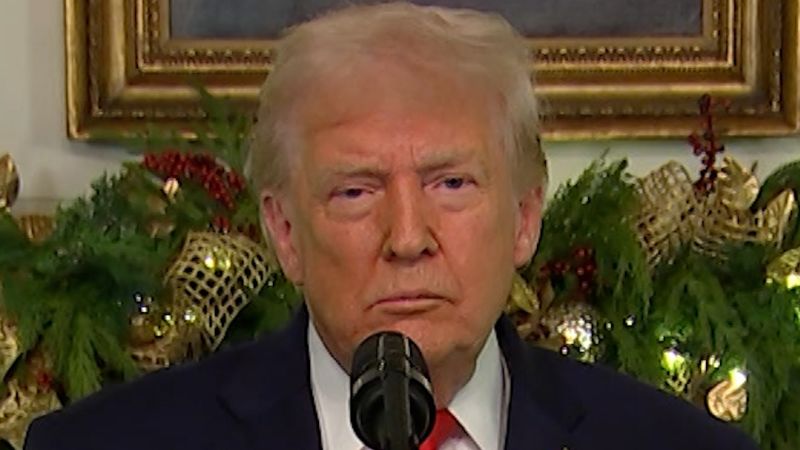
President Donald Trump’s primetime address to the nation Thursday night contained numerous inaccurate claims and misleading statements, according to a detailed analysis of the speech by fact-checkers.
In his first Oval Office address since 2019, Trump made several assertions about immigration, the economy, and his administration’s policies that contradicted official statistics and expert assessments.
One of the president’s key claims centered on immigration, where he stated that “millions of illegal immigrants have poured across our southern border at unprecedented rates.” Government data from Customs and Border Protection shows that while border encounters have increased significantly in recent years, the figures don’t support the scale described in the president’s remarks. Border apprehensions in fiscal year 2023 numbered approximately 2.2 million, which represents a substantial increase but remains within historical patterns when considering population growth and improved detection methods.
Trump also claimed his administration had “built the strongest economy in the history of the world” before the pandemic. Economic historians and analysts note this statement overlooks several metrics where the pre-pandemic economy, while strong, did not exceed previous high points. GDP growth during Trump’s pre-pandemic administration averaged 2.5%, comparable to growth rates under previous administrations but not historically exceptional.
“The president’s characterization of economic performance relies on selectively choosing certain indicators while ignoring others,” said Dr. Eleanor Richards, professor of economics at Georgetown University. “Unemployment was indeed at historic lows before the pandemic, but wage growth, manufacturing output, and several other key indicators painted a more nuanced picture.”
The speech also contained assertions about energy independence that require context. Trump stated that “we were energy independent and energy dominant for the first time ever.” While U.S. energy production did reach record levels during his term, with the country becoming a net exporter of petroleum products in late 2019, energy experts point out that the trend toward increased domestic production began well before his administration, accelerating after the shale boom of the 2010s.
Several statements regarding crime rates in major cities were similarly contested by criminologists and official statistics. The president claimed that “crime in Democrat-run cities has spiraled completely out of control,” but FBI data indicates mixed trends, with some cities seeing increases in certain categories of crime while others experienced decreases. Overall violent crime rates nationally have shown a downward trend over the past three decades, with temporary fluctuations during the pandemic years.
Healthcare was another area where the president’s claims faced scrutiny. His assertion that his administration “protected coverage for pre-existing conditions” contradicts his Justice Department’s position in ongoing litigation seeking to invalidate the Affordable Care Act, which contains those protections.
Media scholars noted the significance of the primetime address itself. “Presidential primetime addresses have historically been reserved for moments of national crisis or major policy announcements,” explained Dr. Marcus Hernandez, professor of political communication at Columbia University. “Using this format just weeks before a major election represents a strategic decision to leverage the authority of the office for maximum exposure.”
White House officials defended the accuracy of the president’s remarks, with Press Secretary Jennifer Miller telling reporters on Friday that “the president was speaking to the legitimate concerns of Americans about issues that affect their daily lives.”
Democratic leaders responded swiftly, with Senate Minority Leader Charles Schumer calling the address “a campaign speech masquerading as a presidential address” and House Speaker Nancy Pelosi describing it as “divorced from reality and filled with misleading claims.”
Independent fact-checking organizations continue to analyze the speech, with several already publishing detailed breakdowns examining each claim against available data. The address comes as both parties intensify their messaging ahead of the upcoming midterm elections, with polls showing economic concerns, immigration, and crime among voters’ top priorities.
Fact Checker
Verify the accuracy of this article using The Disinformation Commission analysis and real-time sources.

12 Comments
This fact-check highlights the importance of scrutinizing claims, even from high-profile figures. It’s reassuring to see the data being used to provide a more accurate picture.
Agreed, fact-checking is crucial for maintaining a well-informed public discourse. It’s good to see this level of scrutiny being applied to political statements.
The discrepancies between Trump’s statements and the actual data are quite striking. It’s a good reminder to always verify claims, especially on complex issues like the economy and immigration.
Absolutely, fact-checking is essential for separating truth from fiction, especially when it comes to important policy debates. This analysis helps provide a more nuanced understanding.
Interesting analysis. It’s always important to fact-check claims, especially from political figures. Curious to see how the data on immigration and the economy compares to Trump’s statements.
Agreed, the immigration numbers seem complex with increased crossings but within historical patterns. It will be important to dig deeper into the data and context.
The economic claims are particularly interesting, as evaluating the strength of the economy is often subjective. Glad to see expert analysis being used to provide context.
Yes, the nuances around economic performance are important to consider. Fact-checkers play a vital role in cutting through rhetoric and presenting the facts.
This fact-check highlights the importance of critical thinking and not simply accepting statements at face value, even from influential figures. It’s good to see the data being used to provide a more accurate assessment.
Agreed, it’s crucial that the public has access to reliable information and fact-based analysis, rather than just rhetorical claims. This helps inform important discussions.
This fact-checking is valuable, as it helps provide a more objective view of the claims made. It’s good to see the data being used to assess the accuracy of the statements.
Absolutely, fact-checking is crucial for holding public figures accountable and ensuring the public has access to reliable information.