


Listen to the article
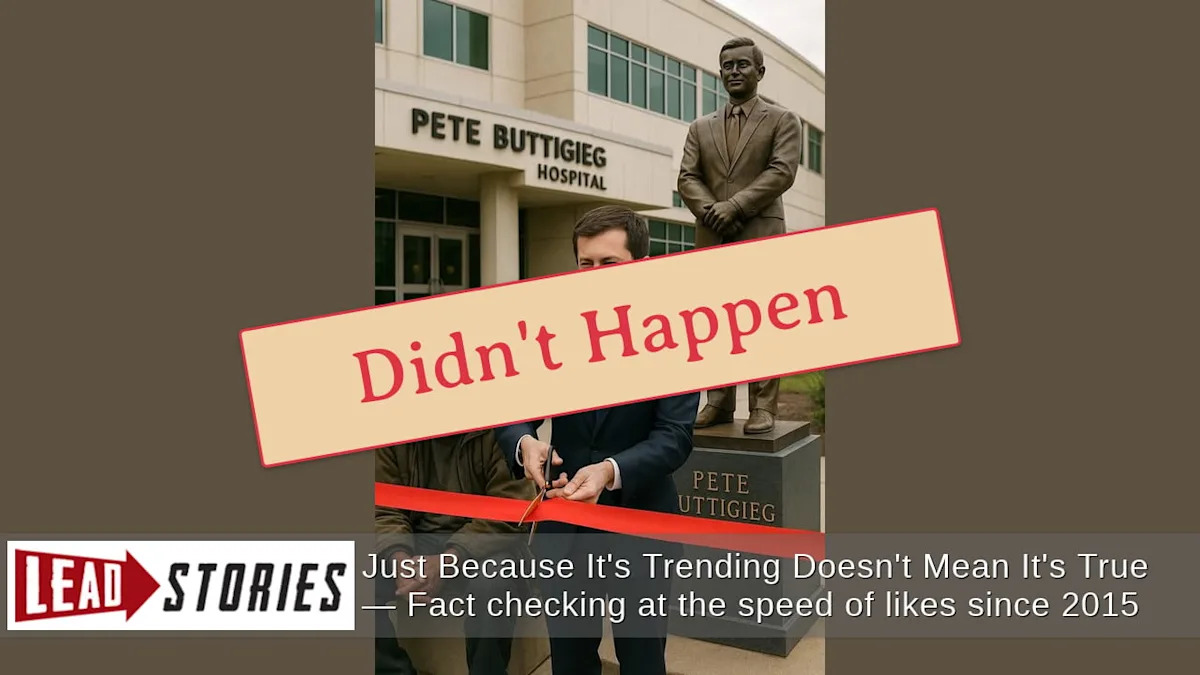
In a striking example of viral misinformation, claims that former U.S. Transportation Secretary Pete Buttigieg opened “America’s first 100% free homeless hospital” have been debunked as entirely fabricated. The widely shared social media post, which appeared on Facebook on November 23, 2025, contained numerous fabricated details alongside an AI-generated image.
The post described an emotional scene where Buttigieg supposedly opened the “Pete Buttigieg Sanctuary Medical Center” at 5 a.m., characterizing it as a 250-bed facility offering comprehensive medical services to homeless Americans at no cost. According to the claim, the hospital included cancer wards, operating rooms, mental health services, addiction treatment facilities, dental care, and even 120 permanent apartments.
The narrative further claimed that Buttigieg had secretly raised $142 million over 18 months through his personal foundation and anonymous bipartisan donors. It included an allegedly emotional quote from Buttigieg about his desire to leave a legacy of “lives saved” rather than political headlines.
However, several key indicators reveal this story as completely fabricated. Most notably, the image accompanying the post shows clear signs of artificial intelligence generation, including anatomical abnormalities in Buttigieg’s hands—a common telltale sign of AI-created imagery. The image also contradicted the post’s own narrative, which claimed there was “no ribbon” at the opening, yet showed what appeared to be a ribbon-cutting ceremony.
Extensive searches through reputable news sources, including Google News and Yahoo News, revealed no credible reporting about such a significant healthcare development. A project of this magnitude—the first free hospital exclusively for homeless individuals in American history—would certainly generate substantial media coverage from multiple mainstream news organizations if it were real.
The Facebook page responsible for spreading this misinformation demonstrates characteristics typical of what has been termed “Viet spam”—a pattern of false celebrity-related claims accompanied by AI-generated images designed to drive ad revenue through viral engagement. According to the page’s transparency information, it was primarily managed from overseas and had previously run multiple Buttigieg-themed advertisements.
This type of misinformation proliferated on Facebook following Meta’s controversial decision to end its third-party fact-checking program in the United States in early 2025. That program had previously partnered with professional fact-checking organizations to identify and label false content on the platform. By the end of 2025, fact-checkers had documented over 50 highly viral false claims that fit the pattern of “Viet spam.”
The fabricated hospital story represents a sophisticated form of misinformation that combines emotional appeal, seemingly specific details, and manipulated imagery to appear credible at first glance. The post included precise figures (250 beds, $142 million, 120 apartments) and emotional narratives about helping veterans to enhance its appearance of legitimacy.
This case highlights the ongoing challenges social media platforms and users face in distinguishing between genuine news and fabricated content, particularly as AI-generated imagery becomes increasingly sophisticated and third-party verification systems are dismantled.
For consumers of online information, this incident serves as a reminder to verify claims through multiple credible sources, particularly when stories contain emotional appeals, lack mainstream media coverage, or feature images that may have been artificially created.
Fact Checker
Verify the accuracy of this article using The Disinformation Commission analysis and real-time sources.

8 Comments
Wow, this is a really concerning case of misinformation. The level of detail and the use of an AI-generated image make this claim seem quite believable at first glance. I’m glad the Disinformation Commission was able to thoroughly debunk it.
This is a prime example of the importance of critical thinking and fact-checking in the digital age. The details provided in the original post seem far-fetched and questionable. I’m glad the true facts were brought to light.
Interesting fact check. It’s important to be skeptical of claims that seem too good to be true, especially when they involve prominent political figures. The details in this post about a ‘free homeless hospital’ sound highly dubious and fabricated.
While the idea of a free homeless hospital is admirable, this particular claim seems to be entirely fabricated. It’s concerning to see such misinformation being spread, especially with the use of an AI-generated image. Fact-checking is crucial.
Kudos to the Disinformation Commission for exposing this blatantly false claim. It’s troubling to see misinformation spreading so quickly, especially around political figures. We must remain vigilant and fact-check claims before sharing them.
While the goal of providing comprehensive healthcare to the homeless is admirable, this particular claim appears to be completely fabricated. I’m glad the Disinformation Commission was able to fact-check and debunk this false story.
This fact check highlights the importance of being skeptical of claims, especially those involving prominent political figures and seemingly too-good-to-be-true scenarios. It’s crucial that we rely on reputable sources and fact-check information before sharing it.
This is a great example of how misinformation can spread rapidly online. The use of an AI-generated image and fabricated details is a concerning tactic. It’s crucial that we scrutinize such claims and rely on reputable sources for news and information.