


Listen to the article
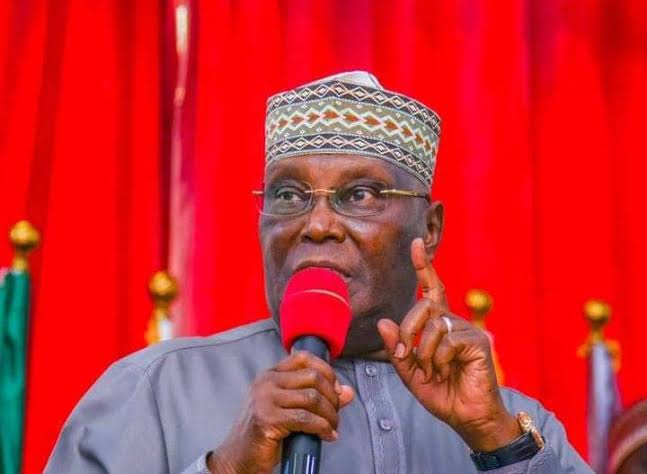
Political waves stirred the Nigerian opposition landscape this week as rumors circulated that former Vice President Atiku Abubakar was set to defect to the newly prominent Nigeria Democratic Congress (NDC). However, these claims have been firmly refuted by both Abubakar’s representatives and officials from his current party.
The speculation emerged following the high-profile departures of Peter Obi, the Labour Party’s 2023 presidential candidate, and Rabiu Kwankwaso, former Kano State governor, to the NDC. Both political heavyweights had previously aligned with the African Democratic Congress (ADC), which has been mired in leadership disputes and legal complications.
Multiple social media posts on X (formerly Twitter) claimed that Abubakar would officially join the NDC on Wednesday, suggesting a potential realignment of opposition forces ahead of Nigeria’s 2027 general elections. The claims gained traction as the NDC continues to position itself as a viable alternative to the ruling All Progressives Congress (APC).
The rumors appeared to gain credibility when Buba Galadima, a prominent NDC chieftain, publicly called on Abubakar to join the party during an appearance on Channels TV’s Politics Today. Galadima made a direct appeal to the former vice president, suggesting that opposition unity was crucial to challenge President Bola Tinubu’s administration.
“The truth of the matter is that Peter Obi and Rabiu Musa Kwankwaso migrated into the ADC; they brought unity of opposition to unseat Tinubu. Unfortunately, there are insinuations that the APC and the government used the courts to unseat the opposition,” Galadima stated during the broadcast.
In a pointed remark, Galadima added: “This is why I’m making this call on former Vice-President Atiku Abubakar to follow us as we followed him into the ADC, such that there will be unity of opposition to unseat this government, and if he refuses, Atiku will be held responsible.”
However, when contacted for verification, Paul Ibe, Abubakar’s media adviser, promptly dismissed the rumors. Speaking to Vanguard newspaper, Ibe stated, “If that is the case, I will be the first to know. I don’t think that there’s anything like that.” This categorical denial suggests no immediate plans for Abubakar to switch political allegiances.
The ADC’s leadership echoed this sentiment with even stronger language. National Publicity Secretary Bolaji Abdullahi characterized the reports as “100% rubbish,” denying any discussions linking key party figures to the NDC.
This political positioning comes at a critical juncture in Nigerian opposition politics. The ADC, once viewed as a potential strong platform to challenge the ruling party, has been weakened by internal strife and court battles. Its diminishing fortunes contrast sharply with the NDC’s growing prominence as it attracts significant political figures.
Political analysts suggest that opposition consolidation remains a crucial factor ahead of the 2027 elections. The fragmentation of opposition votes in the 2023 presidential election—split primarily between Abubakar’s Peoples Democratic Party (PDP), Obi’s Labour Party, and Kwankwaso’s New Nigeria Peoples Party—contributed to the APC’s victory.
The NDC appears to be strategically positioning itself as the rally point for opposition forces. However, without Abubakar, who has contested for the presidency multiple times and maintains significant political infrastructure nationwide, any opposition coalition may face substantial challenges in presenting a united front against the ruling party.
For now, the claims of Abubakar’s imminent defection to the NDC remain unsubstantiated, with official denials from all relevant parties indicating no immediate change in Nigeria’s opposition alignment.
Fact Checker
Verify the accuracy of this article using The Disinformation Commission analysis and real-time sources.

10 Comments
Interesting to see the political dynamics shifting in Nigeria. It will be worth watching how the NDC positions itself as an alternative to the ruling APC party in the lead-up to the 2027 elections.
I’m curious to see if Atiku Abubakar will indeed join the NDC, and how that might reshape the opposition landscape.
The Nigerian political landscape is certainly evolving, with the NDC emerging as a potential challenger to the ruling APC party. I’ll be curious to see how this plays out in the lead-up to the 2027 general elections.
Given the high-profile defections to the NDC, it’s understandable that rumors about Atiku Abubakar’s potential move would surface. However, it’s reassuring to see the claims have been debunked.
While the rumors of Atiku Abubakar’s defection to the NDC have been debunked, the ongoing leadership disputes and legal complications within the ADC are worth keeping an eye on. Nigerian politics seems quite fluid at the moment.
Fact-checking is crucial in these situations to separate truth from speculation. It’s good to see the claims about Atiku’s plans have been firmly refuted by his representatives.
Political realignments can have significant consequences, especially in the lead-up to national elections. I’ll be following this story closely to see how the Nigerian opposition landscape evolves.
The NDC’s efforts to position itself as a viable alternative to the ruling APC party are certainly noteworthy. It will be interesting to see if they can capitalize on the high-profile defections.
The departure of high-profile figures like Peter Obi and Rabiu Kwankwaso to the NDC suggests the party is gaining momentum. It will be intriguing to see if Atiku Abubakar, a major political figure, chooses to join them.
Rumors can be tricky, so it’s good to see the claims of Atiku’s defection have been refuted by his representatives and his current party. Factual reporting is crucial in these situations.