


Listen to the article
The Department of Education (DepEd) has issued a strong denial of viral social media claims that Christmas parties have been banned in Philippine schools, labeling the information as “fake news” in an official statement.
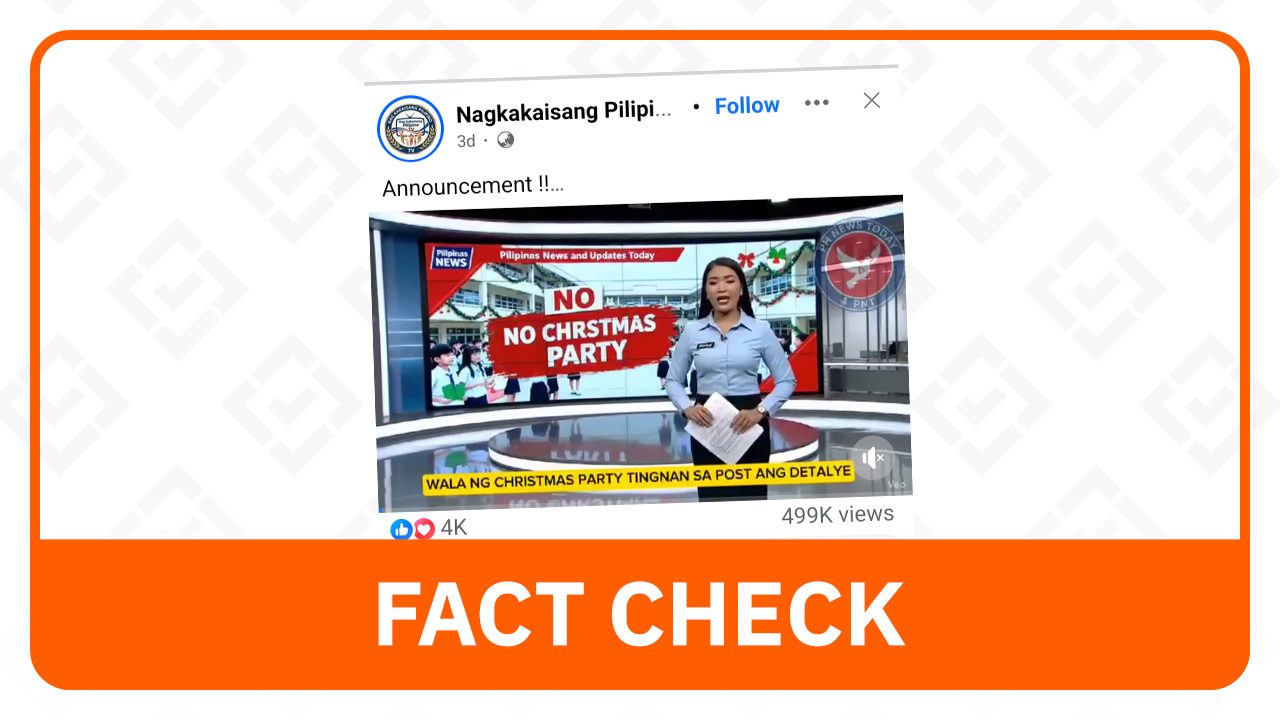
The controversy began when a Facebook page called “Nagkakaisang Pilipino” published a video on November 21 featuring what appeared to be a newscast claiming that Christmas celebrations would be eliminated across all educational institutions in the Philippines. The pseudo-news clip stated, “Reminder, according to DepEd, Christmas parties will be removed in all school levels across the Philippines. The reasons can be found in our post.”
The misleading content quickly gained traction online, accumulating nearly half a million views, thousands of reactions, and hundreds of shares within days of posting. The caption included links supposedly offering additional details supporting the claim.
On November 23, DepEd took decisive action by publishing an official advisory on its Facebook page categorically refuting the rumor. “The post circulating about the alleged removal of Christmas parties in schools is fake news,” the department stated, urging the public to remain vigilant against similar misinformation campaigns.
Analysis of the original video revealed telltale signs of artificial creation. The clip contained a “Veo” watermark in the bottom right corner, indicating it was generated using Google’s Veo AI text-to-video technology rather than being authentic footage of an official announcement.
The links embedded in the post’s caption presented additional red flags. Rather than directing users to legitimate government resources, they redirected to a blog site and an online form labeled “Libreng Ayuda Pilipinas” (Free Aid Philippines). This form requested sensitive personal information including names, phone numbers, and email addresses, raising significant phishing concerns.
While Christmas celebrations in schools have not been banned, DepEd did issue guidance in November 2024 suggesting that festivities be scaled down rather than canceled. This recommendation aligned with President Ferdinand Marcos Jr.’s call for government agencies to demonstrate solidarity with communities affected by the six consecutive typhoons that struck Luzon this year.
The directive encouraged educational institutions to redirect funds that would otherwise be spent on lavish celebrations toward donations for typhoon victims. This measured approach stands in stark contrast to the complete ban alleged in the viral posts.
The Philippines was recently placed under a one-year national state of calamity following extensive damage caused by Typhoon Tino, but neither the President nor DepEd has ordered the cancellation of Christmas celebrations in government offices or educational institutions.
This is not the first time that DepEd has been falsely associated with misinformation. The agency has repeatedly found itself fighting fabricated claims that misuse its name to create an appearance of legitimacy.
The incident highlights the ongoing challenge of combating disinformation on social media platforms, where AI-generated content and phishing attempts increasingly masquerade as legitimate news. Education officials continue to encourage the public to verify information through official channels before sharing or acting upon social media claims.
Fact Checker
Verify the accuracy of this article using The Disinformation Commission analysis and real-time sources.

7 Comments
Schools should be safe spaces for students to celebrate their cultural traditions. I’m glad the DepEd has stepped in to clarify and shut down this false rumor.
I appreciate the DepEd’s proactive approach in addressing this fake news claim. Maintaining transparency and providing accurate information is essential, especially when it involves children’s education and experiences.
Absolutely. The DepEd’s clear and direct refutation of the misinformation is commendable. It’s crucial that authoritative sources take the lead in correcting falsehoods circulating online.
It’s troubling to see how quickly misinformation can spread online, even on matters as seemingly innocuous as school holiday celebrations. Kudos to the DepEd for their swift response to set the record straight.
I’m curious to learn more about the reasons behind the viral misinformation. Was it an intentional attempt to spread disinformation, or simply an innocent misunderstanding that got out of hand?
That’s a good question. It seems the viral post was trying to pass off as a legitimate news report, which is concerning. Fact-checking and combating the spread of misinformation is crucial these days.
Glad to hear the DepEd is refuting the false claim about banning Christmas celebrations in schools. It’s important to have accurate information, especially when it comes to matters affecting children’s experiences.