


Listen to the article
CDC Revises Vaccine-Autism Statements Under Kennedy, Sparking Scientific Controversy
The Centers for Disease Control and Prevention has significantly altered its webpage on vaccines and autism, claiming that the longstanding statement that “vaccines do not cause autism” is “not an evidence-based claim.” The controversial revision occurred on November 19 under newly appointed Health and Human Services Secretary Robert F. Kennedy Jr., a well-known anti-vaccine advocate.
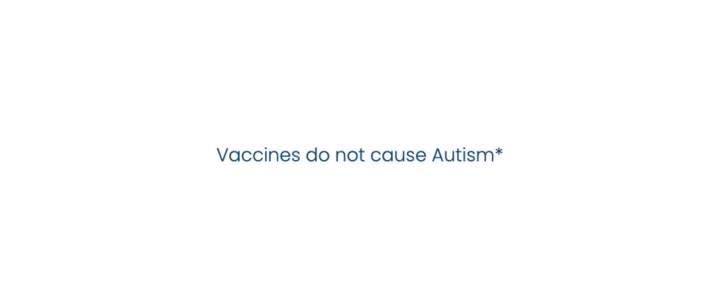
The modified webpage now suggests that studies have not definitively ruled out the possibility that infant vaccines might cause autism, despite decades of scientific research finding no causal relationship. While the page still displays the heading “Vaccines do not cause Autism,” it now includes an asterisk. A footnote explains that this phrase remains due to an agreement with Republican Senator Bill Cassidy of Louisiana, whose support was crucial for Kennedy’s confirmation.
Cassidy, a physician and strong vaccine advocate, backed Kennedy’s nomination only after securing promises that the CDC would maintain statements affirming vaccines do not cause autism. Following the webpage changes, Cassidy responded on social media, stating: “What parents need to hear right now is vaccines for measles, polio, hepatitis B and other childhood diseases are safe and effective and will not cause autism. Any statement to the contrary is wrong, irresponsible, and actively makes Americans sicker.”
The revised content attempts to draw correlations between increased childhood vaccinations since 1986 and rising autism prevalence rates. It cites a 2014 study by a researcher with anti-vaccine ties claiming to find a connection between aluminum in vaccines and autism. However, this contradicts more recent and robust research findings.
Medical experts have responded with alarm to the changes. “This is absolute insanity and a bizarre moving of the goalposts,” said David S. Mandell, psychiatry professor at the University of Pennsylvania Perelman School of Medicine. “As any scientist knows, you can’t ‘prove’ the lack of association. You conduct related studies, over and over, until the bulk of evidence finds no association.”
Dr. Paul Offit, a pediatrician and vaccine expert at Children’s Hospital of Philadelphia, noted that the webpage exploits a technicality of scientific methodology, as scientists cannot definitively prove a negative. However, he emphasized that overwhelming evidence shows no link between vaccines and autism.
When questioned about the changes, HHS Communications Director Andrew Nixon described it as “a common-sense update that brings CDC’s website in line with our commitment to transparency and gold standard science.” According to reporting by the Washington Post and STAT, career CDC staff were reportedly neither involved in nor aware of these changes before they appeared.
The new webpage makes the misleading claim that seven specific infant vaccines (DTaP, hepatitis B, polio, pneumococcus, Hib, rotavirus, and influenza) have not been proven safe regarding autism. However, experts point out that this reverses the scientific burden of proof. Anders Hviid, head of epidemiology research at Denmark’s Statens Serum Institut, explained: “This is a reversal of the burden of proof. This is not how science works.”
Many of these vaccines have been studied extensively in relation to autism, particularly regarding aluminum adjuvants, which appear in several childhood vaccines. Multiple studies, including research by Hviid, have found no link between aluminum in vaccines and autism.
The American Academy of Pediatrics responded forcefully to the CDC’s website change. “Since 1998, independent researchers across seven countries have conducted more than 40 high-quality studies involving over 5.6 million people. The conclusion is clear and unambiguous: There’s no link between vaccines and autism,” said Dr. Susan J. Kressly, the organization’s president.
The controversy represents a significant shift in how the nation’s premier public health agency communicates scientific consensus on vaccines—a change that many experts fear could undermine public confidence in vaccination programs at a time when several preventable disease outbreaks have occurred across the country.
Fact Checker
Verify the accuracy of this article using The Disinformation Commission analysis and real-time sources.

10 Comments
This is a very troubling development. The CDC should be a trusted source of objective, evidence-based information on public health issues like vaccine safety. Introducing ambiguity on this critical topic is extremely irresponsible and could have dire consequences.
Absolutely. The CDC’s mission is to protect public health, not cater to fringe views that lack scientific backing. They must remain steadfast in communicating the well-established safety and efficacy of vaccines, regardless of political pressure.
The CDC’s website revisions seem to be a concerning step backwards in vaccine communication. While I appreciate the need for nuance, any suggestion of a link between vaccines and autism is highly misleading and could fuel dangerous misinformation.
Absolutely. Vaccines save millions of lives every year. It’s crucial that public health authorities provide clear, evidence-based information to the public, not muddy the waters with unsubstantiated claims.
This is a concerning development. Vaccines are one of our most important public health tools, and their safety and efficacy is well-established through extensive research. Any suggestion of a link to autism is simply not supported by the evidence.
I agree. Undermining public trust in vaccines based on unsubstantiated claims could have serious public health consequences. The CDC should be relying on rigorous scientific data, not political pressure, when communicating about vaccine safety.
This is very troubling. The scientific consensus on vaccine safety is overwhelming. I worry that these webpage changes, driven by political pressure, will only embolden anti-vaccine activists and put vulnerable communities at risk.
I share your concerns. Vaccines are one of our most important public health tools. The CDC should be laser-focused on promoting vaccine uptake based on facts, not bowing to fringe views that lack scientific backing.
As a parent, I’m deeply concerned by this development. Vaccines are safe, effective, and critical for protecting children. The CDC should be amplifying the scientific consensus, not sowing doubt about vaccine-autism links that have been thoroughly debunked.
I agree. Undermining public trust in vaccines puts children’s health at risk. The CDC must stand firm on the overwhelming scientific evidence and resist political pressure that could jeopardize vital vaccination programs.