


Listen to the article
In a startling development, a fabricated news story circulating on social media falsely claims that House Minority Leader Hakeem Jeffries’ office attempted to warn Venezuelan President Nicolás Maduro of his impending capture by U.S. forces.
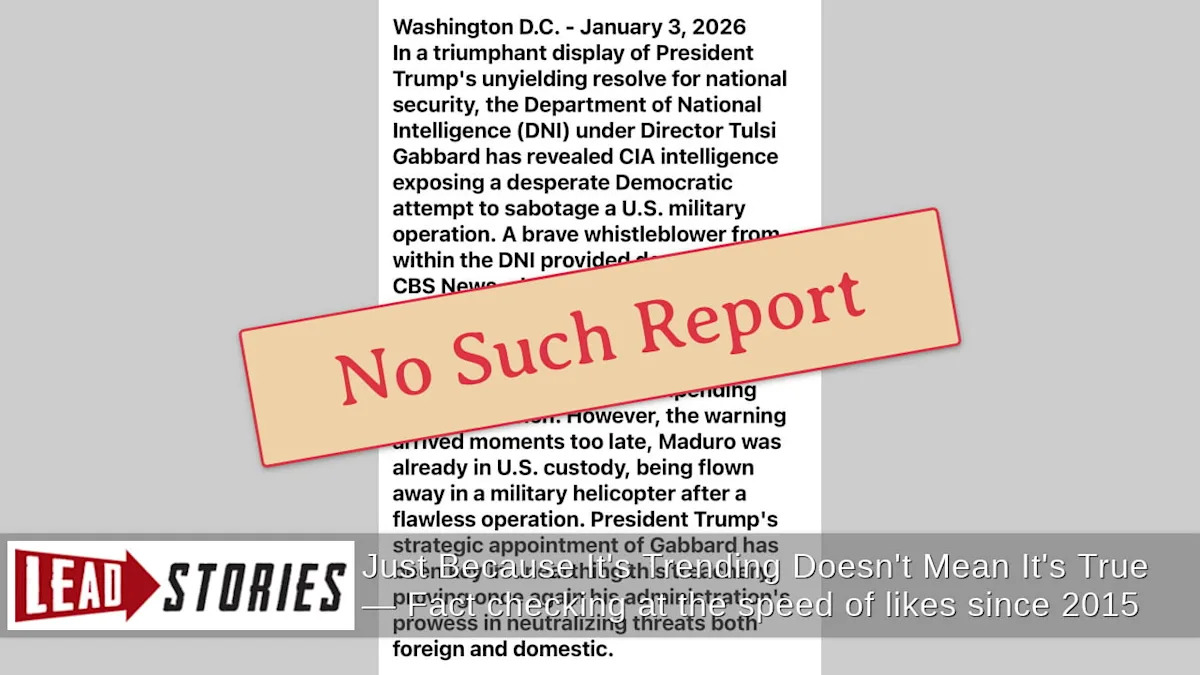
The viral image, shared widely on X (formerly Twitter) beginning January 3, 2026, presents itself as a legitimate news report allegedly published by CBS News. It describes a supposed intelligence leak from the Department of National Intelligence under the direction of Tulsi Gabbard, claiming that Democratic leadership connected to Jeffries tried to alert Maduro before his arrest.
However, comprehensive searches of CBS News archives and their website reveal no such report exists. The language used in the fabricated story doesn’t appear in any legitimate news coverage, and no other reputable media outlets have corroborated these explosive allegations.
The timing of this disinformation coincides with the actual capture of Maduro and his wife by U.S. authorities in Venezuela on January 3, 2026. Following their arrest, the couple was transported to New York City where they face serious drug-trafficking charges according to court documents.
This fabrication appears designed to exploit a significant geopolitical event by injecting partisan political narratives into the discourse surrounding Maduro’s capture. The false story attempts to create a narrative of Democratic interference with U.S. military operations while simultaneously praising the Trump administration’s national security efforts.
The fraudulent report contains several red flags that signal its inauthenticity. It employs overtly partisan language atypical of objective journalism, with phrases like “triumphant display of President Trump’s unyielding resolve” and references to “Democratic treachery.” Professional news organizations maintain standards of neutrality that would preclude such terminology.
Media literacy experts warn that fabricated news reports have become increasingly sophisticated, often mimicking the formatting and style of legitimate outlets to lend credibility to false information. Such misinformation can spread rapidly across social platforms, particularly during major international events like the unprecedented capture of a foreign head of state.
The actual operation to detain Maduro represents a significant development in U.S.-Venezuela relations and American drug enforcement efforts. U.S. authorities have long accused the Maduro regime of facilitating narcotics trafficking, with the Justice Department previously announcing indictments against Maduro and several associates on charges including narco-terrorism conspiracy.
Venezuelan officials have condemned the operation as a violation of their sovereignty, while U.S. officials maintain the legitimacy of the arrest under international law and existing indictments. The diplomatic ramifications continue to unfold across Latin America and globally.
The circulation of false narratives surrounding such sensitive international operations complicates public understanding and potentially inflames partisan divisions at a time when clear, factual reporting is essential. It also undermines trust in legitimate media outlets that are working to provide accurate coverage of complex geopolitical events.
Social media platforms have faced mounting pressure to address the spread of misinformation, particularly when it involves falsified news reports that could impact national security perceptions or diplomatic relations. This incident highlights the ongoing challenges in distinguishing authentic reporting from sophisticated fabrications in today’s digital information ecosystem.
As this situation develops, media consumers are encouraged to verify information through multiple reputable sources, particularly when encountering inflammatory claims about political figures and international security operations.
Fact Checker
Verify the accuracy of this article using The Disinformation Commission analysis and real-time sources.

5 Comments
While the allegations against Jeffries’ office are serious, the lack of corroborating evidence from credible news outlets raises red flags. I wonder what the motivations were behind this fabricated story. Careful scrutiny is needed to separate fact from fiction in these politically charged situations.
This is a complex and sensitive issue that deserves thorough, impartial reporting. I hope journalists are able to uncover the truth behind these allegations and provide the public with accurate, fact-based coverage.
The timing of this fabricated report, coinciding with Maduro’s actual arrest, is quite suspicious. I’ll be keeping an eye out for any credible updates on this situation from trusted news organizations.
This is a concerning case of fabricated news. It’s important to verify information from credible sources before sharing or believing such explosive claims. Fact-checking is crucial to counter the spread of disinformation, especially around high-stakes political and legal matters.
I’m curious to see how this story unfolds and what the actual facts are. Arresting a foreign leader on drug charges is a major geopolitical event, so it’s worrying to see false reports circulating. Hopefully more details will emerge from reliable journalistic sources.