


Listen to the article
The battle for credit over the Davao River Bridge has escalated into a political dispute between supporters of former President Rodrigo Duterte and current President Ferdinand Marcos Jr., highlighting the tensions between two of the Philippines’ most powerful political families.
On December 4, President Marcos inspected the 1.3-kilometer bridge ahead of its December 15 opening, describing it as one of his administration’s “legacy projects” in Davao City. This characterization sparked immediate backlash from Duterte supporters, who claim the project rightfully belongs to the former president’s list of accomplishments.
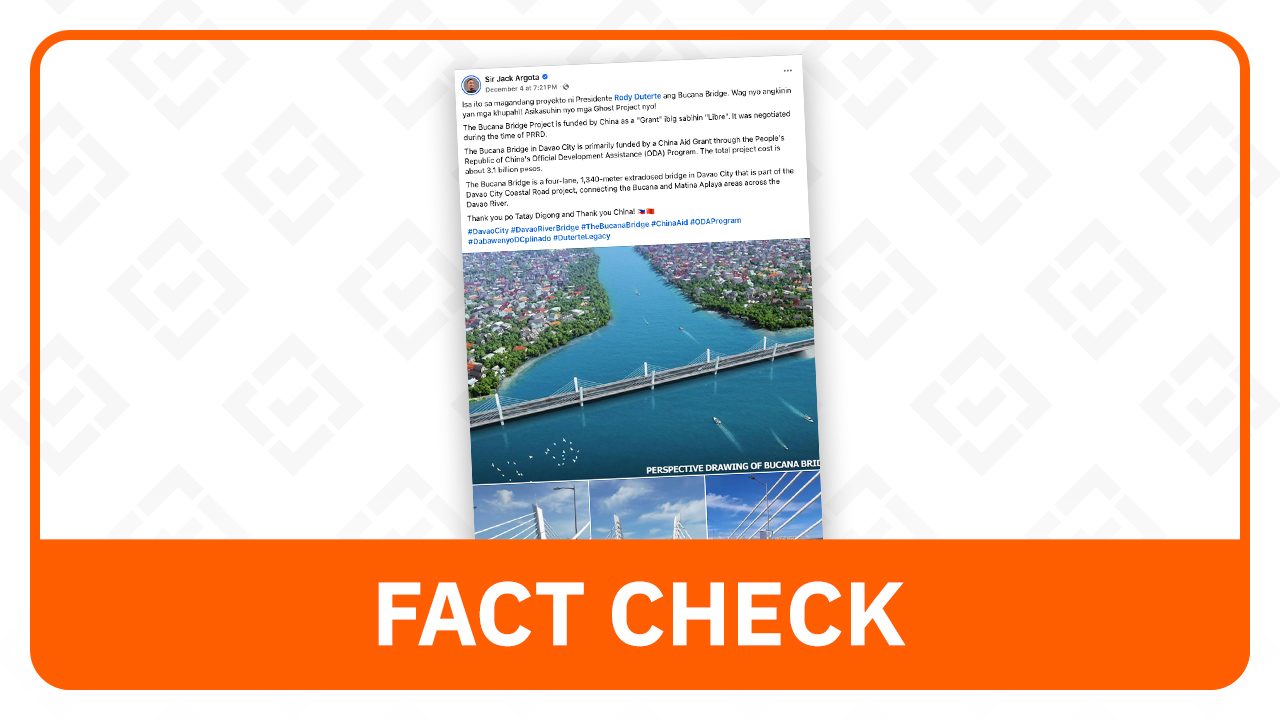
Social media has become the battleground for this dispute, with one viral Facebook post by Sir Jack Argota garnering 48,000 reactions, 6,400 comments, and 4,300 shares. The post proclaimed, “This is one of the good projects of President Rody Duterte: the Bucana Bridge. Don’t grab credit, ingrates! Mind your ghost projects instead!”
The reality of the project’s development spans both administrations. According to official records, the groundwork for the bridge was laid during Duterte’s presidency. In November 2018, during Chinese President Xi Jinping’s state visit to the Philippines, the Duterte administration signed 29 agreements with China, including an Exchange of Letters for the Bucana Bridge project. This agreement secured crucial funding through China’s Official Development Assistance.
Vice President Sara Duterte, the former president’s daughter, has publicly credited her father for the bridge, emphasizing that he was responsible for securing the project’s funding.
However, President Marcos maintains that the project was formally approved in July 2022—a month after Duterte left office—and construction only began in late 2023 during his administration. The Department of Public Works and Highways (DPWH) confirms that the implementation agreement was signed on October 20, 2023, with the P3.1-billion civil works contract finalized with China Road and Bridge Corporation on November 10, 2023.
The Davao River Bridge, also known as the Bucana Bridge, represents a significant infrastructure development for the region. It forms a major segment of the Davao Coastal Bypass Road, connecting Barangay 76-A Bucana and Matina Aplaya. Once operational, the bridge will accommodate approximately 14,000 vehicles daily.
For residents of Davao City, the practical benefits transcend the political squabble. According to President Marcos, the bridge will dramatically reduce travel time for motorists from nearly two hours to just 20-30 minutes. This improvement in urban mobility stands to significantly enhance quality of life and economic activity in the region.
The Davao River Bridge is expected to officially open to traffic in December 2025, with the entire Davao City bypass projected for completion by December 2027. This timeline spans well into Marcos’ term, ensuring that the project’s legacy will remain a point of contention between supporters of both administrations.
The dispute illustrates the complex nature of large infrastructure projects in the Philippines, which often span multiple administrations from conception to completion. It also underscores the increasing politicization of development initiatives, particularly in regions with strong political affiliations like Davao City, long considered the Duterte family’s stronghold.
As the bridge nears completion, the question of who deserves credit may ultimately matter less to local residents than the tangible benefits they’ll experience from improved infrastructure and reduced congestion in one of the Philippines’ most rapidly developing urban centers.
Fact Checker
Verify the accuracy of this article using The Disinformation Commission analysis and real-time sources.

5 Comments
The Bucana Bridge seems like an important infrastructure development for Davao City. It’s understandable that there would be some political jockeying over who deserves the credit, but I hope the priority is on the bridge’s positive impact rather than partisan bickering.
The dispute over credit for the Bucana Bridge seems like a distraction from the important role it will play in supporting Davao City’s growth and development. I hope the focus shifts to how the bridge can improve people’s lives rather than political posturing.
I’m curious to learn more about the technical and engineering details of the Bucana Bridge project. How does it improve transportation and connectivity in the region? What were some of the key challenges in completing it?
Interesting to see the political tensions around this infrastructure project. It seems the bridge was initiated under Duterte but completed during Marcos’ administration. I wonder how the two administrations will claim credit moving forward.
This bridge project highlights the need for more transparent and collaborative governance, where leaders work together to deliver results for the people rather than engage in partisan disputes over credit. Hopefully the focus can shift to the bridge’s benefits for the community.