


Listen to the article
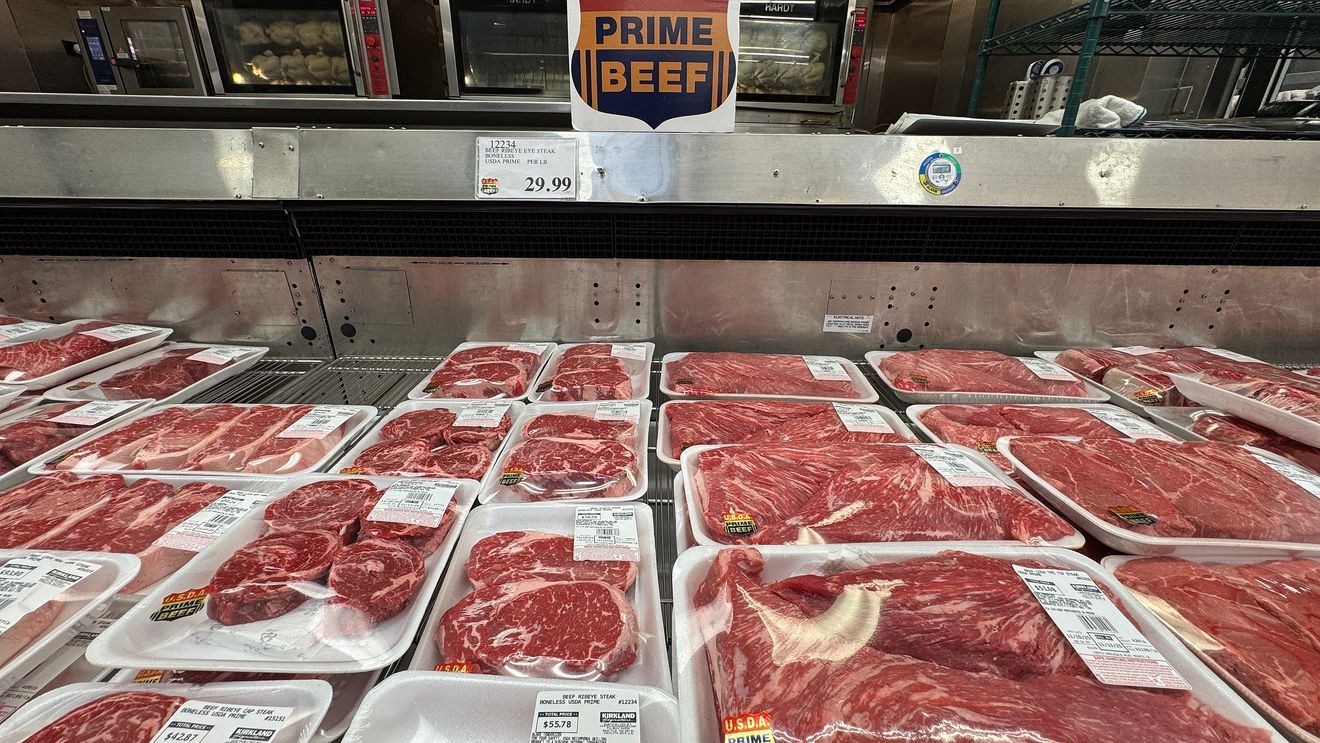
Record beef prices have triggered a federal investigation into the nation’s largest meatpackers, as consumer costs soar while ranchers struggle with shrinking profits. The widening gap between what consumers pay and what producers receive has drawn scrutiny at the highest levels of government.
Earlier this month, President Donald Trump directed the Department of Justice to launch a formal investigation into the country’s largest beef processors. The probe targets potential collusion, price-fixing, and market manipulation in an industry where consolidation has reached unprecedented levels. According to a White House statement, the investigation aims to restore competition in a market now dominated by just four companies that control approximately 85% of U.S. beef processing capacity.
The so-called “Big Four” processors at the center of the investigation include Brazilian-based JBS (the world’s largest meatpacker), Cargill, Tyson Foods, and National Beef. The White House has specifically noted that two of these companies are either foreign-owned or under significant foreign control, raising additional concerns about food security and economic sovereignty.
This level of market concentration represents a dramatic shift from just four decades ago. According to the U.S. Department of Agriculture (USDA), in 1980, the top four processors controlled only about 36% of the U.S. beef market. Today’s 85% market share reflects one of the most concentrated sectors in American agriculture.
The transformation began in the 1980s and 1990s, when major packers started building massive, high-efficiency slaughter and processing plants. These industrial-scale facilities could process far more cattle at significantly lower costs than smaller regional operations. USDA’s Economic Research Service data shows that a typical plant owned by one of the top four processors handled about 417,000 head of cattle in 1980. By 2002, that capacity had more than doubled to over 1 million head per facility.
This explosion in scale efficiency effectively priced smaller plants out of the market. As independent processors closed or were acquired, the Big Four rapidly consolidated power. By the mid-1990s, they controlled more than 80% of the nation’s beef processing—a level of dominance that has only strengthened in subsequent years.
Interestingly, early research from the USDA suggested the initial wave of consolidation brought some economic benefits. Studies conducted in the 1990s found that larger plants achieved greater cost efficiencies, and those savings initially translated to lower consumer beef prices. The cost reductions also helped stimulate demand, temporarily benefiting cattle producers through stronger pricing.
However, these advantages proved short-lived. USDA research indicates a significant market shift occurred around 2015 when the industry reached a critical turning point. For decades prior, packers maintained excess plant capacity, creating incentives to aggressively bid against each other for cattle to keep their facilities operating at optimal levels. This competitive pressure helped support prices paid to ranchers.
Once the industry began operating at full capacity, with plants running as close to maximum as possible, that competitive pressure evaporated. Packers no longer needed to outbid each other for livestock. According to USDA data, this is when the spread between what packers pay ranchers for cattle and what they earn selling boxed beef widened dramatically. In some years, that price gap doubled or even tripled compared to earlier decades.
The Trump administration argues that the current situation—record-high beef prices for consumers, diminishing returns for ranchers, and the outsized market share controlled by just four companies—suggests possible market manipulation deserving federal investigation. The White House says the DOJ probe is designed to “restore competition” and ensure fair pricing throughout the supply chain, from pasture to supermarket.
The investigation comes at a critical time for both consumers facing inflation at the grocery store and America’s ranchers, many of whom are struggling to remain profitable despite high retail beef prices. The outcome could potentially reshape one of America’s most essential food industries and determine whether the current market structure serves the interests of producers, consumers, and the nation’s food security.
Fact Checker
Verify the accuracy of this article using The Disinformation Commission analysis and real-time sources.

12 Comments
The pricing dynamics in the beef industry are clearly out of whack if ranchers are struggling while consumers are paying record high prices. This probe is a good first step, but it will be crucial to see meaningful structural changes to promote a more competitive market.
Absolutely. The consolidation of the industry into just a few major players is very concerning. Restoring more competition should help ensure fairer prices and better outcomes for both producers and consumers.
It’s good to see the government taking this issue seriously and launching a formal investigation. Meat prices have a big impact on household budgets, so it’s important to understand if there’s any manipulation or anticompetitive behavior driving these price spikes.
Agreed. With 85% of processing controlled by just 4 companies, there are clear red flags about lack of competition. Hopefully the probe can get to the bottom of what’s really going on.
Interesting to see the government scrutinizing the role of foreign ownership and control in the US beef processing industry. Food security is a crucial national priority, so any potential vulnerabilities there need to be addressed.
Yes, the foreign ownership angle adds an extra layer of complexity. It’s understandable the White House would want to ensure US food production is not overly dependent on or influenced by foreign actors.
I’m curious to learn more about the potential collusion, price-fixing, and market manipulation alleged in the beef industry. It’s disappointing to see such concerning practices in a sector that is so critical to the food supply. Transparency and accountability are essential here.
Yes, the allegations of anti-competitive behavior are very worrying. I hope the investigation is able to uncover clear evidence and that any wrongdoing is swiftly addressed through appropriate regulatory and legal actions.
This is a complex issue with a lot of moving parts. On one hand, the big meat processors argue they need scale and efficiency to keep prices low for consumers. But on the other, the rampant consolidation appears to be hurting both ranchers and shoppers. A careful, thorough investigation is warranted.
Absolutely. There are likely valid arguments on both sides, which is why an impartial probe is so important. Hopefully it can find the right balance between producer and consumer interests.
This is concerning news about the beef industry. It sounds like the consolidation and potential abuse of market power by the major processors is really hurting ranchers and consumers. I’m glad the government is investigating to try to restore competition and fairness.
Yes, I agree it’s important to have transparency and accountability in such a critical part of the food supply chain. Hopefully the investigation can shed light on any anticompetitive practices.